Are Home Alexandrite Lasers Safe and Effective?
True alexandrite laser hair removal at home is usually not what consumer devices offer. Real alexandrite systems use a 755 nm laser, controlled professional settings, and skin cooling, while most home options are IPL or lower-energy diode devices. The first thing to check is not the marketing name, but the actual technology, your skin tone, and whether your hair has enough dark pigment to respond.

How alexandrite laser hair removal works
Alexandrite hair removal is built around a very specific match: light energy that is strongly absorbed by dark pigment in the hair. That is why it can work quickly for the right person, but also why it is harder to make safe and effective as a casual home treatment.
Uses a 755 nm wavelength
The defining feature of an alexandrite laser is its 755 nm wavelength. Unlike IPL, which sends out a range of light, alexandrite uses one laser wavelength aimed at pigment in the hair follicle. If a product page does not clearly state 755 nm alexandrite laser technology, it is probably not a true alexandrite device.
Targets melanin in the hair
Alexandrite works because melanin in the hair absorbs the laser energy and turns it into heat. Dark brown and black hair usually gives the laser a stronger target, especially when the hair is coarse.
This is also the reason light hair is frustrating. Blonde, gray, white, and many red hairs often lack enough pigment for reliable results, whether the treatment is done in a clinic or with a home device. Buying a more expensive device does not fix the pigment problem.
Works best on lighter skin types
Alexandrite is generally best suited to lighter skin with dark hair because there is clearer contrast between the hair and surrounding skin. Fair skin with dark underarm or leg hair is a typical lower-risk match, while recently tanned skin or naturally darker skin needs much more caution because the skin itself may absorb more heat.
- More suitable: light to light-olive skin with dark, visible hair.
- More cautious: skin that tans easily, has recent sun exposure, or is prone to dark marks after irritation.
- Often a poor match: very light hair, gray hair, or skin tones where another laser type may be safer.
Requires controlled energy and cooling
A professional alexandrite session is not just a flash of light. The provider adjusts treatment settings based on skin tone, hair thickness, treatment area, and recent sun exposure, then uses cooling to protect the skin surface and reduce discomfort.
That control is a big reason true home alexandrite devices are uncommon. A clinic can use stronger energy because a trained person is assessing the skin and managing the risk. A home device has to be safer for unsupervised use, which usually means lower output and slower results.
Alexandrite vs IPL vs home diode
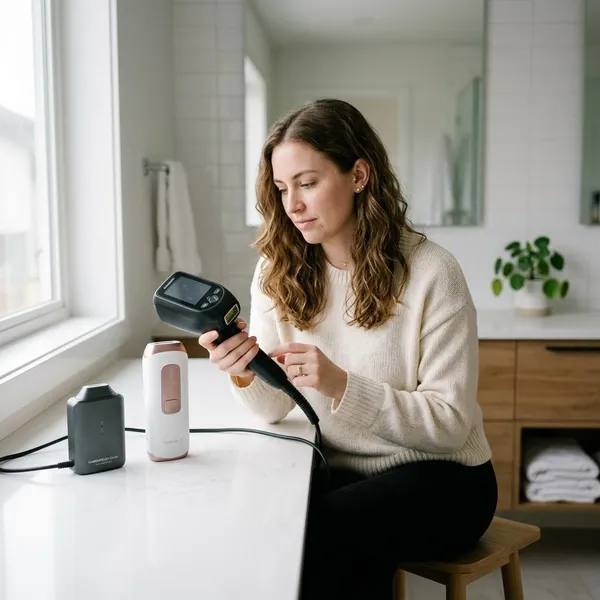
The main confusion comes from the way devices are marketed. "Laser hair removal" is often used loosely, but alexandrite, IPL, and diode devices do not work in exactly the same way. For a home buyer, the practical difference is whether you want convenience and maintenance, or stronger professional reduction.
Alexandrite uses one 755 nm wavelength
Alexandrite is a true laser with one focused 755 nm wavelength. On the right candidate, that focus can make treatment fast and effective, especially for coarse hair on larger areas such as legs, arms, chest, or back.
The same strength creates limits. Because 755 nm is strongly attracted to pigment, skin tone selection matters more than many people expect. It can be an excellent professional option, but it is not a universal or risk-free choice for every skin type.
IPL uses a broad light spectrum
IPL is not alexandrite. It uses broad-spectrum light that is filtered for hair reduction, which makes it less targeted than a true laser. For someone with light skin and dark hair who wants to manage regrowth at home, IPL may still be useful, but it usually requires patience and regular maintenance.
| Option | Best use case | Main tradeoff |
|---|---|---|
| Professional alexandrite | Faster reduction on suitable light skin and dark hair | Clinic visits, higher cost, stricter skin-tone suitability |
| Home IPL | Convenient upkeep on smaller or moderate areas | Less precise, slower, needs repeated use |
| Home diode | At-home laser-style treatment when the device is suitable | Lower energy than clinic lasers, limited speed |
Diode lasers use a different laser wavelength
Diode lasers are true lasers, but they are not alexandrite lasers. Many diode systems operate around the 800 to 810 nm range, depending on the device, so they sit in a different category from 755 nm alexandrite.
Home devices use lower treatment energy
Home devices use lower energy for a good reason: people use them without professional assessment. That makes them more convenient, but it also changes expectations. Underarms or an upper lip may feel manageable at home; full legs, a back, or dense bikini-line regrowth can become a long routine.
- Check the technology first. Look for the actual wavelength or whether the device is IPL, diode, or another light-based system.
- Match it to your skin and hair. Light skin with dark hair is usually the easiest combination for home light devices.
- Be honest about the area. Small areas suit home routines better than large areas that require many repeated passes.
- Avoid treating tanned or irritated skin. If your skin is recently sun-exposed, postpone and reassess.
Who is alexandrite laser best for?
Alexandrite makes the most sense when the person, hair, and treatment goal all line up. The strongest candidates usually want professional treatment, have lighter skin, and have dark hair that gives the laser a clear target.
Lighter skin tones
If your skin is fair to light-olive and your hair is dark, alexandrite is often one of the stronger clinic options to ask about. The contrast helps the laser focus on the hair rather than the skin. If you are darker-skinned, tan easily, or have a history of pigmentation marks, it is worth asking a qualified provider whether a different laser type would be safer.
Dark pigmented hair
Dark pigmented hair is where alexandrite usually performs best. Thick underarm hair, dark lower-leg hair, or coarse bikini-line hair gives the laser more pigment to target than fine pale hair on the arms or face.
Larger treatment areas
Alexandrite is often chosen in clinics for larger treatment areas because professional systems can cover skin more efficiently than most home devices. Someone trying to reduce hair on full legs before summer may prefer clinic speed, while someone only wants light maintenance on underarms may be comfortable using a home IPL or diode device consistently.
People seeking professional treatment
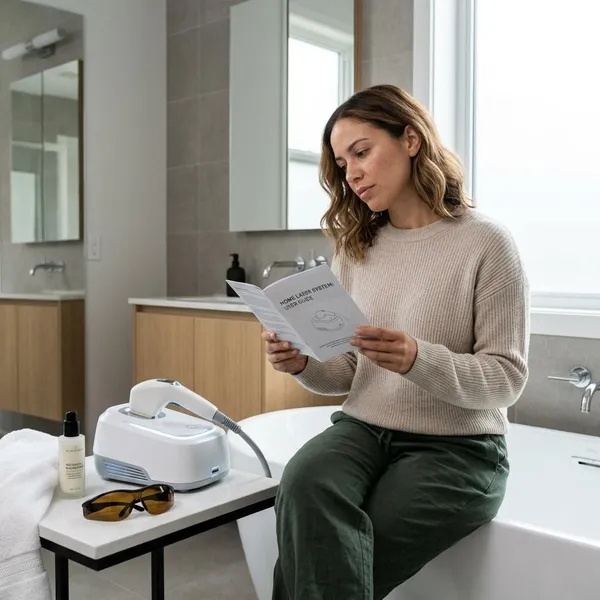
Alexandrite is best thought of as a professional treatment rather than a DIY shortcut. It suits people who want stronger reduction, can attend scheduled sessions, and are willing to let a provider assess whether their skin and hair are suitable.
- Good candidate scenario: light skin, dark coarse hair, larger areas, and a preference for fewer but more structured clinic sessions.
- Home-device scenario: smaller areas, lower budget, privacy concerns, and realistic expectations about slower progress.
- Higher-risk scenario: darker skin, recent tanning, pigment-prone skin, or very light hair; professional advice matters more here.
Conclusion
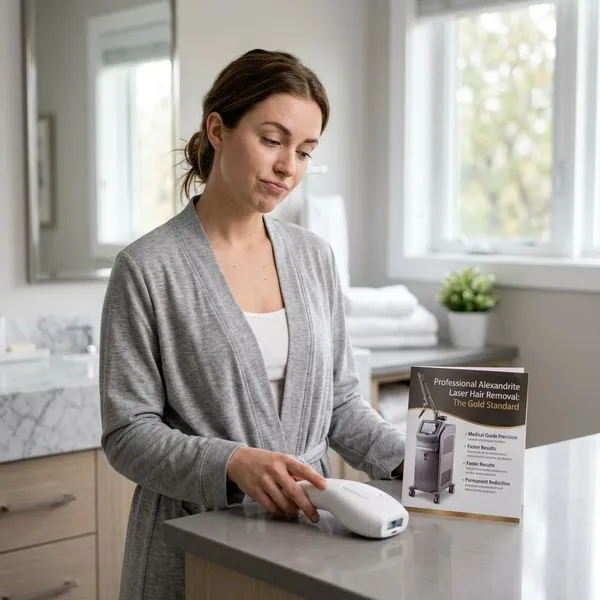
If you want true alexandrite results, a professional clinic is usually the realistic route; most home devices are IPL or lower-energy diode tools rather than 755 nm alexandrite systems. Choose a home device only if your skin and hair are suitable, you are comfortable with slower maintenance, and the treatment area is realistic to manage yourself. For dark coarse hair on lighter skin, especially across larger areas, professional alexandrite is often the more sensible choice.
FAQS
Is alexandrite laser the same as IPL?
No. Alexandrite is a true 755 nm laser, while IPL uses filtered broad-spectrum light. If a home product is IPL, it should not be expected to behave like a clinic alexandrite laser.
Is alexandrite better than a home diode laser?
Often, yes, when it is professional alexandrite used on a suitable candidate. A home diode device may still help with gradual regrowth control, but it usually cannot match clinic-level energy or speed.
Is alexandrite laser safe for darker skin?
It may carry more risk on darker skin because the laser is strongly attracted to melanin. A provider may recommend another laser type instead, especially if your skin tans easily or develops pigmentation after irritation.
Does alexandrite work on blonde or gray hair?
Usually not well. Alexandrite needs pigment in the hair to absorb energy, so blonde, gray, white, and many red hairs tend to respond poorly even with professional equipment.