Does At-Home Laser Hair Removal Affect Tattoos?
If you are wondering does at home laser hair removal affect tattoos, the safe answer is yes: do not use at-home laser or IPL directly over tattooed skin. The ink can absorb the light energy, heat up quickly, and cause burns, blisters, fading, or patchy changes in the tattoo. Treat hair on the tattoo with surface methods instead, and be careful around the edges.
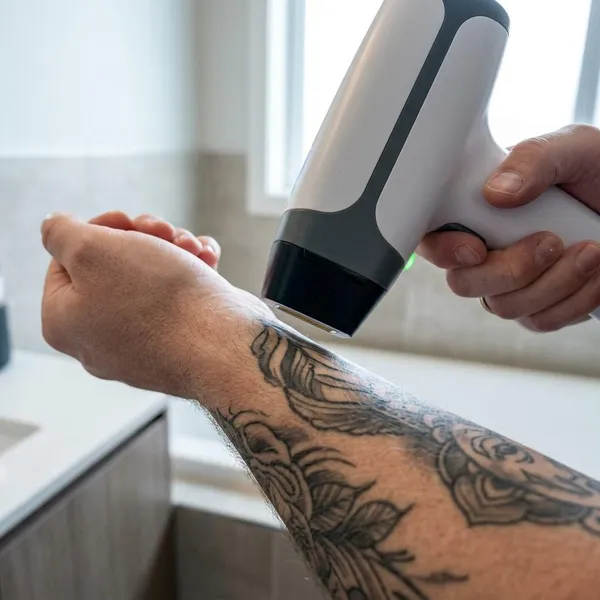
Can at-home laser hair removal damage a tattoo?
At-home laser and IPL devices can damage a tattoo because they are designed to send light into pigment. For hair removal, the intended target is the dark pigment in the hair shaft. A tattoo adds a second, much denser source of pigment in the skin, which makes the reaction less predictable.
Tattooed skin should not be treated
Tattooed skin should be treated as a no-go area for home laser or IPL, even if the tattoo is old, small, faded, or partly hidden by hair. A setting that feels normal on untattooed skin can become too aggressive when ink is present.
Dark ink can absorb light energy
Black, dark blue, deep green, and other darker tattoo colors are especially concerning because they may absorb more light energy. The device cannot tell the difference between pigment you want to target in a hair follicle and pigment you want to keep in a tattoo.
Color tattoos are not automatically safe either. Lighter ink may react differently, but the risk is still uneven heating, irritation, or a visible change in the design.
Excess heat can injure the skin
The main danger is heat building where it should not. That heat can cause sharp stinging, redness, swelling, blistering, or a burn-like reaction. Thin or high-friction areas, such as ankles, wrists, bikini line, underarms, or waistline tattoos, may be more easily irritated because the skin is already more sensitive or often rubbed by clothing.
Tattoo color or appearance may change
A home hair removal device is not a controlled tattoo-removal tool, but it can still disturb tattoo pigment. The result may be a lighter patch, a duller section, blurred-looking line work, or uneven color once the skin has healed.
This matters most with fine-line tattoos, shading, lettering, and color gradients. Even a small patch of fading can stand out because the rest of the tattoo remains unchanged.
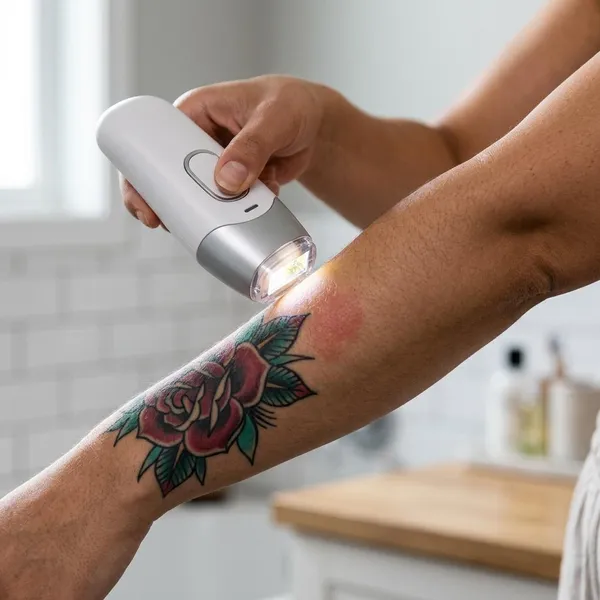
What can happen if you flash over a tattoo?
An accidental flash over a tattoo may cause an immediate hot snap, or the reaction may develop over the next several hours. One brief pulse might only leave temporary redness, but repeated passes, higher settings, darker ink, or sensitive skin can raise the chance of a stronger reaction.
Strong heat or stinging
A flash over tattoo ink often feels sharper than a normal pulse on bare skin. If the sensation is suddenly much hotter, deeper, or more painful than nearby untreated skin, stop immediately. Do not fire another pulse to compare the feeling.
Redness or blistering
Mild redness can settle, but blistering means the skin has had a more significant heat reaction. Do not pop blisters, scrub the area, or cover it with irritating products. Keep it clean, avoid friction, and watch whether the redness spreads or the pain increases.
Fading or color changes
Fading may show as one pale spot, a patchy border, or a duller section of the tattoo. It is often uneven because the flash may hit only part of the design, or because some ink colors absorb energy differently.
If you accidentally overlap the same tattoo edge twice, the risk increases. The second pulse adds heat to skin that is already stressed, which can make both irritation and cosmetic change more likely.
Longer-lasting skin damage
Most minor irritation improves, but stronger reactions can leave longer-lasting darkening, lightening, texture change, or scarring. People who already tend to develop marks after burns, bites, acne, or irritation should be more cautious and seek advice sooner if the area looks more than mildly red.
- Lower risk: one accidental flash, brief discomfort, no blistering, and redness that starts improving.
- Higher risk: repeated flashes, strong pain, swelling, blisters, broken skin, or visible tattoo change.
- Do not retry: if a tattoo reacted once, avoid that area completely in future sessions.
How should you remove hair over a tattoo?
For hair that grows directly over a tattoo, choose methods that do not use light or heat under the skin. The trade-off is that shaving, trimming, and tweezing do not give the same long-term hair reduction as laser or IPL, but they are much less likely to damage the tattoo.
Pick the method based on how much hair you are dealing with. A large forearm or thigh tattoo usually calls for shaving or trimming. A few stray hairs on a small design may be easier to handle with careful tweezing.
Shaving
Shaving is usually safe over a fully healed tattoo because it cuts hair at the surface. Use a clean razor, a gentle shaving product, and light pressure. The blade will not remove healed tattoo ink, but nicks and razor burn can still make the area irritated.
Do not shave a fresh tattoo. Wait until the skin has fully healed and any aftercare instructions from your tattoo artist are complete.
Trimming
Trimming is the easiest low-risk option when you do not need perfectly smooth skin. A body trimmer shortens hair above the surface, which makes it useful for chest, leg, arm, or larger tattooed areas where shaving often causes bumps.
Use a guard if your skin is sensitive or the tattoo sits over a bony area. Pressing hard for a closer trim is rarely worth the irritation.
Careful tweezing for isolated hairs
Tweezing makes sense for one or two noticeable hairs, not for clearing a whole tattoo. Use clean tweezers and pull in the direction of growth. If the hair is ingrown, the skin is inflamed, or you keep picking at the same spot, leave it alone and switch to trimming until the area calms down.
What if you accidentally flash a tattoo?
If you accidentally flash a tattoo, your priorities are to stop adding heat, calm the skin, and watch for delayed symptoms. Do not continue the session over or close to the tattoo just because the first reaction seems mild.
Stop treating the area
Stop using the device on that area right away. If the tattoo is close enough that you cannot confidently avoid it, end the session for that body part and use shaving or trimming instead. Curved areas and fine tattoo edges are especially easy to misjudge.
Cool the skin gently
Use a cool compress wrapped in a soft cloth for short intervals. Do not place ice directly on the skin, and avoid exfoliating acids, retinoids, fragranced lotions, scrubs, or hot showers on the irritated area.
If the skin is intact, a plain, gentle moisturizer may help with tightness. Loose clothing can also make a difference if the tattoo sits under a waistband, bra strap, sock line, or sleeve cuff.
Watch for blistering or worsening pain
Check the area over the next 24 to 48 hours. Look for increasing redness, swelling, shiny skin, fluid-filled bumps, stronger pain, broken skin, or a clear change in the tattoo's color.
- Take a photo: it helps you compare whether redness or swelling is spreading.
- Pause grooming: do not shave, scrub, tweeze, or re-treat the area while it is irritated.
- Protect from sun: irritated skin may discolor more easily after UV exposure.
Seek medical advice for a significant reaction
Get medical advice if you develop blisters, severe pain, open skin, spreading redness, signs of infection, or symptoms that keep getting worse instead of calming down. It is also sensible to ask sooner if the reaction is on the face, covers a larger tattooed area, or you have a history of scarring or pigment changes.
Conclusion
At-home laser or IPL is not worth using over tattooed skin: the safest decision is to keep light-based devices off the ink and manage those hairs with shaving, trimming, or occasional careful tweezing. Before each session, check the treatment window against nearby tattoo edges, because one misplaced flash can cause more trouble than the hair you were trying to remove.
FAQS
Can you use IPL over a tattoo?
No. IPL should not be used over tattoo ink because the pigment can absorb the light and overheat the skin.
Will IPL fade a tattoo?
It can. Any fading is likely to be uneven or patchy, not the controlled result you would expect from professional tattoo removal.
Is shaving safe over a tattoo?
Yes, shaving is generally safe once the tattoo is fully healed. Use a clean razor and avoid shaving if the skin is still peeling, tender, scabbed, or irritated.