How Does Sun Exposure Affect Home Laser Hair Removal?
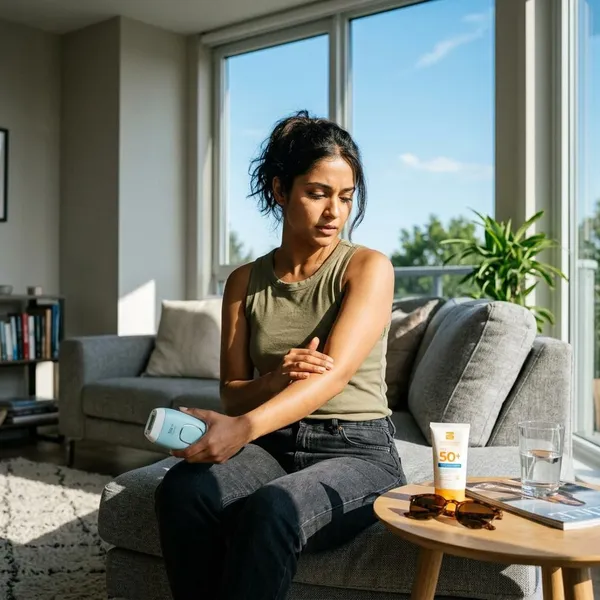
If you have tanned, burned, or spent strong time in the sun, at home laser hair removal sun exposure is a reason to pause, not push through. IPL and home laser devices work best when your skin is close to its usual tone and feels calm. If the treated area is darker, warm, peeling, or sensitive, wait before using the device again.
Why sun exposure affects treatment safety
Home IPL and laser hair removal depend on controlled light and heat. The device is meant to target pigment in the hair, but recent sun exposure can change how much pigment is present in the skin too. That is why a setting that felt fine before a sunny weekend may suddenly feel too hot or irritating afterward.
Tanning increases skin pigment
A tan is not just a surface color change. It usually means your skin has produced more melanin after UV exposure, and that can reduce the safe contrast between your hair and skin.
More pigment can absorb more light
When the skin contains more pigment than usual, it may absorb more of the device's light energy. That leaves less margin for error, especially on areas with uneven exposure such as shoulders, forearms, legs, the upper lip, or bikini line edges.
- Sharp heat: stop if a normal flash suddenly feels hot or biting.
- Uneven tone: tan lines can make one setting feel different across the same area.
- Sensor changes: some devices may block treatment, while others may still flash.
Extra heat can raise burn risk
Recently sun-exposed skin may already be dry, inflamed, or heat-stressed even if it does not look burned. Adding IPL or laser heat on top of that can increase the chance of redness, swelling, tenderness, blisters, or a superficial burn.
Pigment changes can become more likely
Irritated skin that gets more UV exposure during healing is more likely to develop uneven dark marks or, less commonly, lighter patches. This is especially frustrating on visible areas such as the upper lip, arms, chest, shoulders, and lower legs.
Lowering the device level is not always a safe shortcut. If your skin is newly tanned or reactive, waiting is usually the cleaner decision than guessing at a weaker setting.
What to do if you already have a tan
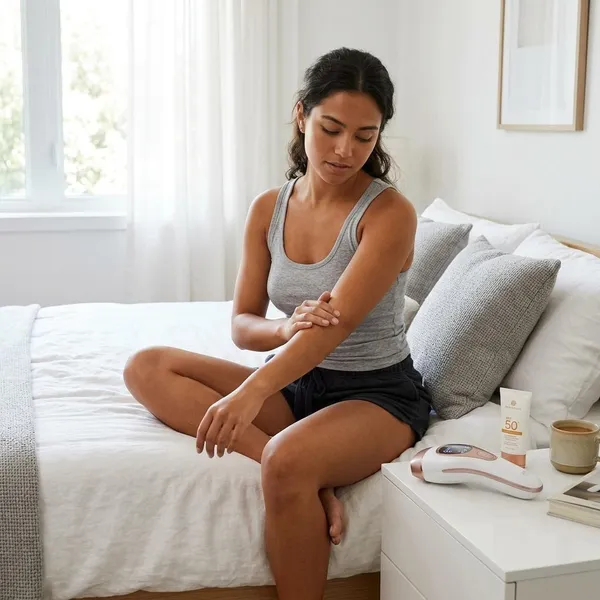
If you already have a tan, the safest move is to stop treatments temporarily. Missing one or two sessions is usually less of a problem than treating skin that is darker, irritated, or still recovering from sun exposure.
Pause your treatment schedule
Pause if the area is sunburned, newly tanned, peeling, tender, unusually dry, or darker than your normal baseline. This applies even if only part of the treatment area changed, such as shins after wearing shorts or forearms after driving in strong sun.
Wait for the tan to fade
There is no single waiting period that fits every skin tone, device, or level of sun exposure. Instead, use practical checks: the area should look close to its usual color in natural daylight, feel normal after showering, and not sting when you apply a plain moisturizer.
For a mild bit of color after casual outdoor time, that may be a short pause. After a vacation, sunburn, peeling, or a deep tan, expect to wait longer and be more cautious.
Check skin tone compatibility again
Before restarting, compare the treatment area with your device's skin tone chart or sensor guidance again. Your skin may have been compatible in spring but sit closer to the device's limit after summer sun.
- Check in daylight: bathroom lighting can hide subtle tanning.
- Compare nearby skin: use an area that was covered from the sun as a reference.
- Respect the manual: if it warns against tanned skin, do not override it.
Patch test if your device recommends it
A patch test is useful after a break, a vacation, a product change, or any time your skin seems different from your usual treatment days. Treat only a small spot at the recommended setting and wait for the reaction window given by your device brand.
Resume only when the skin is calm
Restart when the area looks like your usual skin tone, has no redness or peeling, and feels normal when washed, shaved, or moisturized. If you are unsure, wait a few more days rather than trying to "catch up" with missed sessions.
- Look at the area in natural light.
- Check for warmth, tenderness, peeling, or stinging.
- Confirm your device still allows that skin tone.
- Patch test if your manual recommends it.
- Restart gently only if the skin reacts normally.
Sun protection after treatment
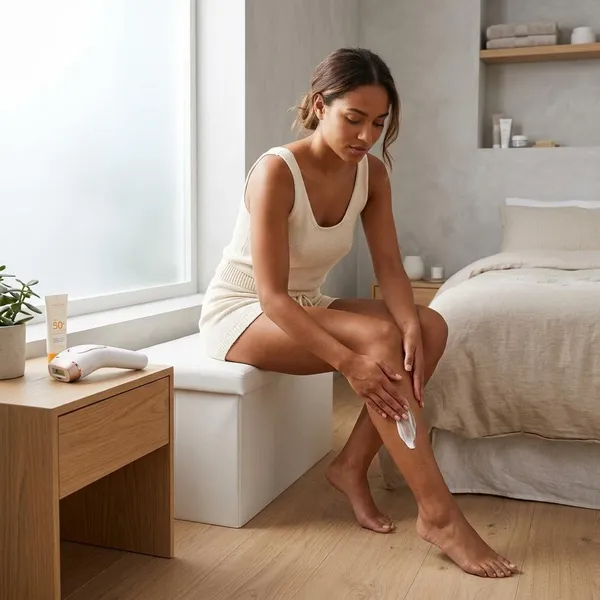
Sun protection matters after treatment because the skin can be temporarily more sensitive, even when it looks fine. Good aftercare also helps prevent a new tan from delaying your next session.
Limit direct sun exposure
Try to avoid strong direct sun on treated areas, especially right after a session. That includes obvious tanning, but also midday errands, outdoor workouts, gardening, or sitting near reflected light from water or pavement.
If you have a beach day, hike, sports event, or pool afternoon planned, it is often smarter to treat after the event rather than the night before. Timing the session around real life is safer than fighting your schedule all summer.
Use broad-spectrum sunscreen
Use broad-spectrum sunscreen on exposed treated areas once your skin can tolerate it and your device aftercare allows it. SPF 30 or higher is a sensible everyday minimum for most outdoor exposure.
Apply enough product to cover the area evenly and reapply according to the label, especially after sweating or swimming. One quick morning layer is rarely enough for a full outdoor day.
Cover treated areas when possible
Clothing gives treated skin a simple physical barrier. Loose pants, lightweight sleeves, a hat, or shade can be more reliable than sunscreen alone when you are outside for hours or may forget to reapply.
Avoid intentional tanning
Intentional tanning makes an IPL routine harder to manage because your skin tone keeps changing between sessions. Sunbathing and tanning beds are the obvious problems, but self-tanner can also interfere because it darkens the visible treatment area.
If you like self-tanner, keep it off areas you plan to treat or wait until the color has fully faded before your next session. This is especially important for larger areas such as legs, where patchy fading can make treatment less predictable.
Follow your device aftercare rules
Your device manual should be the tie-breaker whenever online advice sounds more relaxed. Home IPL and laser models vary in power, sensors, flash delivery, and recommended waiting times.
- Keep skin care gentle: avoid scrubs, strong acids, retinoids, or fragranced products if the area feels sensitive.
- Avoid extra heat: be cautious with hot baths, saunas, and heavy friction right after treatment.
- Plan sessions around sun: schedule treatments when you can realistically protect the area afterward.
Conclusion
The safest approach is simple: treat only when your skin is close to its normal tone, comfortable, and compatible with your device. A short pause after sun exposure is usually the smarter choice, especially in summer, because burns and pigment marks are much harder to manage than a delayed session. Protect the area well, avoid intentional tanning, and let your skin condition guide the schedule.
FAQS
Can I use IPL after a day at the beach?
Usually not the same day. Beach exposure can leave skin warmer, darker, drier, or more reactive even without visible sunburn, so wait until the area looks and feels normal again.
Do I need sunscreen after at-home IPL?
Yes, if the treated area will be exposed to daylight and your skin can tolerate sunscreen. Broad-spectrum SPF 30 or higher is a practical choice for everyday protection.
Can I use self-tanner during an IPL routine?
Avoid it on areas you plan to treat. Self-tanner can make the skin appear darker to sensors and may reduce the safe contrast your device relies on.
Can you use at-home IPL during summer?
Yes, but only with flexible timing. Summer use works best if you skip sessions after strong sun, protect treated areas outdoors, and avoid building a tan on the areas you treat.