Is At-Home Laser Hair Removal Safe for Bikini Area Use?
At-home laser or IPL can be safe for the outer bikini line, but it is not something to use freely anywhere in the pubic area. The first checks are simple: your device must approve that area, your skin and hair type must be supported, and the skin must be calm, untanned, and unbroken. If any of those points are uncertain, waiting or asking a dermatologist is safer than guessing.
Who should avoid or postpone treatment?
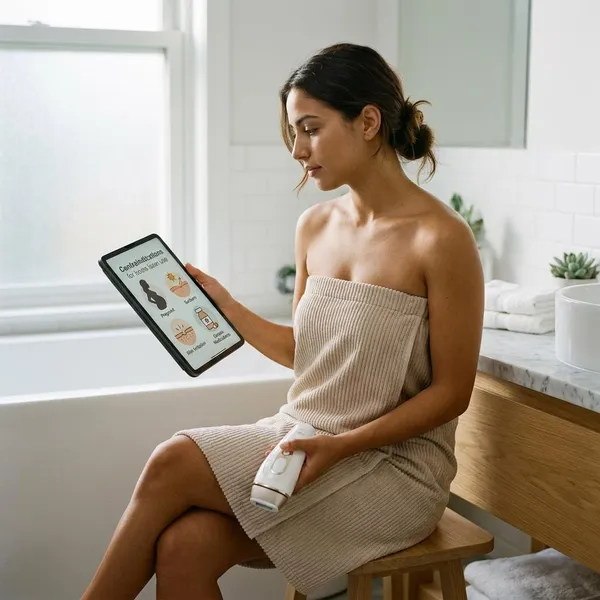
The bikini area is less forgiving than legs or arms because the skin can be darker, more sensitive, and more easily irritated by shaving, sweat, tight clothing, or friction. Before using a home device there, separate two questions: whether you are a suitable candidate at all, and whether today is a good day to treat.
Unsupported skin or hair types
Skip treatment if your device manual says your skin tone or hair color is not supported. Many home IPL and laser devices work best when there is clear contrast between darker hair and lighter skin; blonde, red, gray, or white hair may not respond well because there is less pigment for the light to target.
Darker skin tones need particular caution because the skin itself can absorb more light energy, which may increase the chance of burns or pigment changes. Also check the bikini area specifically, not just your arms or legs, because pubic skin may be naturally darker than other areas.
Sunburned or recently tanned skin
Do not treat skin that is sunburned, visibly tanned, warm, sore, or darker than usual from sun exposure, tanning beds, or self-tanner. Extra pigment can make the device less predictable and may raise the risk of irritation or discoloration.
This matters most in summer or after a beach holiday, when the bikini line may have uneven tan lines. Wait until the skin looks and feels normal again, remove any self-tanner fully, and follow the waiting period in your device manual before restarting.
Broken or irritated skin
Leave the area alone if you see cuts, razor burn, chafing, peeling, rashes, inflamed ingrown hairs, or sore bumps. A mirror check before treatment is worth doing because small shaving nicks are easy to miss in the bikini area.
- Treat another day if washing the area stings or the skin feels raw.
- Wait after shaving if you usually get redness or bumps.
- Avoid friction first if tight underwear, swimsuits, or workouts have left the skin tender.
Active skin infections
Do not use a home laser or IPL device over folliculitis, infected ingrown hairs, fungal irritation, herpes outbreaks, draining bumps, or unexplained painful sores. Heat and light are not treatments for infection and may make the area more uncomfortable.
Areas excluded by the device manual
The manual is the boundary. Many home devices allow the bikini line but exclude the genitals, anus, labia, mucosal tissue, or internal intimate areas. If the wording only says "bikini line," read that as the outer edge rather than the whole pubic region.
How to prepare the bikini area
Preparation is where many avoidable problems are prevented. The goal is not just to make the device flash properly; it is to make sure the skin is calm, the hair is the right length, and no product or irritation is sitting on the surface.
If you are doing this for occasional swimsuit-season upkeep, be extra careful around recent sun exposure and shaving irritation. If you plan to use the device long term, build a routine you can repeat safely instead of trying to rush results in the first few sessions.
Check the approved treatment area
Start with the instruction manual for your exact device model, not a product ad or another user's comment. Look for phrases such as "bikini line," "external bikini area," "not for genital use," or "not for mucosal areas." Those small wording differences matter.
If the approved zone is unclear, contact the manufacturer or stay on the outermost visible bikini line only. Do not use the fact that the device worked on your legs as permission to use it anywhere nearby.
Remove hair as directed
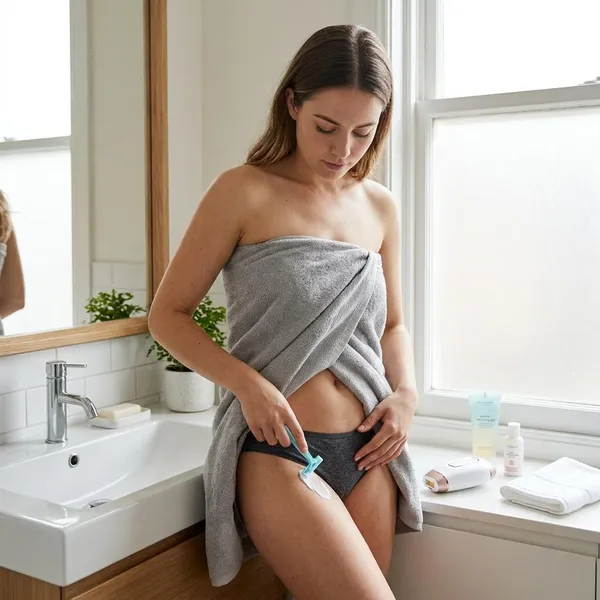
Most home devices require shaving before treatment because the hair root needs to remain under the skin for the light to target it. Waxing, threading, or plucking can make treatment less effective because they remove the root.
- Use a clean razor and shave gently to avoid nicks.
- Do not leave long hair on the surface, as it may singe and feel hotter.
- Delay the session if shaving leaves bumps, redness, or tenderness.
Clean and dry the skin
Wash away sweat, body lotion, sunscreen, oils, fragrance, deodorant, self-tanner residue, and active skincare products before treatment. The skin should be completely dry so the device sits evenly and you can judge the skin's reaction clearly.
Check for irritation or cuts
Inspect the area just before you start. Look for redness, cracked skin, chafing, inflamed follicles, fresh shave marks, or any spot that feels warmer or more sensitive than the surrounding skin.
This is especially useful after exercise or a day in tight clothing. The bikini line can be irritated by friction before it looks obviously damaged, and treating over that irritation is one of the easiest ways to turn a simple session into a painful one.
Patch test when recommended
Do a patch test if the manual recommends it, if this is your first bikini session, or if your skin tone has changed recently. Choose a small approved external spot, use the suggested starting intensity, and wait the recommended time before treating more skin.
Mild short-lived redness can happen, but blistering, strong pain, swelling that worsens, or new dark or light marks are warning signs. If the test area reacts badly, do not continue with a full session.
How to use a home device safely
Safe use is mostly about staying controlled and boring: correct placement, approved skin only, no repeated flashing, conservative intensity, and a realistic schedule. The bikini area is not the place to experiment with extra passes or maximum settings to speed things up.
Think of the session as a small, focused treatment rather than a full grooming shortcut. If you feel sharp pain, see unusual whitening, notice blistering, or the skin feels wrong rather than briefly warm, stop and reassess before continuing.
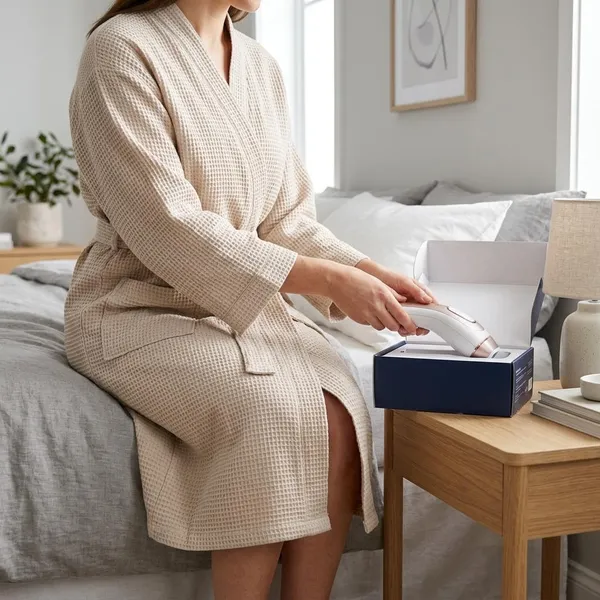
Keep the device flat against the skin
Hold the treatment window flat so the pulse is delivered evenly and the safety sensor can work as intended. On the curved bikini line, changing position may help more than pressing harder.
If the device refuses to flash, treat that as useful feedback. It may not have full contact, the angle may be wrong, or the area may not be suitable for that attachment or setting.
Treat only approved external areas
Stay within the external area your manual allows. For many devices, that means the hair that would sit along the edge of underwear or a swimsuit, not the labia, anus, or inner genital area.
If your goal is a small amount of tidying around the bikini line, a home device may be reasonable when all other checks are passed. If your goal is full intimate hair removal, the safer choice is usually to speak with a qualified professional instead of trying to extend a home device beyond its intended use.
Avoid repeatedly flashing one spot
More flashes on the same patch do not mean faster results. They mainly add heat, which can increase redness, swelling, burns, or dark marks.
- Work in one direction so you know where you have already treated.
- Allow only the overlap your manual permits.
- Do not treat while distracted or rushing before going out.
Use the recommended intensity
Use the setting recommended for your skin tone, hair color, body area, and experience level. The highest setting may be tolerable on the legs but too much for the bikini line.
A cautious first session is not a failure. Start lower if the manual allows, see how the skin responds, and increase only later if the device instructions support it and the skin has stayed calm.
Follow the treatment schedule
Follow your device's schedule rather than treating whenever you notice regrowth. Hair grows in cycles, so extra sessions usually do not force faster results and may only irritate the skin.
If the skin is still red, tender, itchy, or swollen when the next session is due, postpone it. Consistency matters over months, but recovery matters more than sticking to a date on the calendar.
Conclusion
Home laser or IPL is a reasonable option for some people on the outer bikini line, but only when the device, skin type, hair color, and exact treatment area all line up. The safest choice is to treat the bikini area as a sensitive zone rather than just another patch of body hair: stay external, start conservatively, and skip the session whenever the skin is irritated, recently tanned, infected, or outside the manual's limits.
FAQS
Can you use at-home IPL on pubic hair?
Sometimes, but only on external pubic or bikini-line hair if your device manual clearly allows it. If the manual only approves the "bikini line," do not treat farther inward.
Does bikini IPL hurt more than other areas?
It often feels sharper than treating legs or arms because the skin is more sensitive and the hair may be coarser. A quick warm snap can be normal; strong pain is a sign to stop or lower the setting if the manual allows.
How often should you treat the bikini area at home?
Use the schedule for your specific device, which often starts with regular sessions and later moves into maintenance. Do not add extra sessions on irritated skin, even if you are trying to get results faster.