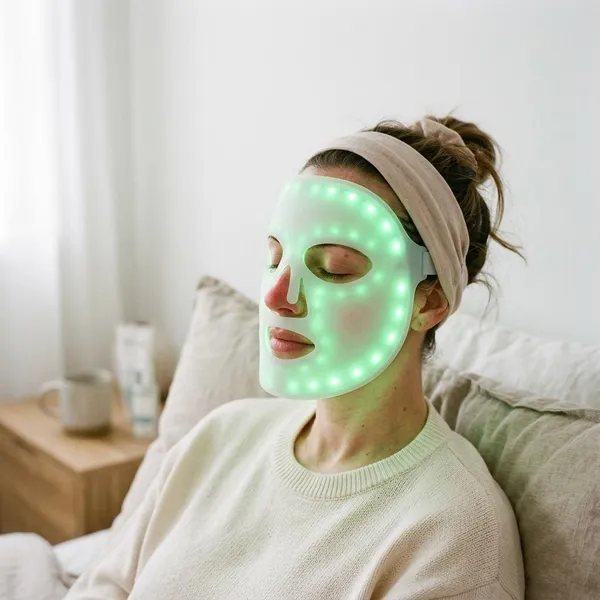
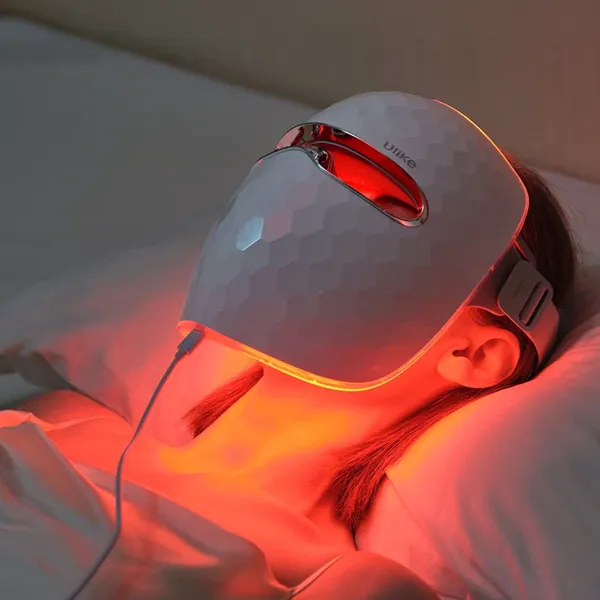
Which Red Light Therapy Mask Matches Your Skin Goals?
Red light therapy masks are not all the same. The biggest differences are the wavelengths used, how evenly the LEDs cover your face, how comfortable the mask is to wear, and whether the modes actually match your skin goals. If you are comparing masks, check those basics before you worry about price, color options, or social media hype.
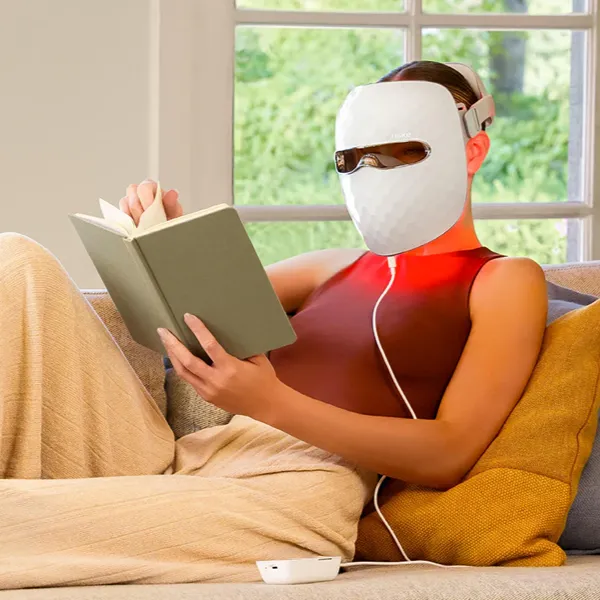
Are all red light therapy masks the same?
Two masks can both glow red and still work very differently. A useful mask should make its wavelength numbers clear, cover the face evenly, feel wearable enough for repeated sessions, and give you realistic instructions. A weak mask often hides behind vague phrases like "beauty light" without explaining what the light actually is.
Wavelengths vary by mask
Wavelength is one of the first specs to check because it tells you more than the visible color. Red light around 630–660nm is commonly used for visible skin concerns such as fine lines, texture, and dullness, while near-infrared light around 810–850nm is often included for deeper skin support.
A red-only mask may be enough if you mainly want a simple routine for surface-level glow. If you are buying one device for longer-term use and want broader support, a mask that combines red and near-infrared light may make more sense.
Coverage can differ widely
Coverage is not just about having a mask shape. The LEDs need to reach the forehead, cheeks, chin, and jawline in a fairly even way. If the lights are sparse or poorly placed, some areas may get much less exposure than others.
This matters most if your goal is full-face improvement, such as overall tone or firmness. For a small concern in one area, uneven coverage may bother you less. For a regular full-face routine, it becomes a bigger deal.
Light modes target different goals
More modes are useful only when they have a clear purpose. A mask with separate settings for firmness, blemishes, radiance, or calmer-looking skin is easier to use than a device with several colors and no practical explanation.
Fit and comfort affect consistency
A powerful-looking mask loses value if it feels heavy, slips around, presses awkwardly near the nose, or makes your eyes uncomfortable. Red light masks usually depend on repeated use, so comfort is not a luxury detail.
For occasional use before an event, you may tolerate a slightly clunky design. For a long-term routine, choose the mask you can realistically wear several times a week without feeling annoyed by the straps, weight, or session setup.
Safety features are not equal
Good safety design is usually quiet and practical: eye comfort features, auto shutoff, skin-safe materials, clear usage times, and warnings for people who should be more cautious. If you have a medical skin condition, use photosensitizing medication, or have concerns about light exposure, it is sensible to check with a professional before starting.
- Avoid vague claims: "healing light" is less useful than exact wavelength information.
- Check eye comfort: glare can make regular sessions unpleasant.
- Read the timing rules: more time is not automatically better.
- Look for support details: warranty, charging, and materials matter for a device worn on your face.
Why Ulike ReGlow stands out
Ulike ReGlow stands out because it gives you several concrete things to compare: 465nm blue light, 590nm yellow light, 630nm red light, 830nm infrared, 272 LEDs, 360-degree mirror-reflection technology, and four goal-based modes. Those details are more helpful than a generic promise that a mask "revitalizes" skin.
The value is in the combination. One feature alone does not make a mask right for everyone, but clear wavelengths, broad coverage, and easy mode choices make the product easier to judge before you buy.
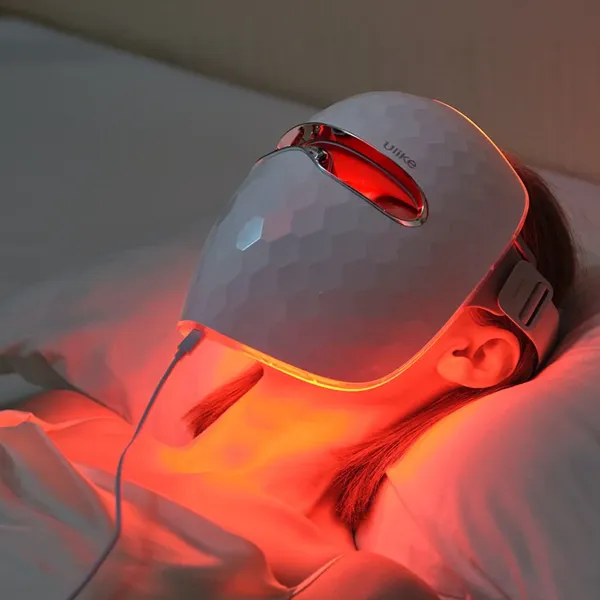
630nm red light and 830nm infrared support anti-aging goals
Ulike's Firm mode combines 630nm red light with 830nm infrared. According to Ulike, this combination is intended to support firmer-looking skin and reduce the appearance of wrinkles. That makes it a practical fit for someone who wants a straightforward anti-aging step without choosing a vague red-light device.
830nm infrared works with other wavelengths across the modes
The 830nm infrared light is included in all four Ulike ReGlow modes and is used together with other wavelengths rather than as a stand-alone treatment. It is not automatically "better," but it makes the device a broader multi-wavelength option than a simple red-light-only mask.
272 LEDs provide broad face coverage
With 272 LEDs, Ulike ReGlow is positioned for broad face coverage rather than small-area spot treatment. LED count is not the only thing that matters, but a higher count can help reduce weak zones when the lights are arranged well.
Mirror technology is designed to improve light distribution
Ulike says its mirror technology is designed to help light distribute more evenly across the face. That matters because facial curves around the nose, cheeks, and jaw can make light delivery less uniform in simpler mask designs.
Four modes target different skin goals
The four modes make ReGlow easier to match to real skin concerns: fine lines, breakouts, dullness, and calmer-looking skin. That flexibility is useful when your skin does not behave the same way every week.
Which Ulike ReGlow mode fits your goal
The simplest way to choose a Ulike ReGlow mode is to start with the concern you notice most right now. Do not rotate modes randomly just because they are available. Pick the setting that matches your main goal, then adjust when your skin changes.
Firm for fine lines
Choose Firm if fine lines, loss of bounce, or a less supported look is your main concern. It is the most direct choice for users who want the mask to fit into an anti-aging routine.
Clear for breakouts
Clear is the better match when recurring breakouts or mild-to-moderate inflammatory acne are the problem you notice first. It is a better fit when you are more focused on breakouts than fine lines.
Glow for dull-looking skin
Glow fits the days when your skin looks tired, flat, or uneven rather than actively irritated or breakout-prone. It is intended for an ongoing routine focused on dullness and radiance, including periods after travel or during seasons when your skin looks less fresh, rather than as a guaranteed same-day treatment before a social event.
Rejuvenate for calmer-looking skin
Ulike positions Rejuvenate as the mode to consider when your complexion looks stressed or uneven, with the goal of a calmer, more even-looking appearance. It gives the mask a role beyond classic anti-aging or blemish care.
If your skin is easily reactive, use any LED device carefully and follow the brand's timing instructions. A calmer-looking goal should not turn into overuse.
Is Ulike ReGlow worth considering
Ulike ReGlow is worth considering if you want one mask that covers several common skin goals instead of a very basic red-light-only option. Its strongest case is the mix of specific wavelengths, broad LED coverage, mirror-assisted distribution, and four easy-to-understand modes.
Good for multiple skin goals
ReGlow makes sense for users whose skin priorities shift over time. You might focus on fine lines most weeks, then switch attention to breakouts, dullness, or a tired-looking complexion when those issues show up.
Good for full-face LED coverage
The combination of 272 LEDs and mirror technology is most useful for people who want full-face treatment instead of spot-focused use. If you care about overall tone, firmness, or radiance, even coverage should sit high on your checklist.
Good for users wanting four treatment modes
Four modes are helpful when you want flexibility without buying separate devices. The key advantage is not having more buttons; it is being able to choose a mode that matches your skin goal quickly and consistently.
Conclusion
The smartest way to compare red light therapy masks is to check wavelengths, coverage, comfort, safety guidance, and mode clarity before being swayed by price or appearance. Ulike ReGlow is worth a closer look if you want a full-face mask with clear specs and several goal-based settings, but the right choice is still the one that matches your skin priorities and feels realistic enough to use regularly.
FAQS
How do you know if a red light mask is good?
A good red light mask gives exact wavelength numbers, clear usage instructions, comfortable eye-area design, and enough LED coverage for your goal. If the product page is vague about the light technology, be cautious.
Are expensive red light masks better?
Not automatically. A higher price is easier to justify when it comes with clearer specs, better fit, stronger coverage, and useful safety features, not just luxury packaging.
Does the number of LEDs matter?
Yes, but only with good placement. More LEDs can support broader coverage, while poor spacing can still leave weaker areas around facial curves.
Is near-infrared better than red light?
No, it has a different role. Red light is commonly used for visible surface concerns, while near-infrared is included for deeper support, so many users prefer a mask that combines both.