Is Laser Hair Removal Safe With Hidradenitis Suppurativa?
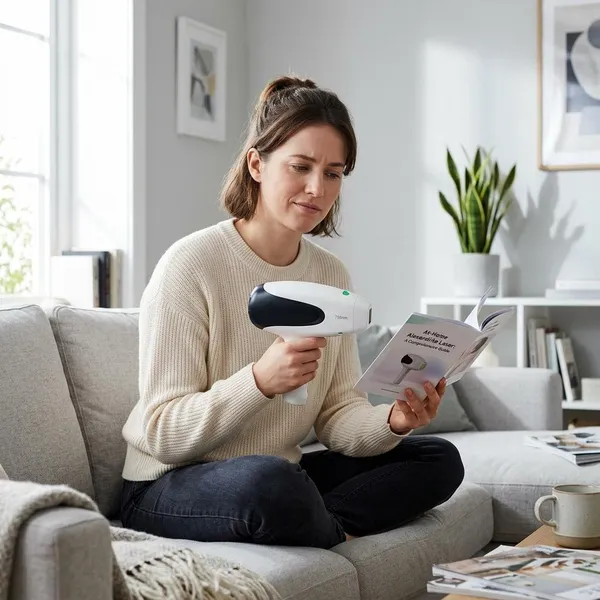
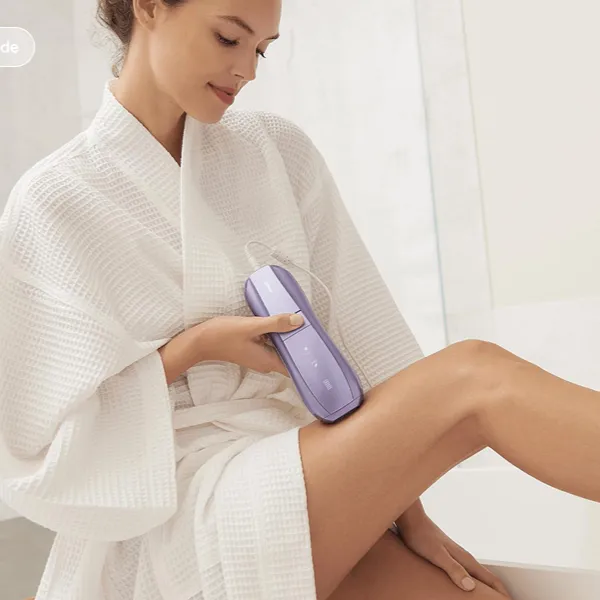
At-home laser hair removal for HS is something to approach carefully, not casually. If your skin is actively inflamed, draining, painful, recently opened, or still tender from a flare, do not use a home laser or IPL device on that area. The safer starting point is to separate cosmetic hair removal from HS treatment and ask whether the skin is calm enough to tolerate any grooming at all.
Is at-home laser hair removal safe with HS?
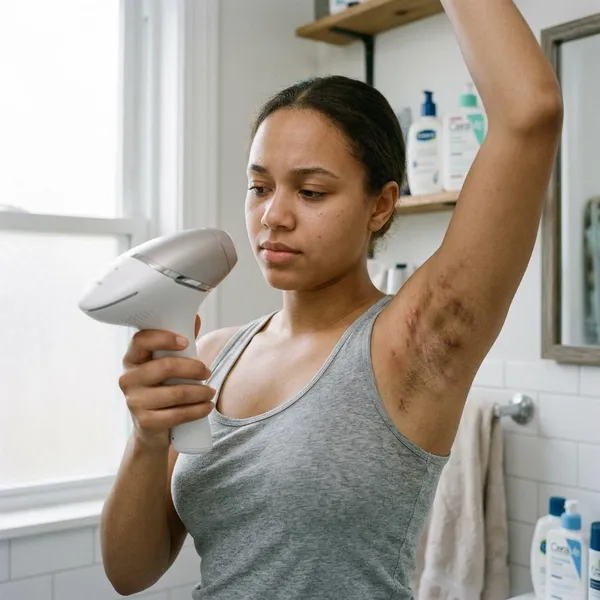
There is no reliable blanket "yes" for HS-prone skin. Home laser and IPL devices are made for cosmetic hair reduction on intact skin, while HS often involves inflammation below the surface, fragile healing areas, scarring, and lesions that can reopen or drain.
The first check is simple: is the area completely calm, unbroken, and not sore? If the answer is no, skip the device. If you are dealing with repeated flares in the same underarm, groin, inner thigh, or buttock area, it is worth asking a dermatologist before using light or heat there, even if the skin looks quiet that day.
Home devices are not established HS treatments
A home IPL or laser device should not be treated as HS care. It may reduce hair for some users, but HS is a chronic inflammatory skin condition, not just a hair-growth problem. Less hair might reduce one source of irritation, but it does not treat tunnels, recurring nodules, abscesses, scarring, or the inflammation driving the disease.
This distinction matters if you are buying a device because shaving keeps triggering bumps. For occasional grooming on calm skin, a home device is still a risk to discuss. For frequent painful flares, drainage, or scarring, using a cosmetic device instead of getting medical care can delay treatment that may matter much more.
Active HS lesions should not be treated
Do not use at-home laser or IPL over active HS lesions. Avoid any area that is painful, swollen, draining, open, crusted, recently burst, unusually warm, or still tender after a flare.
- Open or draining spot: leave it alone and focus on gentle wound care.
- Raised painful lump: skip heat, light, shaving, waxing, and friction.
- Recently healed area: wait until it feels normal, not just until it looks less red.
- Scarred or tunneled skin: ask a dermatologist before treating it at home.
Can laser hair removal actually help HS?
Professional laser hair removal may help some people with HS, but that evidence does not automatically apply to home devices. The useful question is not only whether laser reduces hair; it is whether the right laser, on the right skin, at the right disease stage, can reduce irritation without making inflammation worse.
For someone with mild, localized HS who mainly flares after shaving, hair reduction may be worth discussing with a dermatologist. For someone with frequent draining lesions, deep pain, or scarring, controlling HS inflammation usually comes first, and laser may only be considered later as an add-on.
Hair reduction may lower flare frequency
Hair reduction can lower flare frequency for some people because it may reduce repeated shaving irritation, ingrown hairs, rubbing, and follicle-related triggers. This is most relevant when a clear pattern exists: for example, your underarms stay calmer when you avoid shaving, but flare after close grooming.
It is less convincing when HS is active regardless of hair removal. If flares happen without shaving, appear in several areas, or leave scars and tunnels, hair reduction alone is unlikely to be enough.
Nd:YAG has the strongest supporting evidence
Long-pulsed Nd:YAG is the laser type most often discussed in HS research and has stronger support than home IPL for selected patients. It is used in professional settings where skin tone, hair type, disease activity, and treatment areas can be assessed before the session.
That medical supervision is not a small detail. Settings, spacing, operator skill, and avoiding active lesions all affect safety. If you want to explore laser for HS rather than just hair removal, ask specifically whether Nd:YAG is suitable for your skin and your HS stage.
IPL evidence is more limited
IPL is not the same as a medical laser, and the evidence for IPL in HS is more limited. Many home devices are IPL-based, so they should not be assumed to offer the same potential benefit seen in studies of professional laser treatment.
Skin tone is another practical issue. Some light-based devices carry a higher risk of burns or pigment changes when used on unsuitable skin tones or used incorrectly. With HS, that risk sits on top of an already sensitive skin condition.
Laser does not replace HS treatment
Laser can be a possible add-on, not a replacement for HS treatment. If your HS is painful, spreading, draining, or scarring, a dermatologist-guided plan matters more than trying to remove hair at home.
- Confirm the diagnosis. HS, folliculitis, razor bumps, and ingrown hairs can look similar but need different care.
- Check disease activity first. Active or recently flared skin should not be treated with light-based devices.
- Ask about device fit. Skin tone, hair color, lesion location, and scarring can change what is safe.
- Do not pause real HS care. Laser decisions should sit inside the treatment plan, not replace it.
What are safer hair removal options with HS?
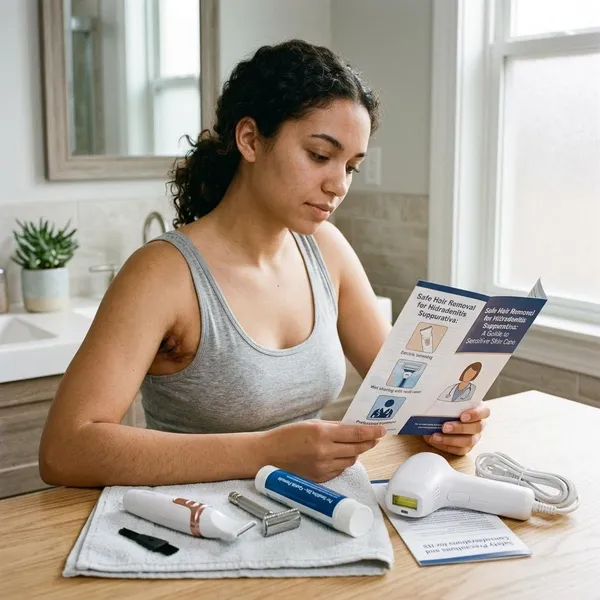
The gentlest option is usually the best one you can maintain without triggering soreness. For many people with HS, that means trimming rather than chasing perfectly smooth skin. Any method that pulls, scrapes, heats, or repeatedly rubs the area deserves extra caution.
Careful trimming
Careful trimming is often the lowest-risk choice because it shortens hair without pulling it from the root or dragging a blade directly over fragile skin. Use clean small scissors with rounded tips or an electric trimmer, keep the pressure light, and stop before the area feels irritated.
This is especially useful for changing HS patterns. If one side of the groin is calm but the other has a tender lump, you can trim around the problem area instead of forcing the same routine everywhere.
Gentle shaving
Gentle shaving may be reasonable only when the skin is calm and intact. Use a clean razor, a non-irritating shave gel or cream, minimal pressure, and shave with the direction of hair growth rather than against it.
- Shave less often if every session leaves burning or bumps.
- Use a fresh blade when tugging starts.
- Skip fragrance-heavy aftercare on HS-prone areas.
- Switch to trimming if shaving repeatedly triggers soreness.
Avoiding shaving over active lesions
Never shave over an active HS lesion. A razor can nick swollen skin, spread irritation, increase pain, and make a draining or healing area harder to manage.
If grooming feels necessary during a flare, trim nearby hair without touching the lesion and leave close removal for later. "Later" should mean the area is closed, no longer sore, and not reacting to normal movement or clothing.
Conclusion
For HS-prone skin, the safest decision is usually conservative: do not use home laser or IPL on active, recently flared, scarred, or uncertain areas, and do not treat a cosmetic device as HS therapy. If hair removal is mainly about comfort, careful trimming is often the better first move; if you are hoping laser might reduce flares, make that conversation medical and specific rather than experimenting at home.
FAQS
Can at-home IPL make HS worse?
Yes, it can, especially on tender, inflamed, broken, or recently healed skin. If the area does not feel completely normal, avoid IPL and wait for medical guidance.
Does laser hair removal help prevent HS flares?
It may reduce flares for some people when shaving irritation is a clear trigger. It is not reliable as a standalone prevention method for active, widespread, or scarring HS.
Which laser is most studied for HS?
Long-pulsed Nd:YAG is the most studied laser for HS. That evidence mainly comes from professional treatment settings, not consumer home devices.