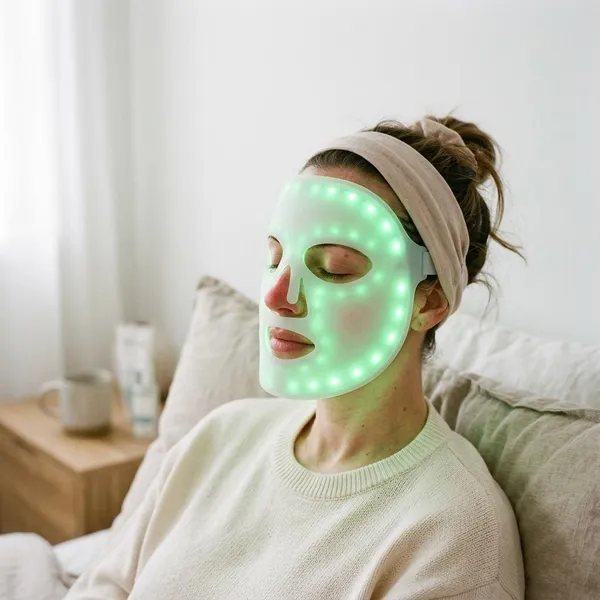
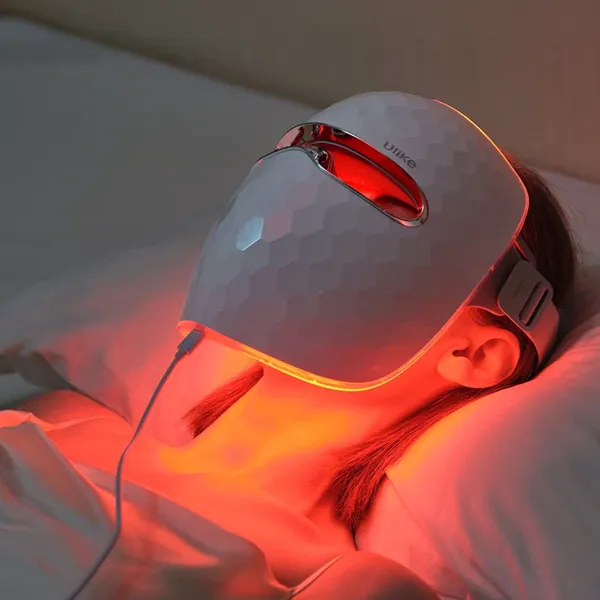
Which Red Light Therapy Mask Fits Your Skin Goals?
If you want the best red light therapy mask, start with your main skin goal rather than the longest feature list. Omnilux is the cleanest anti-aging pick, Dr. Dennis Gross is stronger for acne plus wrinkles, CurrentBody is best for flexible full-face coverage, Shark adds cooling for breakouts and puffiness, and TheraFace makes sense if you want a premium multi-mode device.
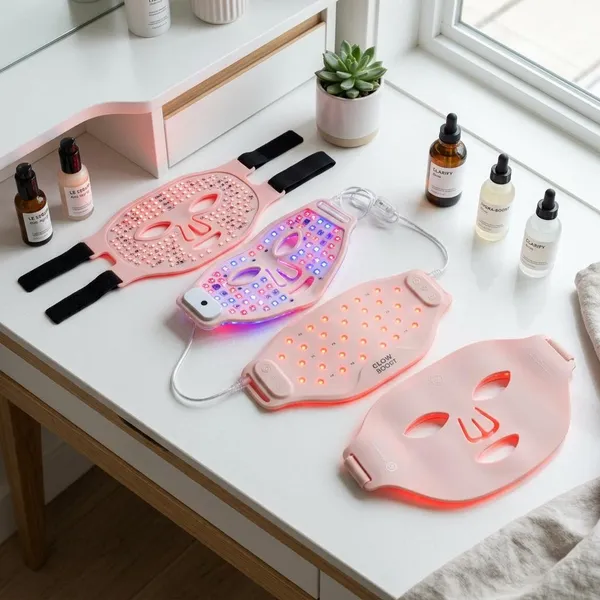
Best red light therapy masks
The easiest way to choose is to match the mask to the problem you actually care about most. Fine lines, acne, lower-face coverage, comfort, and treatment time do not all point to the same device.
| Mask | Best fit | What to check before buying |
|---|---|---|
| Omnilux Contour | Simple anti-aging routine | Whether the flexible strap fit works for your face shape |
| Dr. Dennis Gross FaceWare Pro | Acne and early wrinkles | Whether you prefer a rigid mask and very short sessions |
| CurrentBody Series 2 | Flexible full-face anti-aging coverage | Whether chin and lower-face coverage matter to you |
| Shark CryoGlow | Breakouts, cooling, and under-eye puffiness | Whether you are happy with a bulkier, guided device |
| TheraFace Mask | Premium treatment for mixed concerns | Whether the added comfort features justify the price |
Which mask is best for your skin goal
Your skin goal should decide the shortlist before price does. A $400 mask that matches your routine is usually a better buy than a more advanced device you avoid because it feels awkward, takes too long, or has modes you never use.
For a quick rule: choose red and near-infrared for aging support, add blue light if breakouts are a regular issue, and prioritize comfort if you know you will only stay consistent with something easy to wear.
Omnilux Contour for fine lines and firmness
For fine lines, mild laxity, and a low-maintenance routine, Omnilux Contour is the safest recommendation. It suits someone who wants to cleanse, wear the mask, moisturize, and move on without choosing between several settings.
A good example is the long-term skincare user who already has a stable routine and wants gradual support for firmness. If active acne is the bigger problem, Omnilux is probably not the most targeted choice.
Dr. Dennis Gross FaceWare Pro for breakouts
For recurring blemishes, especially when you also care about texture or early wrinkles, Dr. Dennis Gross is the strongest fit. Blue light gives it a more acne-relevant role than red-only masks, while the red mode keeps it useful when your skin is calmer.
CurrentBody Series 2 for advanced anti-aging
CurrentBody Series 2 is better for the person who wants more complete facial coverage and is willing to pay for a more advanced anti-aging setup. It is especially worth considering if older masks have left you wishing the chin or lower face were treated more evenly.
- Choose CurrentBody if coverage and flexible wear matter most.
- Choose Omnilux if you want the simpler, more focused routine.
- Skip both for acne-first needs if blue light is a must-have.
Shark CryoGlow for acne and cooling
Shark CryoGlow is best for someone who wants acne support plus a more soothing treatment experience. It is a sensible pick for morning puffiness, post-workout redness, or skin that feels easily irritated after a long day.
It is less ideal if you hate bulk or want to multitask around the house. This is more of a sit-down-and-use-it device than a barely-there silicone mask.
TheraFace Mask for multiple skin concerns
TheraFace Mask fits the buyer who wants one premium tool instead of separate devices for acne, texture, and relaxation. It is most convincing when the experience itself matters to you, because comfort can be the difference between using a mask for two weeks and using it for months.
If your budget is tight, do not stretch for it just because it has more features. The value comes from actually using those features, not owning them.
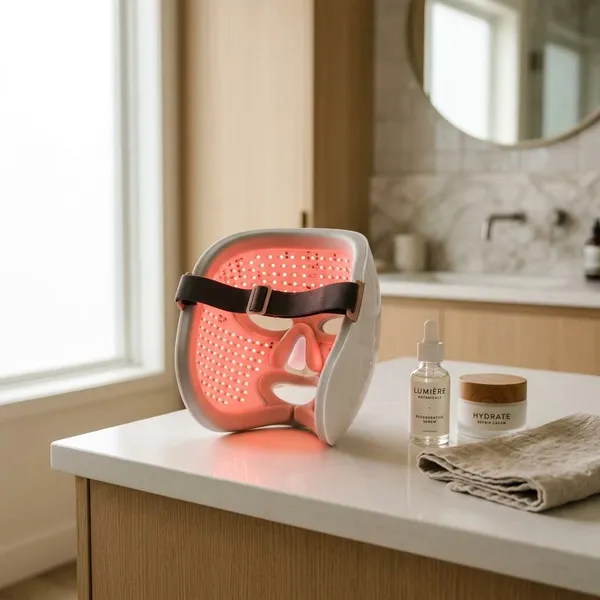
What to look for in an LED face mask
A mask that is comfortable, clear to use, and realistic for several sessions a week usually beats one with impressive claims but a routine you will not maintain.
Red and near-infrared wavelengths
For aging-related goals, red light and near-infrared are the main wavelengths to look for. Many consumer masks use red light around the mid-600 nm range and near-infrared around the low-to-mid 800 nm range, but do not judge by numbers alone.
The more useful check is whether the brand clearly explains the wavelengths, treatment time, intended use, and safety guidance. If a product only says "anti-aging light" without details, be cautious.
Blue light for acne concerns
Blue light is worth paying for if acne is a regular concern, not just an occasional pimple. It is commonly used for surface-level acne support, which makes it more relevant for oily, congested, or breakout-prone skin.
If your skin is usually clear and your priority is firmness, blue light is optional. If you get monthly flare-ups or jawline breakouts, a red-plus-blue device will likely feel more useful year-round.
Comfortable full-face fit
Fit is not a small detail. A mask that presses on the nose, leaks too much light around the eyes, or lifts away from the chin is harder to use and may leave you feeling like the treatment is uneven.
- Flexible silicone: better for storage, travel, and light movement.
- Rigid shell: often feels more structured but less forgiving.
- Better straps: helpful if you plan to sit upright instead of lying down.
Short treatment times
Be honest about your patience. A three-minute mask may be easier to use daily, while a 10-minute mask can still be realistic if you already have a calm evening routine.
Clinical testing and safety credentials
Look for clear safety instructions, usage limits, contraindications, and any credible testing or clearance information the brand provides. This matters more for people with eye sensitivity, photosensitive conditions, pregnancy concerns, prescription acne treatments, or a history of skin reactions.
If any of those apply, check the device manual before buying and ask a clinician when the instructions are not clear. Avoid brands that promise instant wrinkle removal or tell you to use the mask far more often than typical home LED guidance.
Red light vs near-infrared vs blue light
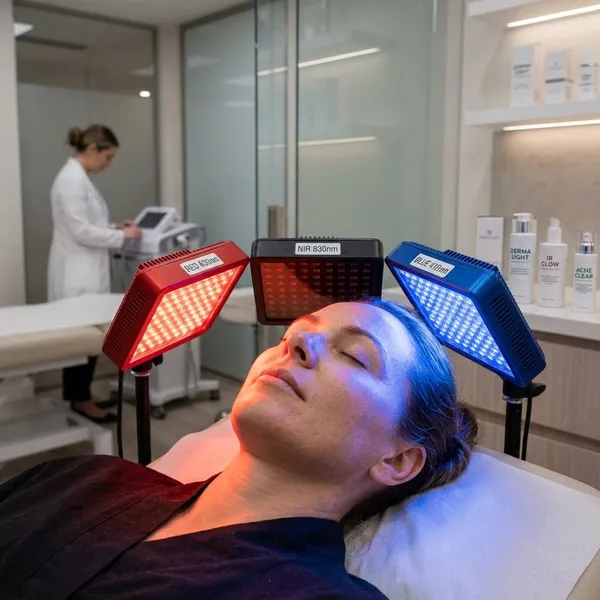
The light color matters because each type is used for a different purpose. Red light is usually chosen for visible aging and skin renewal, near-infrared is added for deeper support, and blue light is the acne-focused option.
Red light for fine lines and skin renewal
Red light is the core feature in most anti-aging LED masks. It is used for concerns such as fine lines, dullness, uneven texture, and visible redness, with results that tend to build slowly rather than appear after one session.
It is a good starting point for first-time LED users who want broad skin maintenance. Just keep expectations realistic: it may support smoother-looking skin, but it will not replace sunscreen, retinoids, injectables, or professional treatments if your goals are more dramatic.
Near-infrared for deeper skin support
Near-infrared is often paired with red light in premium masks because it is used for deeper skin support. You usually cannot see it as clearly as visible red light, so do not assume a dimmer-looking mask is weaker without checking the device information.
For long-term anti-aging routines, the red and near-infrared pairing is often more useful than a long list of decorative modes.
Blue light for acne-prone skin
Blue light belongs on your must-have list only if breakouts are a real pattern for you. It is the better match for acne-prone skin than a red-only mask, especially if you are trying to manage recurring congestion rather than occasional irritation.
For mixed skin concerns, a dual-mode mask can be more practical than choosing between acne care and anti-aging care. For clear but aging-focused skin, blue light may add cost without much everyday value.
How to use an LED mask effectively
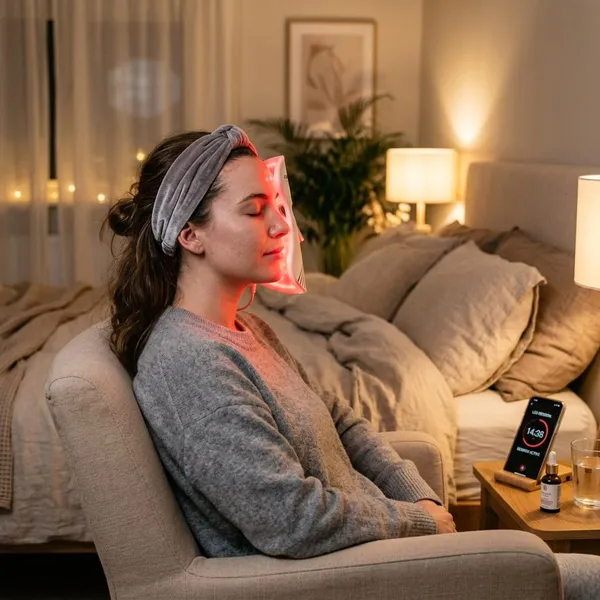
Good results depend less on doing something complicated and more on repeating the right basic routine. Use the mask on clean, dry skin, follow the brand schedule, finish the session, and give it several weeks before deciding whether it is helping.
Start with clean dry skin
Use your LED mask after cleansing and drying your face unless the device instructions say otherwise. Makeup, sunscreen, facial oil, and thick creams can make the session messier and may interfere with comfortable contact.
A simple order works best: cleanse, dry, use the mask, then apply serum or moisturizer. For acne-prone skin, this also helps avoid trapping sweat or residue under the device.
Follow the recommended schedule
Follow the schedule for your exact mask instead of guessing. Some devices are designed for frequent short sessions, while others recommend fewer sessions per week.
- Do not double sessions to chase faster results.
- Set fixed days if you forget beauty devices easily.
- Pause and reassess if your skin or eyes feel unusually irritated.
Use the full treatment time
Complete the full session when you can. Stopping halfway occasionally is not a disaster, but making a habit of partial treatments makes it harder to judge whether the mask is working.
This is where lifestyle matters. A busy parent, shift worker, or frequent traveler may get more value from a shorter device than from a technically impressive mask that never fits into the day.
Stay consistent for several weeks
Give the routine several weeks before making a judgment. Many people notice small changes first, such as calmer-looking skin or smoother texture, while firmness and fine lines usually take longer to assess.
- Pick your main goal: aging support, acne, cooling, or mixed concerns.
- Use the matching mode: do not switch settings without a reason.
- Track lightly: take a photo every few weeks in similar lighting.
- Judge the habit too: if you dislike wearing it, the device is not right for you.
Conclusion
The right LED mask is the one that matches both your skin concern and your tolerance for the routine. Omnilux is the straightforward anti-aging choice, Dr. Dennis Gross is the better acne-and-wrinkle option, CurrentBody is strongest for flexible coverage, Shark is useful when cooling and breakouts matter, and TheraFace is worth considering if you genuinely want a premium multi-mode experience.
FAQS
Do red light therapy masks really work?
Yes, they can help some users with smoother texture, softer-looking fine lines, and calmer-looking skin when used consistently. Expect gradual improvement, not an overnight change.
How often should you use an LED face mask?
Use it as often as your specific device recommends. Many home masks are used several times per week, but overusing one is not a smart shortcut.
Is Omnilux or CurrentBody better?
Omnilux is better if you want simplicity and a focused anti-aging routine. CurrentBody is better if flexible full-face coverage, especially around the lower face, is your priority.
Can red light therapy help acne?
Red light may help calm the look of inflammation, but blue light is usually the more acne-targeted feature. If breakouts are your main concern, choose a mask with blue light.
Are expensive LED masks worth it?
They can be worth it if the higher price buys better fit, clearer safety information, useful modes, or a routine you will actually follow. They are not worth it just because they have the most features.