Can At-Home Laser Hair Removal Cause Cancer?
At-home laser and IPL hair removal are not known to cause cancer, but that does not make every home session automatically safe. The light used for hair reduction is non-ionizing, so the bigger concern is usually burns, pigmentation changes, irritated skin, or eye exposure from using the wrong device or setting.
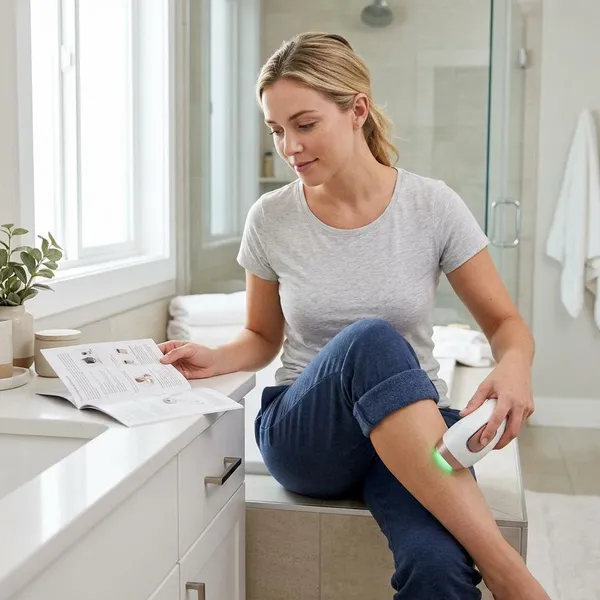
Can at-home laser hair removal cause cancer?
No clear cancer link has been established for at-home laser hair removal or home IPL devices. The word "radiation" can make the treatment sound more worrying than it is, but these devices use light energy, not the kind of ionizing radiation associated with DNA damage.
The more practical question is whether your device is suitable for your skin tone, hair color, and treatment area. Someone using a compatible device on light skin with dark hair has a very different risk profile from someone treating recently tanned skin, flashing over moles, or using a device near the eyes.
No cancer link has been established
Current evidence does not show that at-home laser or IPL hair removal causes cancer. Dermatology safety concerns usually focus on short-term skin and eye injuries rather than cancer formation.
One important exception in everyday use is moles or unusual pigmented spots. The concern is not that the device turns a mole cancerous, but that heat or irritation may change how the spot looks and make it harder to monitor. If a mole is new, changing, irregular, or already being watched by a dermatologist, skip that area.
Hair-removal lasers use non-ionizing light
Hair-removal lasers use non-ionizing light, which does not have enough energy to directly break DNA in the way ionizing radiation can. The light is meant to be absorbed by pigment in the hair, where it turns into heat and affects the follicle close to the skin surface.
That also explains why "stronger" is not always better at home. If too much energy is absorbed by the skin instead of the hair, the likely result is irritation, a burn, or a dark mark rather than faster hair reduction.
IPL also uses non-ionizing light
IPL stands for intense pulsed light. It is not a true laser because it uses a broader range of light wavelengths, but home IPL hair-removal devices still use non-ionizing light.
For cancer risk, the practical answer is the same: IPL is not known to act like X-rays or other ionizing radiation. For skin safety, though, IPL still needs the same careful checks, especially if your skin is tanned, easily irritated, or darker than the device's approved range.
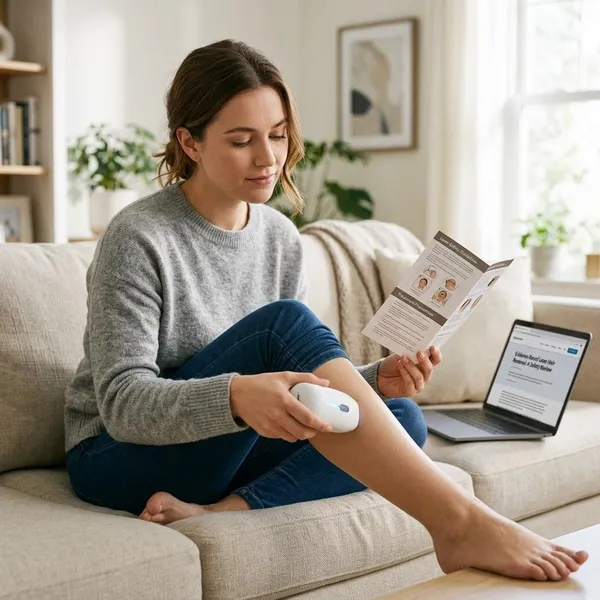
Why laser and IPL are different from cancer-causing radiation
The main difference is how the energy behaves in the body. Cancer-causing radiation is generally a concern when it can damage DNA directly or when it exposes skin to harmful ultraviolet wavelengths over time. Hair-removal laser and IPL devices are designed to heat pigment in hair, not to penetrate deeply or mutate cells.
X-rays use ionizing radiation
X-rays use ionizing radiation, which can affect atoms and DNA. That is why medical imaging is controlled and used only when there is a good reason for it.
At-home laser and IPL devices are not in that category. They may both be described broadly as forms of energy, but biologically they are not comparable. A better way to think about home hair-removal light is localized heat aimed at pigment, not whole-body radiation exposure.
UV damages skin through different wavelengths
Ultraviolet light from sunlight and tanning beds can damage skin and increase skin cancer risk. That risk is well established, especially with repeated sunburns or tanning-bed use.
Home hair-removal devices are not meant to work by tanning the skin or delivering cancer-associated UV exposure. Still, recently sun-exposed skin is more reactive, so summer use needs extra caution. If your legs are tanned from a beach week, waiting is usually smarter than treating immediately and hoping the normal setting still fits.
Hair-removal light targets pigment with heat
The target is melanin, the pigment found in hair. Dark hair absorbs the light more readily, which is why many devices work best when there is a clear contrast between darker hair and lighter skin.
- Best match: dark hair with a skin tone approved by the device chart.
- Poor response: white, gray, very blond, or red hair, because there may be too little pigment to target.
Higher burn risk: darker or recently tanned skin if the device is not designed for that tone.
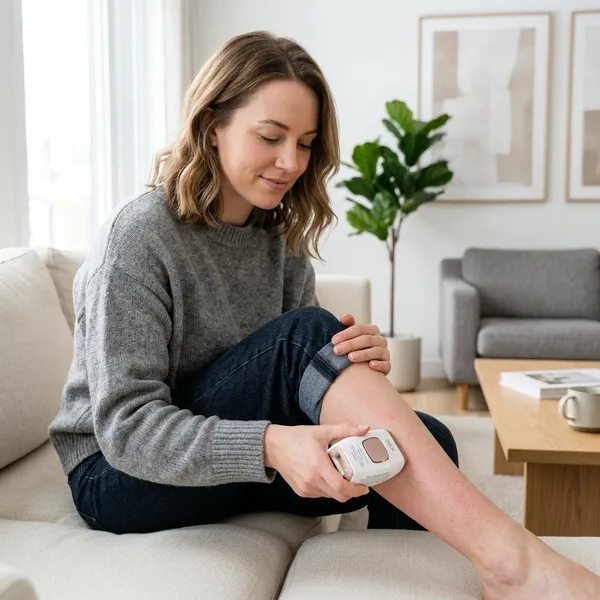
What are the real risks of at-home laser hair removal?
The real risks are skin and eye injuries. Most problems come from using a device on the wrong skin tone, choosing a setting that is too high, treating recently tanned skin, overlapping flashes, or ignoring no-treatment areas such as moles, tattoos, broken skin, and the eye area.
Burns and blisters
Burns and blisters usually mean too much heat reached the skin. This can happen when the setting is too strong, the same patch is flashed repeatedly, or the skin has been darkened by recent sun exposure.
A mild reaction may feel warm and look pink for a short time. A more concerning reaction is sharp pain, swelling, blistering, crusting, or redness that keeps getting worse. Do not "finish the area" if the skin is already reacting badly; stopping early is the safer choice.
Skin irritation
Some redness, warmth, or tenderness can happen after treatment, especially around hair follicles. It should feel manageable and gradually settle, not intensify.
Dark or light spots
Dark or light patches can appear when the skin reacts to heat or inflammation. This is more likely on medium to deep skin tones, recently tanned skin, or skin that tends to mark easily after irritation.
Dark marks often follow a burn or inflamed patch. Lighter areas may happen if pigment-producing cells are temporarily affected. These changes may fade, but they can last far longer than the treatment session, so conservative settings are worth it.
Eye injury
Eye injury is one of the risks worth taking seriously. Bright laser or IPL flashes should not be viewed directly, and many devices restrict use near the eyes for a reason.
Contact sensors and automatic locks can reduce accidental flashes, but they are not a reason to improvise around the upper face. If you notice eye pain, blurred vision, light sensitivity, flashes, or persistent discomfort after use, seek prompt medical care.

How to use at-home laser or IPL more safely
A safer routine starts with compatibility, not intensity. If the device does not suit your skin tone, hair color, or treatment area, using it more carefully will not fully fix the mismatch.
For most people, the safest order is simple: read the device rules, confirm your skin and hair match, test a small patch, avoid restricted areas, and stop at the first sign of a significant reaction.
Check the device instructions
Start with the manual for your exact model, even if you have used another home device before. Brands can differ in approved body areas, skin tone limits, timing between sessions, safety sensors, and whether eye protection is recommended.
- Check frequency: do not treat more often than the schedule allows.
- Check body areas: face, bikini line, and genital-area rules vary by device.
- Check warnings: photosensitivity, medications, skin conditions, and recent tanning may change your risk.
Confirm skin and hair compatibility
Use the device's skin tone and hair color chart before buying and again before a treatment cycle. Your "usual" match may not apply if you have recently been in the sun.
A low-risk scenario is someone with dark leg hair, untanned skin, and a device chart that clearly approves their tone. A more cautious scenario is someone with deeper skin, melasma-prone skin, or a fresh tan; in that case, the main decision may be to wait, choose a device designed for a wider skin-tone range, or ask a dermatologist before starting.
Complete the recommended skin test
A patch test is not a formality. Treat a small area at the recommended setting and wait the time listed by the manufacturer, often at least a day, before doing a larger area.
Do not continue if the test area develops blistering, strong pain, unusual swelling, lasting redness, or a pigment change. A small failed patch test is inconvenient; a full leg or face reaction is much harder to manage.
Avoid restricted skin areas
Skip areas the manufacturer tells you not to treat, especially near the eyes, over tattoos, on moles, on broken skin, or over active rashes and infections. Dark tattoos and pigmented spots can absorb extra heat, while irritated skin may react unpredictably.
If you are trying to tidy a small area around a mole, do not flash over the mole and assume it is close enough. Leave a margin, remove the remaining hairs another way, or ask a dermatologist if the spot is hard to avoid.
Stop if you develop a significant reaction
Stop treatment if you develop blistering, crusting, severe pain, spreading redness, marked swelling, or sudden pigment changes. Pushing through because you want to stay on schedule is one of the easiest ways to turn a small reaction into a longer-lasting skin problem.
For mild warmth or redness, switch to gentle care: cool the area, avoid heat and exfoliating products, and protect the skin from strong sun. If the reaction is severe, affects the eyes, involves a mole changing appearance, or does not improve as expected, get medical advice instead of continuing with the next session.
Conclusion
At-home laser and IPL hair removal are not known to cause cancer, but they do require sensible limits. The best decision is to treat cancer risk as low based on current evidence, while taking burns, pigmentation changes, moles, tanning, and eye safety seriously enough to check them before every session.
FAQS
Can IPL hair removal cause cancer?
No clear evidence shows that IPL hair removal causes cancer. IPL uses non-ionizing light, so the more realistic concern is whether your skin and hair are compatible with the device.
Can laser hair removal damage a mole?
Yes, it can irritate a mole or change its appearance, which is why you should not treat directly over moles. If a mole is changing, irregular, bleeding, or already being monitored, have it checked before doing cosmetic treatments nearby.
Can laser hair removal cause infertility?
No, laser hair removal is not known to cause infertility. The light acts near the skin and hair follicle rather than reaching reproductive organs, but elective treatment during pregnancy is often avoided because pregnancy-specific safety data is limited.
Does laser hair removal increase melanoma risk?
There is no good evidence that laser hair removal increases melanoma risk. The safer habit is to keep laser or IPL away from suspicious pigmented spots so changes in the skin are easier to notice.
When should you see a dermatologist after treatment?
See a dermatologist if you get blisters, crusting, severe pain, persistent pigment changes, or a mole that looks different after treatment. Eye pain, blurred vision, or light sensitivity after a laser or IPL flash needs prompt medical attention.