Is At-Home Laser Hair Removal Painful?
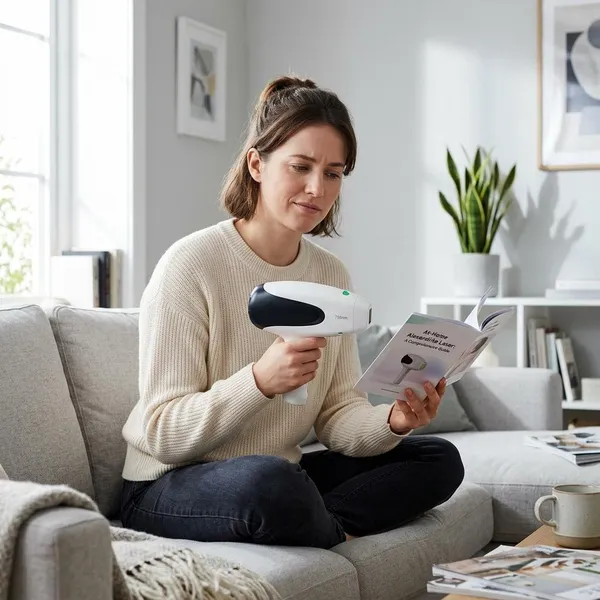
If you are wondering does at home laser hair removal hurt, the honest answer is: it can feel sharp for a second, but it should not feel like ongoing pain. Most at-home IPL or laser-style devices feel like warmth, a tiny snap, or a brief sting, especially on coarse hair or sensitive skin. If a flash feels burning, lingering, or too intense to repeat, lower the setting or stop rather than pushing through.
What does at-home laser hair removal feel like?
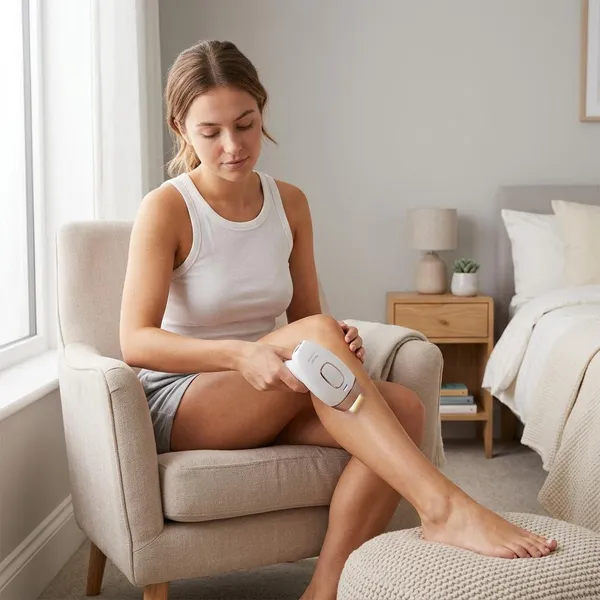
At-home laser hair removal and IPL usually feel more like a quick heat pulse than traditional hair removal pain. The sensation is short because the flash happens quickly, but the exact feeling changes with hair thickness, skin sensitivity, body area, and energy level.
Warmth during each flash
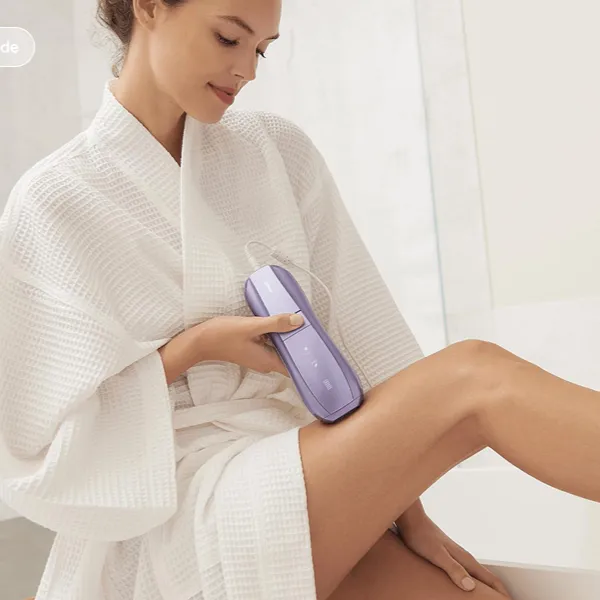
Warmth is usually the first thing people notice. On lower legs or arms, it may feel like a small burst of heat that disappears almost as soon as the device moves to the next spot.
If the skin feels hotter with each pass, pause instead of rushing through the area. This can happen during longer sessions, especially when treating both legs in one sitting.
A quick snapping sensation
The "rubber band snap" comparison is common because the flash can feel sharp but very brief. It is usually more noticeable where the hair is dark and coarse, since the light has more pigment to target.
- Normal: a quick snap that fades immediately.
- Too much: a flash that feels burning or makes you tense before every pulse.
- Best response: reduce the level, test a smaller patch, or take a break.
Brief stinging on sensitive areas
Stinging is more likely on underarms, the bikini line, and approved facial areas. The skin there can be thinner or more reactive, and the hair is often denser than on the arms.
Little or no sensation for some users
Some people barely feel anything, especially on low settings, sparse hair, or after several sessions when regrowth is finer. That does not automatically mean the device is doing nothing.
What matters more is correct use: freshly shaved skin, full contact with the treatment window, a compatible skin and hair type for the device, and a schedule you can actually keep.
Which areas tend to hurt more?
The easiest way to predict discomfort is to look at two things: how sensitive the skin is and how coarse the hair is. Broad, flatter areas usually feel easier. Small areas with thick hair usually feel sharper.
If you are new to IPL, do not start with the most sensitive zone just to "get it over with." Try an easier area first so you know what a normal flash feels like before moving to underarms, bikini line, or the face.
Legs and arms
Legs and arms are often the most beginner-friendly areas. The skin is easier to stretch flat, the device is easier to place evenly, and the sensation is usually mild warmth or a light snap.
Lower legs can still feel stronger than upper arms if the hair is darker or denser. For a first session, a small patch on the lower leg or forearm is a practical low-pressure test area.
Underarms
Underarms often feel sharper because the area is small, curved, and usually has coarse hair. The upside is that treatment is quick, so even if the sensation is stronger, it is over faster than a full-leg session.
- Keep the skin dry: skip deodorant, lotion, or residue before treating.
- Hold the skin steady: better contact can make flashes feel more predictable.
- Start lower: comfort matters more than using the highest level early.
Bikini line
The bikini line is one of the areas most likely to hurt more. Thick hair and sensitive skin make the flash feel hotter or stingier than it does on the legs.
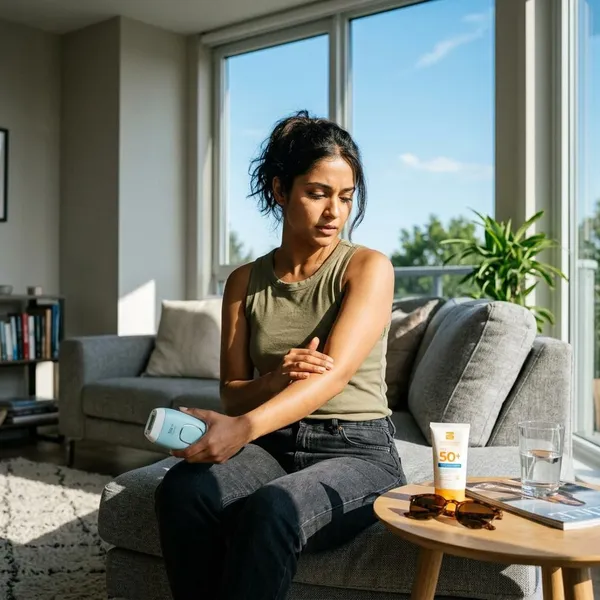
This is where gradual use matters. Treat only the areas your device allows, avoid irritated or recently sun-exposed skin, and do not keep flashing the same spot because you are worried you "missed" it. For long-term use, a tolerable setting you repeat consistently is better than an aggressive session that makes you avoid the device next time.
Approved facial areas
Approved facial areas can vary a lot. The upper lip often feels sharper because the skin is delicate and close to the bone, while areas such as the jawline may feel milder for some users.
Only use the device where the manufacturer says it is safe, and be especially careful around the eyes. Facial skin can show irritation quickly, so stop if redness, heat, or tenderness feels stronger than your usual post-treatment reaction.
Does cooling make IPL more comfortable?
Cooling can make IPL feel more comfortable, mainly by reducing the hot feeling on the skin surface. It is helpful, but it is not a guarantee that every flash will feel painless.
Think of cooling as a comfort support, not a reason to ignore intensity. If the setting is too high for your skin, a cool contact plate may soften the sensation, but it will not make a bad setting safe or pleasant.
Cooling helps reduce surface heat
Cooling is most useful when the skin starts to feel warm from repeated flashes. On a larger area like the legs, that can make the difference between a session that feels steady and one that becomes increasingly uncomfortable.
Contact cooling can soften the hot sensation
Contact cooling means the treatment window or plate feels cool against the skin while the flash is delivered. You may still feel the pulse, but the hot edge can feel less abrupt.
This can be especially reassuring if you are nervous before the first few flashes. Less tension often makes the session feel easier, even when the actual pulse has not changed much.
Sensitive areas may benefit most
Cooling tends to matter most on underarms, bikini line, and approved facial areas because those zones often react faster. If you only use IPL occasionally before summer, cooling may make it easier to restart after a break. If you use it regularly as part of a longer routine, it can help you stay consistent without dreading the sensitive-area sessions.
Cooling does not guarantee painless treatment
Cooling will not remove every snap or sting. Coarse hair, high settings, sensitive skin, poor shaving, or treating too soon after irritation can still make IPL uncomfortable.
- Check first: skin is clean, dry, shaved, and not irritated.
- Adjust next: lower the setting if the flash feels too sharp.
- Stop when needed: burning, swelling, or lingering pain is a warning sign.
Conclusion
At-home laser or IPL should feel brief and manageable, not like something you have to endure. Start with a low setting, learn the sensation on an easier area, and treat sensitive zones more cautiously. If the discomfort fades quickly, you are probably within the normal range; if it burns, lingers, or makes your skin react strongly, step back before the next flash.
FAQS
Does at-home laser hurt more on the bikini line?
Yes, it often does. The bikini line combines sensitive skin with coarse hair, so use a lower setting first and treat only the area your device approves.
Does IPL become less uncomfortable over time?
For many users, yes. As regrowth becomes finer, the flashes may feel milder, although sensitive areas can still sting.
Can you lower the IPL setting if it hurts?
Yes. Lowering the setting is the right move if the flash feels too intense, because consistency matters more than forcing a level you cannot tolerate.