Why Is My Face Red After Using an LED Mask?
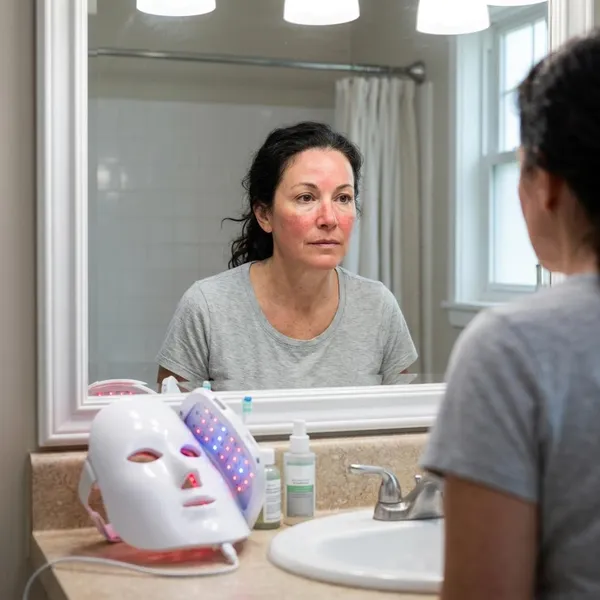
If your face is red after an LED mask, stop the session and treat the reaction as irritation until it proves otherwise. A light pink flush that fades quickly can be temporary, but redness that feels hot, painful, swollen, patchy, or lasts into the next day is a reason to pause the device and be more cautious before using it again.
What to do if your face is red after an LED mask
The first priority is not to "push through" the reaction. Calm the skin, remove obvious triggers, and watch the timeline. The most useful check is simple: is the redness fading within a short time, or is it becoming hotter, more painful, or more visible?
Stop using the mask
End the session as soon as the redness feels stronger than a mild flush. Do not restart later the same day to "finish" the treatment, and do not increase the time because you think more light will work better.
Before using the mask again, check three things: whether you went beyond the device instructions, whether your skin was already irritated, and whether you used strong skincare around the session. If the redness was painful, sharply outlined, or lasted overnight, wait until your skin is fully normal and consider asking a dermatologist before trying again.
Apply a cool compress
Use a soft, clean cloth dampened with cool water and rest it on the red areas for several minutes. Keep it cool, not icy, and avoid rubbing. Ice directly on the face can make sensitive skin feel worse.
This is most helpful when the skin feels warm but not severely painful. If the compress makes the area sting more, or if swelling and tenderness increase, stop home treatment and seek medical advice.
Use a plain moisturizer
After the skin feels cooler, apply a simple fragrance-free moisturizer. A bland barrier-supporting formula is a better choice than a treatment serum right now. Look for gentle ingredients such as glycerin, ceramides, squalane, hyaluronic acid, or petrolatum if your skin usually tolerates them.
Pause irritating skincare products
Give your skin a quiet routine for the next 24 to 72 hours, depending on how reactive it feels. Skip retinoids, exfoliating acids, scrubs, benzoyl peroxide, strong vitamin C, alcohol-heavy toners, essential oils, and fragranced products.
- If the redness is mild: use a gentle cleanser, plain moisturizer, and sunscreen during the day.
- If your skin stings with water or moisturizer: keep the routine even simpler and avoid heat, workouts, steam, and hot showers.
- If the redness lasts into the next day: treat it as more than a normal flush and do not use the mask again until you know what triggered it.
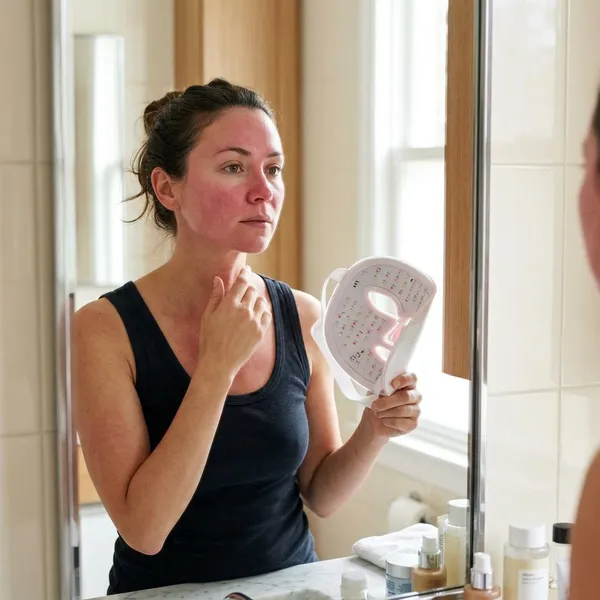
What can cause redness after an LED mask?
Redness can come from the device session itself, but it is often the whole situation around the mask that matters: timing, skincare, skin condition, medication, and how closely the device instructions were followed. A mild temporary flush is one thing; redness that feels like irritation usually means something needs to change before the next session.
Sessions beyond the device instructions
Using the mask for longer than directed or using it too often is one of the easiest ways to make your skin reactive. At-home LED devices are designed around a specific session length and frequency, and doubling the time does not automatically improve results.
This matters most for beginners and for people who use the mask daily because they want faster results. If your device says to use it for a set number of minutes, treat that as the upper limit, not a starting point. If your skin is sensitive, it may be smarter to begin with the most conservative schedule allowed by the brand rather than the most frequent one.
Already irritated skin
Skin that is already stressed is more likely to turn red after LED use. Skip the mask if your face is sunburned, windburned, peeling, freshly waxed, recently exfoliated, or irritated from retinoids or a cosmetic procedure.
A reaction to skincare products
The mask may not be the only cause. Retinoids, exfoliating acids, benzoyl peroxide, strong vitamin C, harsh cleansers, fragrance, and essential oils can all make skin more reactive around an LED session.
- Before LED: avoid applying strong actives unless your device instructions specifically allow it.
- Right after LED: choose moisturizer over treatment products.
- When testing a reaction: separate LED sessions from active skincare for a few days and see whether the redness improves.
If your face only turns red when you combine the mask with a certain serum, the serum or the timing may be the real problem.
Light sensitivity from medicines or conditions
Some medicines and medical conditions can make skin more sensitive to light. Certain antibiotics, acne medicines, diuretics, antifungals, and other prescriptions may increase photosensitivity, and conditions such as lupus or pigment disorders can also affect how skin responds.
If you take medication with a photosensitivity warning, have a diagnosed skin condition, or react strongly every time you use the mask, ask a dermatologist or prescribing clinician before continuing. Do not guess based only on the fact that LED masks are often marketed as gentle.
When does post-mask redness need medical care?
The clearest warning signs are duration, pain, swelling, blistering, and symptoms beyond the skin. A short-lived pink flush may settle with basic care, but a reaction that worsens or comes with significant discomfort should not be treated as normal.
Photos can help if you are unsure. Take one in the same lighting every few hours so you can see whether the redness is fading or spreading. That gives you better information if you need to contact a clinician.
Redness that persists or worsens
If the redness is still obvious the next day, becomes deeper over several hours, or returns strongly after every session, stop using the mask and get advice before continuing. Mild redness often fades within minutes to a couple of hours; redness that hangs around is more consistent with irritation than a normal temporary response.
Also pay attention to texture and sensation. Itching, tenderness, unusual dryness, burning with water, or patchy inflamed areas are signs your skin barrier may be irritated.
Significant pain, swelling, or blisters
Pain, obvious swelling, blistering, or sharply marked red areas are not expected after normal LED mask use. Stop using the device, avoid active skincare, and contact a doctor or dermatologist.
If the mask felt unusually hot, left a repeated pattern on your face, or caused the same painful reaction more than once, do not keep testing it on your skin. Check the device fit and instructions, and consider contacting the manufacturer because a heat issue, poor fit, or malfunction may need to be ruled out.
Emergency signs such as trouble breathing
Get urgent medical help if facial redness comes with trouble breathing, swelling of the lips or tongue, dizziness, faintness, or widespread hives. Those symptoms can point to a serious allergic reaction rather than simple irritation.
Use extra caution if you have severe allergies, autoimmune disease, known photosensitivity, or a recent facial procedure. In a higher-risk situation, it is better to ask early than to keep experimenting with the device at home.
Conclusion
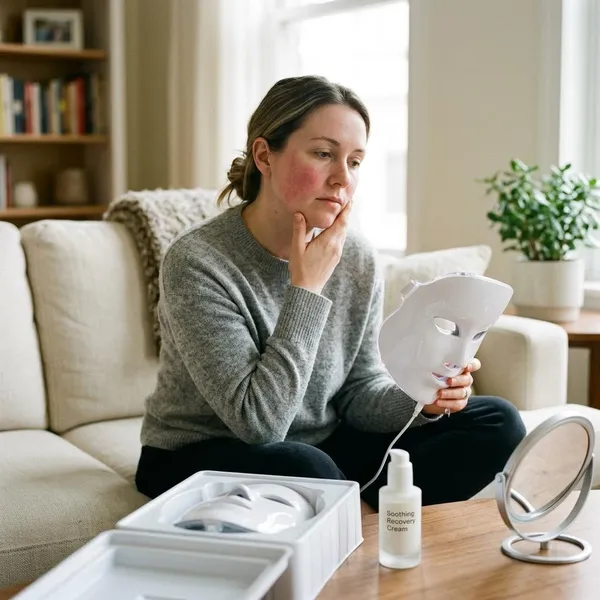
A little temporary pinkness after an LED mask is not always alarming, but your next step should depend on how the skin feels and how long the redness lasts. If it fades quickly, keep future sessions conservative; if it hurts, swells, blisters, lasts overnight, or keeps happening, stop the mask and get professional advice before using it again.
FAQS
Can mild redness after an LED mask be temporary?
Yes. A mild pink flush can be temporary, especially if it fades within a short time and does not sting, swell, or worsen.
Does redness mean the LED mask is working?
No. Redness is not proof that the treatment is working. Good tolerance and correct use matter more than seeing your skin turn red.
Can an LED mask burn your skin?
It is uncommon, but irritation or burns are possible if the device is misused, overheats, is used on compromised skin, or malfunctions. Pain, blisters, swelling, or sharply outlined marks need medical review.
Can I use an LED mask if I have rosacea?
Possibly, but be cautious. Rosacea-prone skin can flush easily, so ask a dermatologist if your flares are frequent, severe, or triggered by heat and light-based treatments.