Can At-Home Laser Hair Removal Cause Eye Pain?
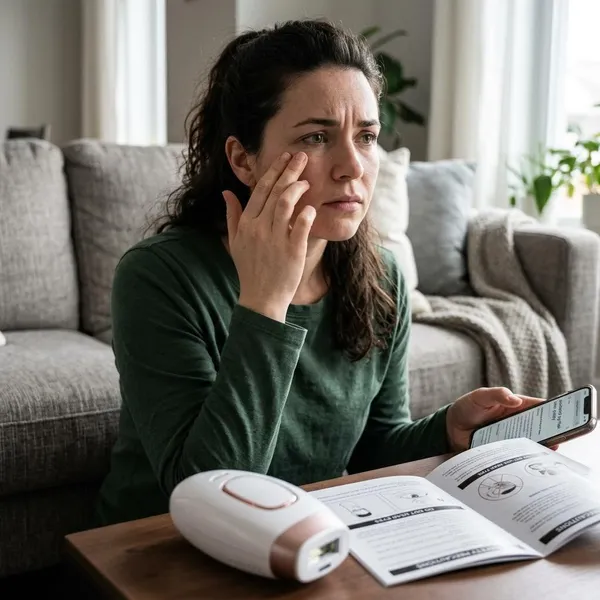
If you have eye pain after an at-home laser or IPL flash near your eye, stop using the device first and treat any lasting vision change as a same-day eye-care issue. Reddit can be useful for feeling less alone, but it cannot tell whether your cornea, retina, or another eye structure was affected.
What to do after a flash near your eye
The first few minutes matter because people often keep testing the device or checking the eye under harsh bathroom lights. Your priorities are simple: prevent another flash, compare your vision eye by eye, and decide whether the symptoms are settling or getting more concerning.
Stop using the device
Turn the device off and end the session, even if you are not sure the flash reached your eye. Do not "try one more pulse" to see whether the same pain happens again; that only adds another possible exposure.
A common low-risk-looking scenario is a quick upper-lip or sideburn touch-up in a mirror. It feels routine, but the hand angle can change quickly on the face. Once pain or a flash near the eye happens, the session is over.
Avoid another light exposure
Move away from the device and use comfortable indoor lighting. You do not need to sit in darkness, but avoid bright vanity lights, direct sun, repeated mirror checks, or screen use if they clearly make the eye hurt more.
Check for vision changes
Check one eye at a time in normal room light. Cover the unaffected eye, read a few lines of text, look at a straight edge, then switch sides. You are looking for blur, a dark or gray spot, waviness, a persistent afterimage, missing areas, new floaters, or colors that look different between eyes.
This check matters because pain is not the only warning sign. If one eye seems different after the flash, especially for more than a few minutes, do not rely on forum replies saying someone else was fine.
Monitor pain and light sensitivity
Mild watering or glare that quickly fades is different from pain that stays, increases, or makes ordinary light hard to tolerate. Note when the flash happened and whether symptoms are improving, unchanged, or worsening over the next several hours.
- Less concerning: brief glare, watering, or an afterimage that clearly fades.
- More concerning: ongoing eye pain, strong light sensitivity, redness, blur, distortion, or a new spot in vision.
- Do not wait casually: sudden vision loss, severe pain, or an eye you cannot comfortably open in normal light.
Seek prompt care if symptoms persist or worsen
Contact an optometrist, ophthalmologist, urgent care clinic, or emergency service promptly if pain, blur, light sensitivity, or a visual spot persists or worsens. If symptoms are severe or vision changes suddenly, seek urgent in-person care rather than waiting for online answers.
When you call, mention the device type if you know it, the treatment area, whether the flash was direct or reflected, and what changed in each eye. That information is more useful than comparing your situation with a Reddit post that may involve a different model, angle, or exposure.
How laser and IPL can affect the eyes
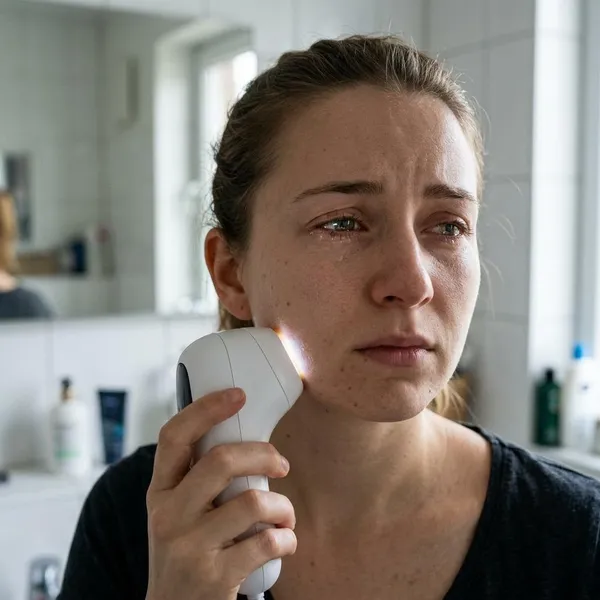
At-home hair removal devices use light energy to target pigment in hair. The concern near the eye is that eye tissues can also absorb light, and the eye is designed to gather and focus incoming light rather than block it like ordinary skin.
Direct exposure carries the greatest concern
Direct exposure is the situation to take most seriously. A flash aimed toward the eye, fired too close to the orbital area, or delivered from an unsafe facial angle may allow more light to enter sensitive structures.
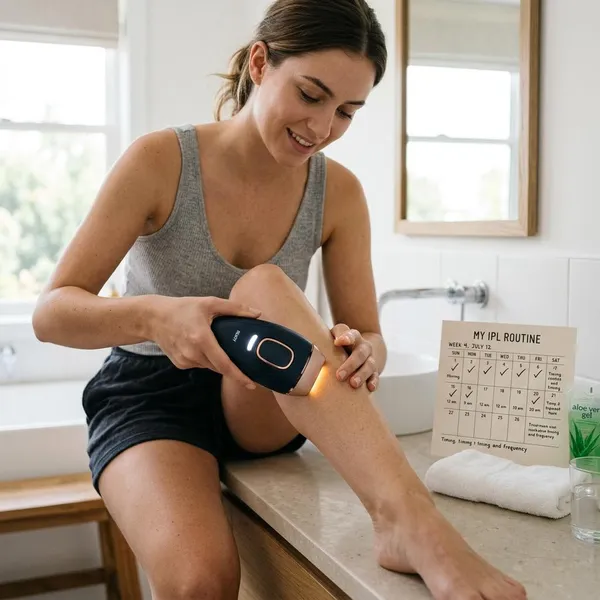
A flash on the lower leg with the device flat against the skin is not the same risk picture as a flash near the upper cheek or temple. Distance, angle, and whether the eye was in the path of the light are the details that matter.
Laser and IPL produce different light profiles
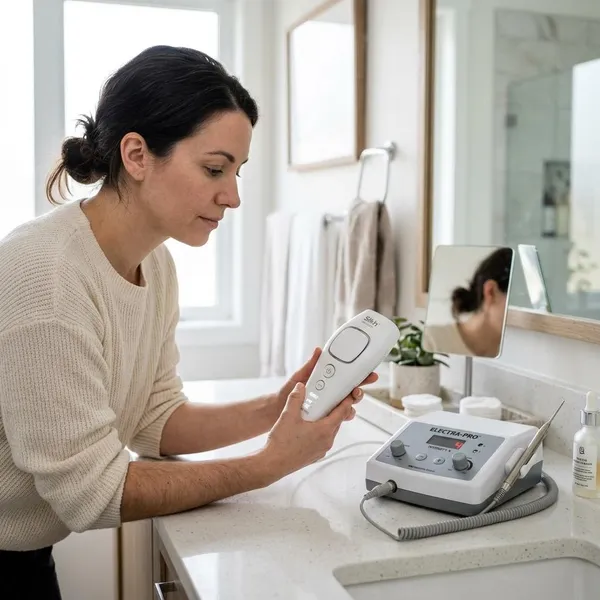
Laser and IPL are often lumped together in casual searches, but they are not identical. Laser devices usually use a narrower wavelength range, while IPL uses filtered broad-spectrum pulses.
Eye tissues can absorb light energy
Different parts of the eye may respond differently depending on the wavelength, intensity, distance, and path of exposure. Surface irritation may feel scratchy, watery, red, or light-sensitive; deeper involvement may show up more as blur, distortion, or a persistent spot.
Symptoms do not always identify the affected tissue neatly. That is why a home check can help you decide whether to seek care, but it cannot confirm that the eye is unharmed.
Risk depends on the device and exposure
The same Reddit thread can contain experiences that are not comparable. One person may have used a low setting on the jawline with no direct flash toward the eye; another may have fired close to the upper cheek or brow area with pain afterward.
- Device details: model, energy setting, flash window, and safety features can vary.
- Exposure details: distance, angle, reflection, and whether the eye was open matter.
- Symptom details: lasting blur or a visual spot carries more weight than someone else's reassurance.
Why facial treatment needs extra care
Facial use is where many accidents become more believable. The treatment area is close to the eye, the surface is curved, and people often work in a mirror where the device angle is easy to misjudge.
The eyes are close to the treatment area
Upper lip, cheek, sideburn, and jawline work leaves less room for sloppy placement than body areas. A small upward tilt can point the flash window closer to the eye than intended, especially when you are watching your reflection instead of the device angle.
Curved areas make placement harder
Curves around the cheekbone, temple, and side of the face can stop the device from sitting flat. If you find yourself twisting your wrist, pressing unevenly, or chasing a tiny missed patch, that is a sign to stop rather than force the flash.
Devices may restrict use above the cheekbones
Many manuals restrict use around the eyes or above the cheekbones. Follow that boundary even if online comments make the area sound harmless. A manufacturer's approved treatment map is more relevant to your device than someone else's brow or upper-cheek routine.
If you have to debate whether a spot is too close to the eye, it is usually not a good home-treatment spot. Choose a safer hair-removal method for that area instead of trying to make the device fit.
Safety sensors do not replace correct placement
Contact sensors and skin sensors can reduce some kinds of misuse, but they do not understand anatomy. A device may be able to fire while still being too close to the eye or outside the intended facial zone.
- Before facial use: reread the facial section of the manual, not just the general instructions.
- During use: keep the device flat, move slowly, and avoid awkward mirror angles.
- After any near-eye flash: stop for the day and reassess symptoms before considering future use.
Conclusion
Reddit can tell you that other people have had scary flashes, mild symptoms, or normal exams, but it cannot examine your eye. If discomfort fades quickly and vision stays normal in both eyes, the situation may be less alarming; if pain, light sensitivity, blur, distortion, or a new visual spot persists, getting prompt eye care is the safer judgment than waiting for reassurance online.
FAQS
Can one IPL flash damage your eye?
Yes, it can, especially if the flash was direct, close, or aimed toward the eye. A single brief flash does not always cause injury, but lasting pain, light sensitivity, blur, or a new spot in vision should be checked promptly.
How can you tell if a laser injured your eye?
You cannot confirm it reliably at home. The useful at-home step is to compare each eye separately for blur, distortion, missing spots, or unusual light sensitivity, then seek care if anything persists or feels significant.
Do you need goggles for at-home IPL?
Use the eye protection instructions for your exact device. Some home IPL devices are designed for approved areas without separate goggles, but that does not make use near the eyes or outside the manual's facial limits safe.
How long can eye symptoms last after a bright flash?
Brief glare or watering may settle quickly. Symptoms that continue for hours, worsen, or involve vision changes deserve professional advice rather than being watched for days.