How Often Should You Use At-Home Laser Hair Removal?
A realistic laser hair removal schedule at home usually starts with weekly or every-other-week sessions, then moves to occasional touch-ups once regrowth slows. The safest first step is not copying someone else's routine, but checking your device manual and matching the schedule to your skin, hair, and treatment area.
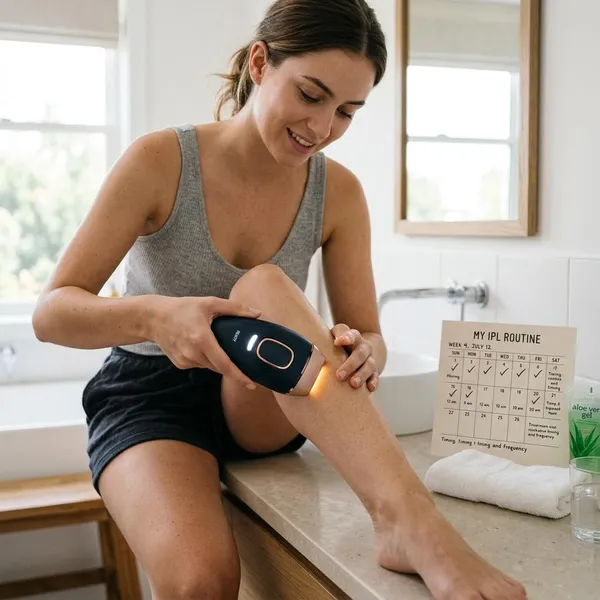
How often should you use at-home laser or IPL?
Most at-home laser and IPL devices are used once a week or once every two weeks during the first treatment phase. After the initial course, you usually reduce the frequency and treat only when visible regrowth returns.
Follow your device schedule first
Your device manual should override general advice online. Some IPL devices are designed for weekly use at the start, while some home laser devices may need longer gaps between sessions.
Check three things before planning your calendar: the recommended treatment interval, the allowed body areas, and any skin-tone or intensity warnings. This matters especially if you want to treat the face, bikini line, or recently sun-exposed skin, where the margin for irritation can be smaller.
Treat more often during the initial phase
The initial phase is the most structured part of the schedule because you are trying to catch hairs as they move through active growth. For many people, this means weekly or biweekly sessions for several weeks, depending on the device.
- Mark the full starter window: do not judge results after one or two sessions.
- Shave before treatment: unless your manual says otherwise, visible hair above the skin can absorb energy before it reaches the follicle.
- Keep the spacing steady: skipped sessions often lead to patchy progress.
- Do not "make up" missed sessions: doubling up may irritate the skin without improving results.
Reduce frequency as regrowth slows
Once hair comes back more slowly, looks finer, or appears only in small patches, frequent full-area sessions become less useful. At that point, spacing treatments farther apart is usually more sensible than continuing the starter routine forever.
Use touch-ups during maintenance
Maintenance is not a failure of the treatment; it is the normal long-term stage. Many people use touch-ups every 4 to 8 weeks, but some need them sooner and others can wait longer.
Treat the areas that actually show regrowth instead of repeating a full session out of habit. For example, legs may stay smooth for longer while underarms or the bikini line need closer attention because the hair is often coarser and more hormone-responsive.

Why treatment schedules vary
Treatment schedules vary because the device, body area, hair growth pattern, and skin response all change how much spacing makes sense. A schedule that works well on lower legs may be too aggressive for the face or too slow for dense underarm hair.
The best schedule balances two things: enough regular sessions to target active follicles, and enough recovery time so your skin stays calm. If either side is ignored, results tend to become slower, patchier, or uncomfortable.
Device technology
Home laser and IPL devices do not all deliver energy in the same way. IPL uses broad-spectrum light, while laser devices use a more targeted wavelength, so the recommended spacing can differ by model.
This is why one device may suggest weekly sessions and another may recommend every two weeks. It is not just branding; the treatment window is meant to match the device's energy output and safety design.
Manufacturer instructions
The manufacturer's schedule is based on that specific device, not on a universal hair-removal rule. It may include different guidance for intensity levels, attachments, body areas, or skin tones.
Do not rely only on a quick-start card if your skin is reactive, your hair is very coarse, or you plan to treat a sensitive area. The detailed manual often contains the warnings that decide whether you should lower the setting, extend the gap, or avoid a specific area altogether.
Hair growth rate
Hair growth rate affects how fast you notice progress. Coarse, fast-growing areas may need the full initial course before results look obvious, while finer areas can appear improved earlier.
Hormones can also change the pattern. Someone treating occasional leg regrowth may move into maintenance quickly, while someone dealing with chin hair or bikini-line regrowth may need a more cautious, longer-term plan.
Treatment area
Different body areas should not always be judged by the same standard. Legs often show progress in a way that feels obvious because shaving becomes less frequent across a large area. On the face, even a few returning hairs may feel noticeable, so progress can seem slower even when density is improving.
Use the area as a guide for expectations: large, lower-risk body areas are usually easier to schedule, while facial and intimate areas deserve stricter attention to device approval, intensity settings, and skin reaction.
Skin response
Your skin gets a vote in the schedule. Mild temporary warmth can be normal with many devices, but lingering redness, stinging, dryness, or tenderness is a sign to pause, lower the setting, or extend the time before the next session.
- If skin calms quickly: stay with the recommended schedule.
- If irritation lasts into the next day: add more spacing before treating again.
- If discomfort repeats: reduce intensity or stop and check the manual's safety guidance.
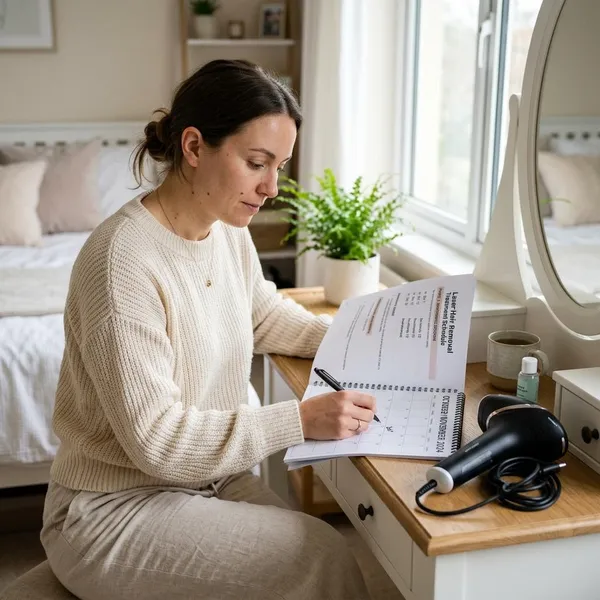
When to switch to maintenance
Switch to maintenance when you have completed the initial schedule and the treated area is clearly growing back more slowly, more sparsely, or in smaller patches. Do not switch just because you are bored with weekly treatments, and do not keep treating weekly forever if the area is already staying smooth.
Regrowth becomes slower
Slower regrowth is usually the first sign that the schedule is working. If stubble used to appear quickly but now takes noticeably longer, you may be ready to widen the gap between sessions after finishing the starter phase.
Hair becomes less dense
Reduced density means fewer hairs are returning, even if some are still visible. Patchy regrowth is common at this stage and can be a good sign because not all follicles respond at the same pace.
This is where spot treatment becomes more practical than repeating a full routine. If only a few sections return, focus maintenance there rather than treating smooth skin out of habit.
Smooth periods last longer
Longer smooth periods are a strong reason to cut back. If the area still looks and feels smooth when your next planned session arrives, your old schedule may now be more than you need.
For year-round use, this might mean setting a loose monthly reminder and treating only if regrowth is visible. For a temporary goal, such as staying smooth during a holiday, a planned touch-up before travel may be enough once the initial course is complete.
The initial schedule is complete
Finish the opening course recommended by your device before switching, even if you see early progress. Stopping too soon can leave follicles that were not active during the first few sessions, which may make regrowth seem sudden later.
- Complete the starter plan: use the manual's timing as the baseline.
- Compare progress honestly: look at speed, density, and smoothness.
- Use photos if needed: the same lighting every few weeks makes changes easier to see.

Conclusion
The right schedule is the one that follows your device instructions, respects your skin, and changes when your regrowth changes. Start with the recommended initial routine, avoid the temptation to over-treat, and move to targeted touch-ups once hair is slower, lighter, or patchier.
FAQS
How many times a week should I use at-home IPL?
Most at-home IPL devices are used once a week during the starting phase. Use it more often only if your specific manual allows it, because extra sessions can irritate skin without speeding up results.
How long should I wait between home treatments?
Many devices call for one to two weeks between sessions at the beginning. If your skin is still red, sore, or unusually sensitive when the next session is due, wait longer and use a lower setting next time.
How often are maintenance treatments needed?
Maintenance is often needed every 4 to 8 weeks, but visible regrowth should guide you more than the calendar. Treat small returning patches instead of repeating full sessions when the area is already smooth.