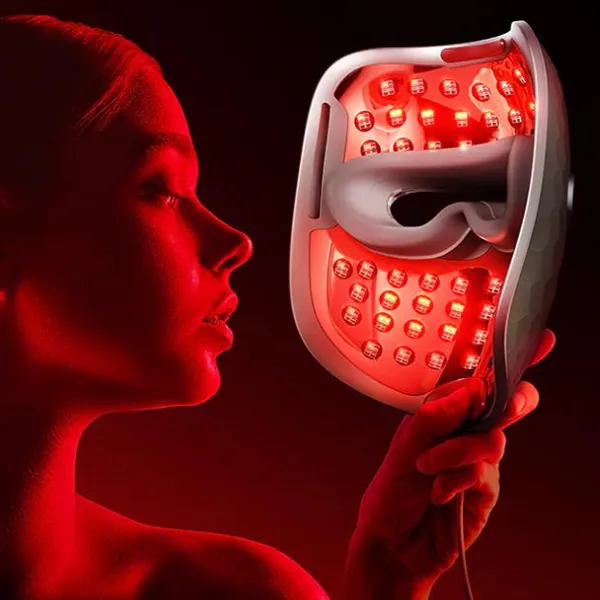
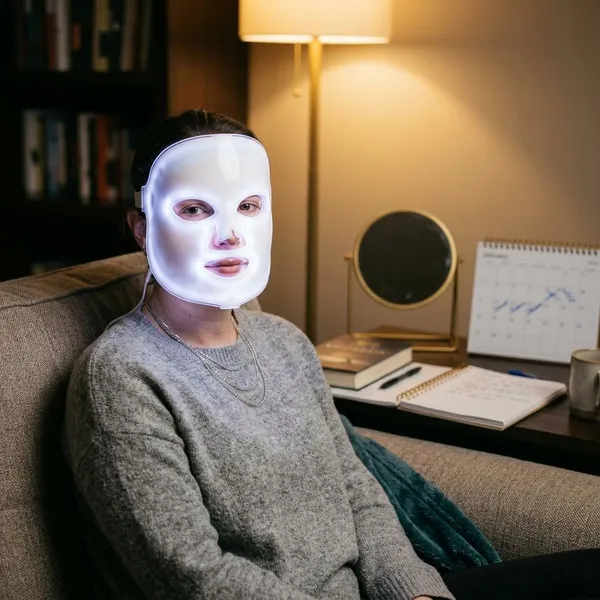
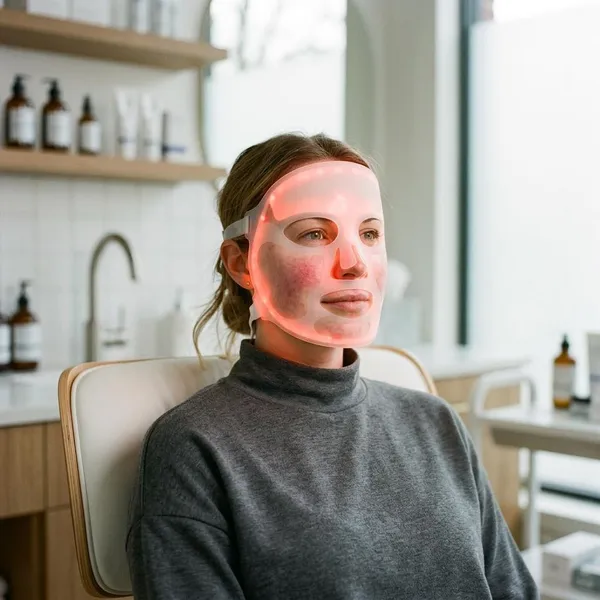
Can LED Face Masks Improve Melasma Safely?
If you are considering an LED face mask for melasma, treat it as a cautious add-on, not a main treatment. Some controlled light treatments may help certain people, but a home mask can also deepen patches if it adds heat, irritation, or the wrong kind of light exposure.
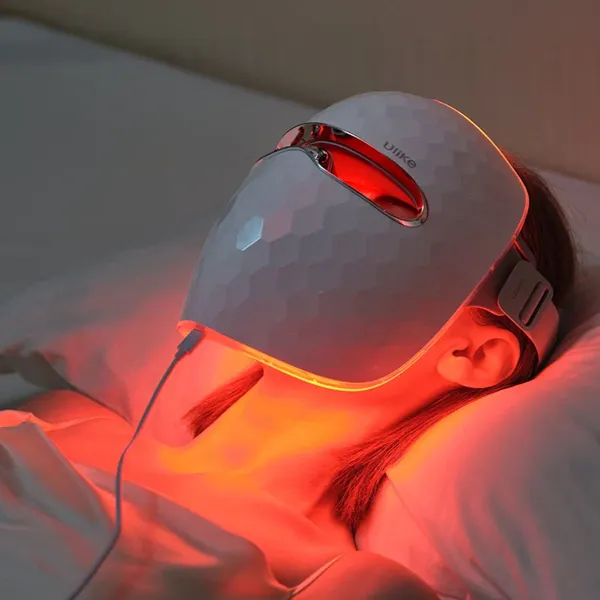
Can an LED face mask help melasma?
An LED mask might help in limited situations, especially if the skin is calm and the device is used conservatively. The bigger point is that melasma is easily triggered, so the first check is not "Does the mask promise brightening?" but "Does it create warmth, redness, stinging, or visible-light exposure my skin may not tolerate?"
Small studies suggest possible benefits
Small studies have explored selected wavelengths, often red or amber light, for possible anti-inflammatory or pigment-related benefits. That is promising enough to explain the interest, but not strong enough to make home LED masks a reliable melasma treatment.
The controlled setting matters. In a clinic or study, dose, distance, session length, and device output are managed more carefully than they usually are with a mask used on the sofa several nights a week.
Results do not apply to every home mask
A research device and a consumer mask are not automatically comparable. Home masks vary in wavelength accuracy, power, fit, session guidance, and how much warmth they create against the skin.
LED masks are not a first-line treatment
For melasma, the more dependable order is usually protection first, proven treatment second, devices last. Daily broad-spectrum sunscreen, visible-light protection, and dermatologist-guided topical options have a clearer role than experimenting with a mask early on.
- Lower-risk situation: mild, stable discoloration, no heat sensitivity, no recent irritation, and a simple skincare routine.
- Higher-risk situation: patches darken after summer heat, exercise, sunlight, retinoids, peels, or acne treatments.
- Buying decision: avoid choosing a mask only because it says "brightening" or has FDA clearance; check what the claim actually covers.
If your melasma is already changing quickly, it is better to stabilize it before adding another variable.
What could worsen melasma during LED use?
The main risks are visible light, irritation, and warmth. They often overlap, which is why someone may blame the mask when the real problem is the combination of LED sessions, strong skincare, hot weather, and not enough visible-light protection.
Pigment-triggering light exposure
UV light is the classic melasma trigger, but visible light can also matter, especially for medium to deeper skin tones. Blue-light modes deserve extra caution if your pigmentation darkens easily after sun exposure or acne inflammation.
Red light is often discussed more favorably, but it is not a free pass. If a red or near-infrared setting leaves your skin warm or flushed, the trigger may be heat rather than the color of the light alone.
Skin irritation
Irritation can push pigment-prone skin in the wrong direction. A common mistake is using an LED mask on the same night as exfoliating acids, a strong retinoid, benzoyl peroxide, or multiple brightening serums.
Watch for early warning signs: stinging during use, tightness afterward, unusual redness, rough patches, or darker edges around existing melasma. Those are reasons to stop and simplify rather than increase sessions.
Excessive warmth
Heat is a practical deal-breaker for many people with melasma. A mask does not need to feel painfully hot to be a problem; repeated mild warmth can still matter if your patches flare after cooking, saunas, workouts, or humid summer days.
- Short trial use: stop at the first sign of flushing or darkening instead of "testing through it."
- Long-term routine: repeated warmth several times a week is more concerning than one isolated session.
- Multi-mode masks: be especially careful with settings that combine red and near-infrared if they feel warmer on your skin.
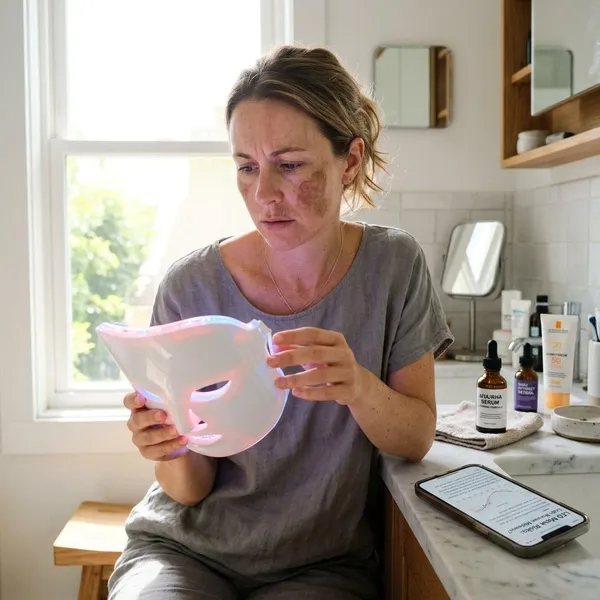
What to do if pigmentation gets darker
If your patches look darker after starting LED, do not try to fix it by using the mask more often or switching colors every few days. The useful response is to remove the likely trigger, calm the skin, and protect it from visible light while you work out what changed.
Pause the LED mask
Stop the mask if pigmentation deepens, spreads, or looks more uneven after use. Take note of the timing, the light mode, whether the mask felt warm, and what skincare you used before and after the session.
That record is helpful because melasma, post-inflammatory hyperpigmentation, and irritation can look similar at first. Continuing the device makes the pattern harder to read.
Keep skincare gentle
Use the plain routine you would choose for irritated skin: mild cleanser, bland moisturizer, and no scrubs or strong exfoliation. If a product stings on application, it is probably not the product to push during a pigment flare.
If you use prescription melasma treatment, ask your dermatologist whether to pause or adjust it temporarily. Barrier repair comes first when the skin is visibly reactive.
Use tinted sunscreen with iron oxides
Tinted sunscreen with iron oxides is worth prioritizing because it helps with visible-light protection, not just UV. It is especially useful if you sit near windows, commute in daylight, spend time outdoors, or notice patches worsening in bright conditions even when you avoid direct sun.
Apply it generously in the morning and reapply when exposure is meaningful, such as after sweating or being outside for a while. A tint that you actually like wearing is usually better than a "perfect" formula you avoid.
Have a dermatologist assess the changes
See a dermatologist if the darkening persists, spreads, burns, itches, or does not match your usual melasma pattern. The next step may be a different topical plan, a pause in irritating actives, or a review of hormones, medications, and heat or light triggers.
This is also the point where experimenting becomes less useful. When pigment is actively worsening, a tailored plan is safer than adding more devices or stronger brightening products.
Conclusion
An LED mask is not automatically off-limits for melasma, but it should earn its place in your routine. If your skin is heat-sensitive, easily irritated, or already darkening, pause the device and focus on calm skin, tinted sunscreen with iron oxides, and professional guidance before trying to make a home mask do the job of a real melasma plan.
FAQS
Does blue light worsen melasma?
It can for some people. Blue light is part of visible light, and visible light may contribute to pigmentation in melasma-prone skin, especially in medium to deeper skin tones.
Is near-infrared light safe for melasma?
It depends on the device and your skin's heat sensitivity. Near-infrared is not automatically unsafe, but if the setting makes your face warm or flushed, it is a poor choice for reactive melasma.
Does FDA clearance mean a mask treats melasma?
No. FDA clearance may relate to a different cosmetic use or general device safety, so check the cleared indication instead of assuming it applies to melasma.
Can a patch test rule out pigmentation risks?
No, not fully. A patch test may reveal quick irritation, but melasma can worsen gradually after repeated full-face use, warmth, daylight exposure, or interaction with skincare actives.