How Long Before You See Results From an LED Face Mask?
Most people need a few weeks before an LED face mask shows anything they can trust: acne-related changes often need about 4 to 12 weeks, while fine-line or firmness changes usually take 8 to 12 weeks or longer. A quick glow after one session can happen, but it is not the same as lasting improvement. The fairest test is consistent use, the correct light mode for your concern, and photos taken in the same lighting.
How long do LED face mask results take?
LED mask results build slowly because the treatment is working with skin processes that take time. If you are using the mask for mild breakouts, the first useful sign may be faster healing or less redness around spots. If you are using it for fine lines, the early change may be smoother-looking skin rather than a dramatic wrinkle change.
A simple timeline is usually more helpful than checking your face after every session:
| Time using the mask | What you might notice | How to judge it |
|---|---|---|
| After 1 session | A temporary glow or calmer look | Nice, but too early to call it a result |
| Weeks 2 to 4 | Less visible redness, less reactive skin, quicker spot recovery | Look for small patterns, not perfection |
| Weeks 4 to 8 | Clearer acne patterns or smoother texture for some users | Compare weekly photos and breakout notes |
| Weeks 8 to 12+ | More noticeable changes in acne, texture, or early fine lines | Decide whether the mask has earned a place in your routine |
Acne improvements may take 4 to 12 weeks
For acne, give an LED mask at least 4 weeks before judging early progress, and closer to 8 to 12 weeks before deciding whether it is really helping. Blue light is often used for acne-focused routines, while red light is commonly used for visible inflammation and recovery, but the exact benefit depends on the device and your skin.
- Mild, occasional breakouts: You may notice spots look less angry or heal faster first.
- Frequent inflamed acne: Track how many new spots appear each week, not just how your skin looks on one good day.
- Deep, cystic, or hormonal acne: An at-home mask may be a support tool, but it should not be treated as the whole plan.
Fine-line changes may take 8 to 12 weeks or longer
Fine lines usually need more patience. Red and near-infrared light are often used in masks aimed at texture and signs of aging, but visible changes tend to be gradual and subtle. Think in terms of smoother surface texture, a fresher look, or early lines looking less sharp, not erased wrinkles.
This is where expectations matter. Someone in their late 20s or 30s tracking early expression lines may notice a small softening sooner than someone hoping to improve deeper lines or sun damage. If the lines are well established, 12 weeks may still be a reasonable checkpoint rather than a finish line.
Why do LED mask results vary?
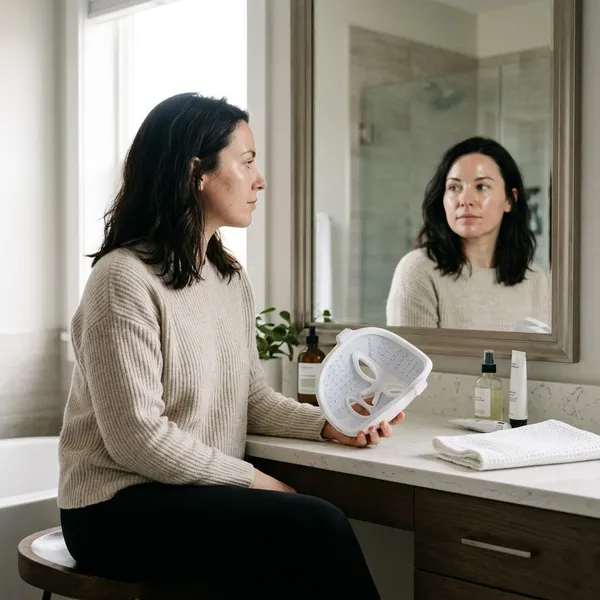
LED mask results vary because the mask is only one part of the picture. Your main skin concern, the device's design, the light mode you use, and your consistency all affect the timeline. The rest of your skincare routine can also make results easier or harder to see.
The first thing to check is whether your goal matches what an at-home LED mask can reasonably do. Mild acne, visible redness, and early texture changes are more realistic targets than deep wrinkles, severe acne, or significant scarring.
Different skin concerns
Not every skin concern moves at the same speed. Redness may look calmer within weeks, while fine lines and old marks need more time because they rely on slower repair and renewal patterns.
Pick one main target before you start. For example, if your goal is "fewer inflamed pimples," count new breakouts each week. If your goal is "less dull texture," compare photos taken in the same light. Trying to judge acne, redness, pores, texture, and wrinkles all at once makes the mask feel more confusing than it needs to be.
Device output and wavelengths
Two masks can look similar and still perform differently. Fit, coverage, wavelength options, and light output all matter, and those details are not always obvious from product photos. A mask that does not sit close enough to the skin or does not include the mode suited to your concern may give limited results even if you use it faithfully.
- For acne: Check whether the device has an acne-focused light mode and how the brand says to use it.
- For redness or texture: Look for the mode intended for calming or repair support.
- For fine lines: Read the expected evaluation period instead of assuming results should show in two weeks.
Treatment frequency and consistency
Consistency matters more than intensity. Many at-home masks are used several times per week for short sessions, but the safest schedule is the one given for your specific device.
Using the mask for longer than directed is not a clever shortcut. It can make sensitive skin feel dry, tight, or irritated, especially if you also use retinoids, exfoliating acids, or benzoyl peroxide. A steady 10-minute routine followed for weeks is usually a better test than random extra-long sessions when you remember.
Other skincare treatments
Your skincare routine can make LED results easier to spot or impossible to judge. A basic routine with cleanser, moisturizer, and daytime sunscreen gives your skin a calmer baseline. A routine full of new actives can create redness and peeling that hides any subtle benefit from the mask.
If your skin is already sensitive, treat LED as one change, not one more step in an overloaded routine. Keep strong products stable for a few weeks, avoid introducing several new treatments at once, and pay attention to irritation rather than pushing through it.
How to tell if your LED mask is working
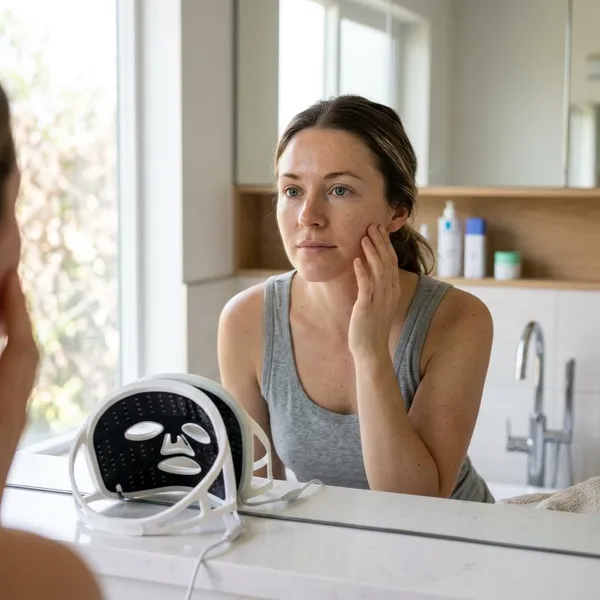
The most reliable way to tell is to track one target concern over time. Your mirror memory is not dependable because skin changes slowly and daily lighting changes everything. A weekly check is enough; daily inspection often makes normal fluctuations feel like failure.
Compare photos in the same lighting
Take a baseline photo before your first session, then repeat once a week in the same spot, at the same time of day, with the same facial expression. Use front, left, and right angles if your concern is spread across the face. For acne, take a closer photo of the same problem area each time.
Do not compare a bathroom mirror photo with a bright window photo and expect a fair answer. Texture, redness, and fine lines can look completely different under different light.
Track changes in your target concern
Choose a sign that matches your reason for using the mask:
- Acne: Count new inflamed spots each week and note how long they take to calm down.
- Redness: Watch whether flushing fades faster or appears less intense in photos.
- Texture: Look for smoother makeup application or less roughness in consistent lighting.
- Fine lines: Compare relaxed-face photos instead of judging lines while smiling or raising your brows.
Review progress over several weeks
Give yourself clear checkpoints. At week 4, look for early signs such as calmer skin or faster blemish recovery. At weeks 8 to 12, decide whether there is enough visible change to keep going.
What to do if you see no results
If you see no results, do not immediately assume the mask is useless. First check three things: whether you used it long enough, whether you used the correct mode and schedule, and whether your skin concern is realistic for an at-home device. Those three checks usually explain most disappointing results.
If all three look fine and you have been consistent for 8 to 12 weeks, it is reasonable to reconsider. The mask may not suit your concern, or your skin may need a treatment with stronger evidence or medical guidance.
Check the device's expected timeline
Read the instructions again and compare them with what you actually did. Look for the recommended session length, weekly frequency, light mode, and the brand's suggested evaluation period. If the manual says results may take 8 weeks, using it five times and stopping is not a fair trial.
Review your treatment routine
Make the routine boring for a while. Use the mask as directed, keep your core skincare steady, and avoid adding new actives during your test period. This is especially useful if you are the kind of person who changes products whenever your skin has a bad week.
- Do not chase faster results with longer sessions than directed.
- Do not stack too many strong actives if your skin is already red or peeling.
- Do not judge from one breakout if your weekly pattern is improving.
Ask a dermatologist about other options
Get professional advice if you have painful acne, persistent irritation, suspected rosacea, melasma, deep wrinkles, or no meaningful change after a consistent trial. A dermatologist can help you decide whether LED is worth keeping, whether your routine is working against you, or whether another option makes more sense.
Conclusion
An LED face mask is worth judging in weeks, not days: look for acne and redness changes around the 4-to-12-week range, and give fine-line or texture goals at least 8 to 12 weeks before making a decision. If your photos show steady progress and your skin feels calm, keep the routine simple and consistent; if nothing changes after a fair trial, your time is probably better spent adjusting the routine or asking for more targeted advice.
FAQS
Can an LED mask work after one session?
It can make skin look temporarily brighter or calmer after one session, but that is not the same as a lasting result. Use one session as a comfort check, not a performance test.
Will longer sessions speed up results?
No, longer sessions are not a reliable way to speed up results. They may only raise the chance of irritation, so follow the timing given for your specific mask.
Do LED mask results last after stopping?
Some improvement may linger for a while, but acne, redness, and aging-related changes can return without maintenance. If the mask helped, occasional ongoing use may be needed to keep the benefit.
Should I stop if my skin becomes irritated?
Pause the mask if you get lingering redness, stinging, unusual dryness, or discomfort. Restart only after your skin settles, and get medical advice if irritation keeps coming back.