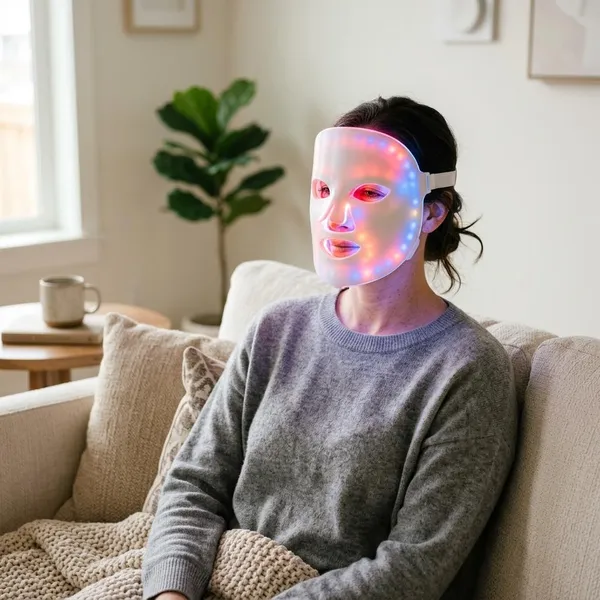
Can an LED Face Mask Help Calm Facial Redness?
An led face mask for redness can be worth trying when the redness is mild, temporary, or tied to irritation, but it is not a cure for rosacea or visible broken vessels. Before buying one, first decide whether your redness is mostly flushing, post-breakout pinkness, or fixed red lines, because those respond very differently.
What LED masks may do for facial redness
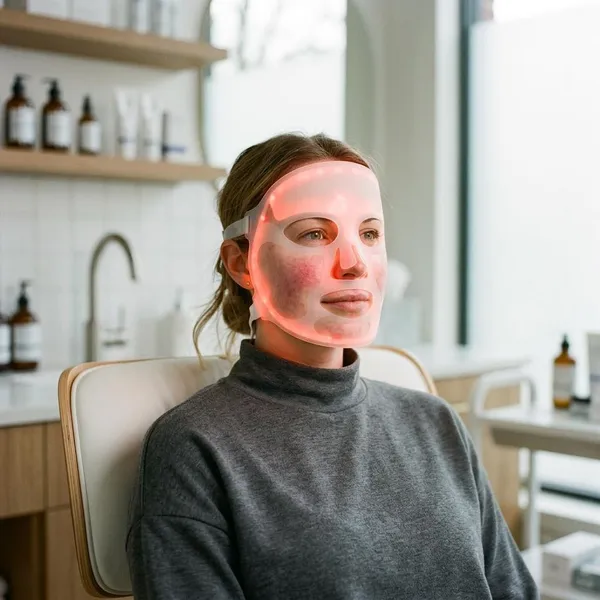
LED masks are most useful when redness is linked to temporary inflammation or a stressed skin barrier. Red and near-infrared light are commonly used in home devices because they may support calmer-looking skin over time, but the result depends heavily on why your face is red in the first place.
Possible improvement in mild redness
Mild redness is the best-fit scenario for a home LED mask. If your face gets pink after over-exfoliating, shaving, a breakout, wind exposure, or a new product that was too strong, red and near-infrared light may help the skin look calmer as your barrier recovers.
The change is usually subtle. A realistic win is not "perfect skin overnight," but less lingering pinkness after cleansing or fewer reactive-looking days after a few weeks of steady use. It works best when the rest of your routine is boring in a good way: gentle cleanser, moisturizer, and sunscreen.
Limited evidence for rosacea
Rosacea is more complicated than ordinary sensitivity. A mask may feel soothing for some people with mild rosacea, but it should be treated as support, not as a replacement for medical treatment or trigger management.
If you flush after heat, alcohol, spicy food, exercise, or emotional stress, LED may not address the main driver. In that situation, the better first step is understanding your trigger pattern rather than assuming a device will calm every flare.
Limits for visible blood vessels
Fixed red lines around the nose or cheeks are different from temporary irritation. A home LED mask is unlikely to remove visible blood vessels because those are structural changes, not just surface redness.
What to look for in an LED mask for redness
For redness-prone skin, the best mask is not automatically the strongest-looking or most expensive one. Start with three checks: the light settings are clear, the fit feels comfortable, and the brand gives sensible safety guidance for sensitive users.
Specs matter, but so does real-life use. A mask that feels hot, presses into the cheeks, or is annoying to set up will probably sit in a drawer, even if the wavelength chart looks impressive.
Redness results from device studies
Look for product testing that mentions redness, skin tone, irritation, or inflammation-related appearance, not only fine lines. General LED research is useful background, but it is less convincing than data tied to the actual device you are considering.
- Better signal: the brand explains what was tested and what improved.
- Weaker signal: broad claims such as "healing light" without clear details.
- Red flag: medical-sounding promises such as curing rosacea or erasing broken vessels.
Clear red and near-infrared settings
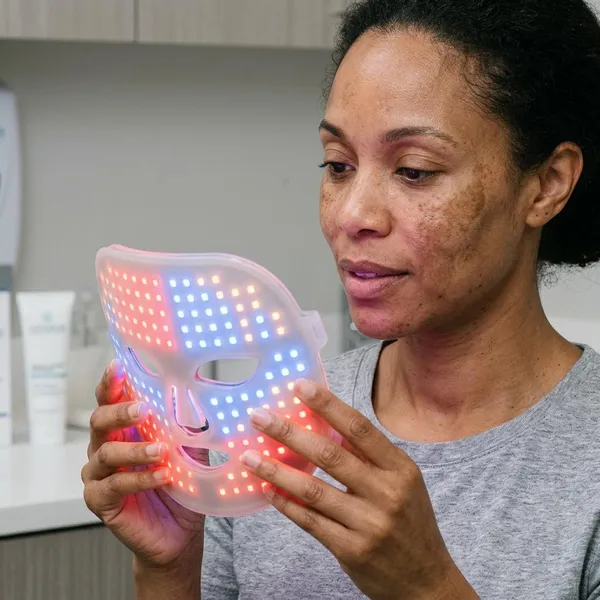
For redness, red and near-infrared settings are usually the ones to look for. Blue light can be useful in acne-focused routines, but it is not usually the main choice when the goal is calming visible irritation.
A comfortable fit without excess heat
Comfort is a practical feature, not a luxury. A mask should sit steadily without digging into your cheeks, pressing awkwardly around the nose, or feeling stuffy after a few minutes.
This is especially important for two common situations. If you only want occasional support after product irritation, you may tolerate a less perfect fit. If you plan to use the mask several times a week for long-term redness management, small annoyances become the reason you stop using it.
Safety guidance for sensitive skin
Choose a device that clearly explains session length, frequency, eye protection, cleaning, and who should be cautious. Sensitive skin does better with clear boundaries than with vague "use as needed" instructions.
- Check before buying: photosensitivity warnings and medication cautions.
- Check during use: warmth, stinging, itching, or flushing that lasts longer than usual.
- Check your routine: whether strong acids, retinoids, or scrubs are already making your skin reactive.
LED face masks to compare for redness
Omnilux Contour Face and CurrentBody Skin LED Face Mask Series 2 are two popular flexible masks people often compare for redness because they focus on red and near-infrared light rather than making blue light the main feature.
Omnilux Contour Face
Omnilux Contour Face is a flexible silicone mask, and the brand lists red and near-infrared wavelengths commonly discussed for skin recovery support. Its main appeal is simplicity: it is soft, lightweight, and easier to store than many rigid masks.
The possible downside is fit variation. A flexible mask may sit nicely on one person and feel loose around the mouth or chin on another. If redness makes you sensitive to pressure or warmth, the lightweight feel may still be a strong point.
CurrentBody Skin LED Face Mask Series 2
CurrentBody Skin LED Face Mask Series 2 is another soft mask designed to sit close to the face. For redness-focused shoppers, the appeal is that it stays centered on red and near-infrared-style treatment rather than trying to be a complicated all-in-one device.
Before choosing it over another mask, check the latest product details, return policy, and eye-comfort design. For sensitive skin, a mask you can wear calmly for the full session is more valuable than one with extra features you rarely use.
When to see a dermatologist before using LED
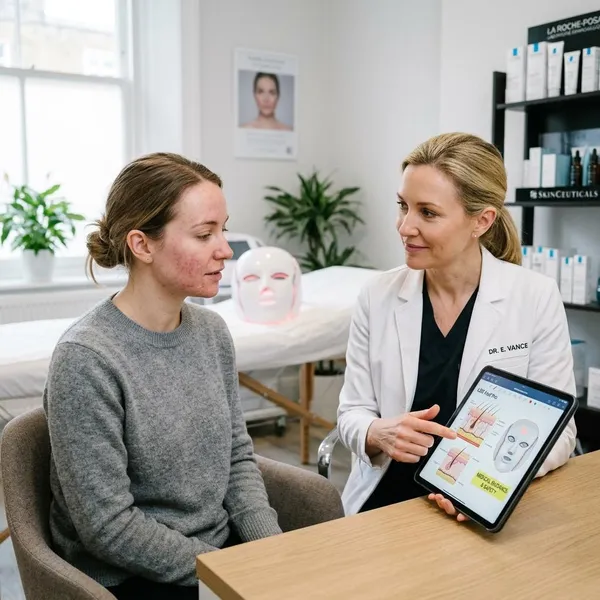
Some redness should be checked before adding a home device. LED can support a calm routine, but it cannot tell you whether the redness is rosacea, contact dermatitis, seborrheic dermatitis, medication-related sensitivity, or something else.
The higher-risk scenario is redness that burns, spreads, changes quickly, or comes with bumps or visible vessels. In those cases, a dermatologist can help you avoid buying a device for the wrong problem.
Persistent flushing or burning
Flushing that happens often, feels hot, or burns deserves medical advice before starting LED. That pattern can point to rosacea or a compromised barrier rather than simple cosmetic redness.
If your skin is already burning after water, moisturizer, or sunscreen, pause new devices and simplify first. Adding another step too soon can make it harder to know what is irritating you.
Visible veins or acne-like bumps
Visible red lines, cheek bumps, or acne-like flare-ups with flushing are good reasons to get a skin exam. These signs can overlap with rosacea, but they do not all respond to the same treatment.
Light sensitivity or medication concerns
Ask a clinician first if you are light-sensitive, have eye conditions affected by bright light, get migraines from light exposure, or take medication that may increase photosensitivity. Home LED may be gentle for many users, but it is not automatically suitable for everyone.
This check matters more if you plan to use the mask regularly rather than as a one-time experiment. Frequent use makes comfort and safety guidance much more important.
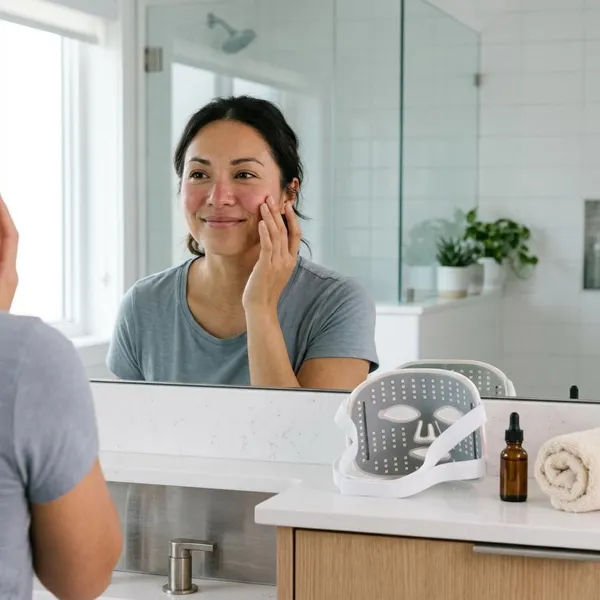
How to use an LED mask for redness
Use an LED mask in the simplest routine possible at first. That gives you a fairer test: if your skin improves, you will know the change is not just from starting three other new products at the same time.
A practical trial is especially helpful for redness-prone skin. Try to keep your cleanser, moisturizer, sunscreen, and active ingredients stable while you introduce the mask slowly.
Start with clean, dry skin
Use the mask after washing with a mild cleanser and patting your skin fully dry. Avoid starting right after exfoliating, shaving irritation, sunburn, windburn, or a strong active product that already made your face sting.
Follow the mask's treatment schedule
Follow the manufacturer's session length and weekly schedule instead of adding extra time. More exposure is not a shortcut for sensitive skin; it can simply make warmth and flushing harder to interpret.
If improvement happens, it usually shows up gradually over several weeks. Watch for practical changes such as less lingering pinkness after cleansing or fewer "everything makes me red" days.
Use eye protection as directed
Use the eye shields, goggles, padding, or closed-eye guidance the device recommends. If bright light bothers your eyes or triggers headaches, do not treat eye comfort as optional.
Keep skin care gentle
During your first few weeks, avoid turning LED into part of an aggressive "skin reset." A calm routine usually gives redness-prone skin a better chance than stacking exfoliating acids, retinoids, scrubs, and a new device together.
- Good pairing: gentle cleanser, plain moisturizer, sunscreen.
- Use caution: strong acids, frequent retinoid use, harsh scrubs.
- Best tracking habit: note flushing triggers and any burning after sessions.
Stop if redness or burning worsens
Stop using the mask if redness, burning, itching, swelling, or heat sensitivity becomes worse or lasts longer than usual. Temporary mild warmth can happen, but worsening irritation is not something to push through.
If the reaction repeats, bring the device instructions and your skin care list to a dermatologist. The issue may be the mask, the schedule, another product, or an underlying skin condition.
- Cleanse gently and dry your face fully.
- Select the red or red-plus-near-infrared mode if your mask offers choices.
- Use the exact session length recommended by the brand.
- Moisturize afterward if needed and keep sunscreen in your daytime routine.
- Review your skin after a few weeks, not after one session.
Conclusion
An LED mask is most sensible when your redness is mild, reactive, and paired with a gentle routine you can keep consistent. If your main issue is burning, frequent flushing, visible vessels, or acne-like bumps, treat the mask as a possible add-on after you understand the cause, not as the first or only solution.
FAQS
What LED light color is best for redness?
Red light is usually the first choice, often paired with near-infrared. Blue light is more acne-focused, so it is not the main setting to prioritize unless breakouts are part of your redness pattern.
How long might redness take to improve?
Give it several weeks of consistent use before judging. If your redness is from fixed vessels or an active skin condition, you may not see much change even with regular sessions.
Is a pricier LED mask better for sensitive skin?
Not always. For sensitive skin, a comfortable fit, clear settings, good eye guidance, and realistic safety instructions matter more than a higher price or extra modes you may never use.