How Does an LED Face Mask Machine Work at Home?
A led face mask machine is worth considering if your goal is steady at-home support for mild breakouts, early fine lines, or dull, uneven-looking skin. It is not a shortcut for severe acne, deep wrinkles, or pigmentation that needs medical care. The smartest first check is simple: does the device match your main skin concern, and will you realistically use it several times a week?
What is an LED face mask machine?
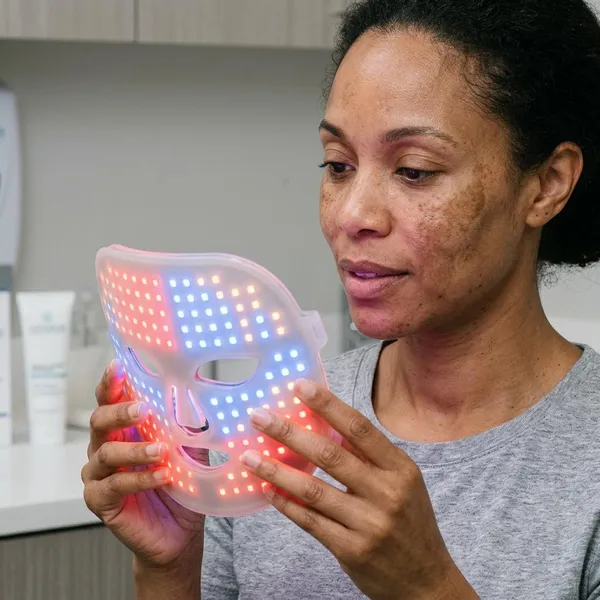
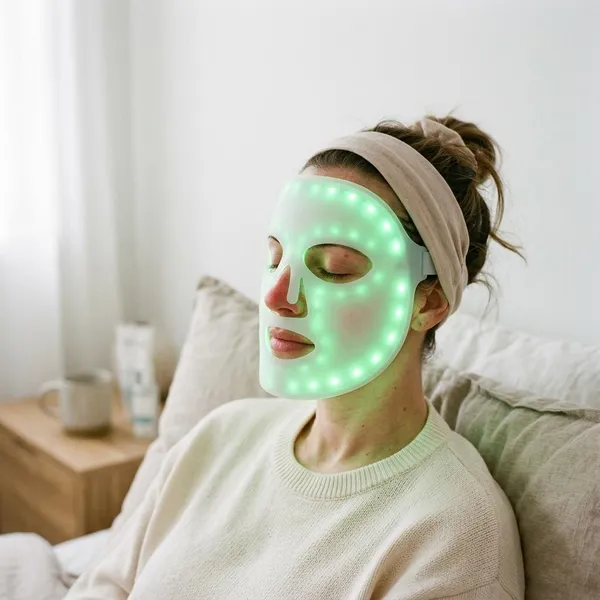
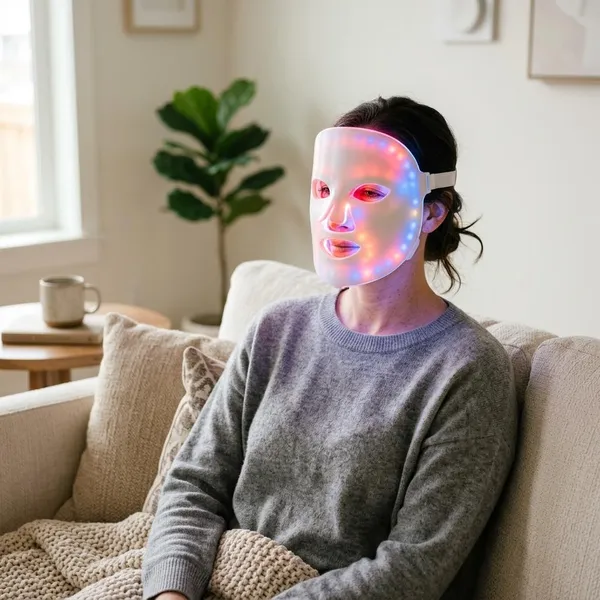
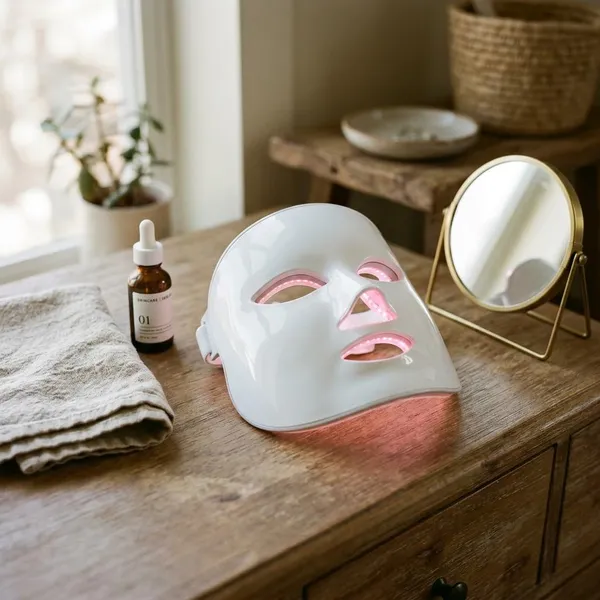
An LED face mask machine is a wearable skincare device lined with small light-emitting diodes. These lights sit close to the face and use specific wavelengths, usually red, blue, near-infrared, or a combination, depending on what the device is designed to target.
The point is controlled exposure, not heat, tanning, or a spa-like glow-up after one session. Most home masks are used for short treatments on a regular schedule, so they fit best when you can make them part of a routine rather than a one-off experiment.
What LED face masks may help with
LED face masks may help most when the concern is mild, visible, and gradual: early aging changes, recurring small breakouts, redness after blemishes, or skin that looks dull and uneven. They are better viewed as a support tool than a treatment that replaces sunscreen, a basic routine, or dermatology care.
The practical expectation is modest improvement over weeks, not a dramatic change overnight. If you are comparing your skin every morning in the mirror, progress can be hard to judge; side-by-side photos usually give a fairer picture.
Fine lines and wrinkles
For early fine lines, red and near-infrared settings are usually the ones to look for. They may help the skin look smoother or less tired over time, especially if your main concern is faint forehead lines, mild crow's feet, or a general loss of firmness rather than deep folds.
This is where routine matters more than excitement. Someone using a comfortable mask consistently for two months is more likely to judge it fairly than someone who buys the strongest-looking device, uses it twice, and forgets it. Sunscreen still does the heavier lifting for preventing new lines.
Mild to moderate acne
Blue light is commonly used in masks aimed at acne-prone skin, and some devices pair it with red light for visible redness and post-breakout calm. This type of mask makes the most sense for recurring small pimples, inflamed surface blemishes, or occasional breakout cycles.
It is less suitable as the main plan for cystic acne, painful deep spots, acne that is suddenly worsening, or breakouts linked to medication or hormones. In that higher-risk situation, spending the same money on professional advice may be more useful than buying another gadget.
Uneven skin texture
Uneven texture is a realistic goal only when the problem is mild: dullness, rough patches, or skin that looks less smooth after breakouts. An LED mask may help the skin look calmer and more even, but it is unlikely to make deep acne scars, pronounced pores, or stubborn pigmentation disappear.
How to choose an LED face mask
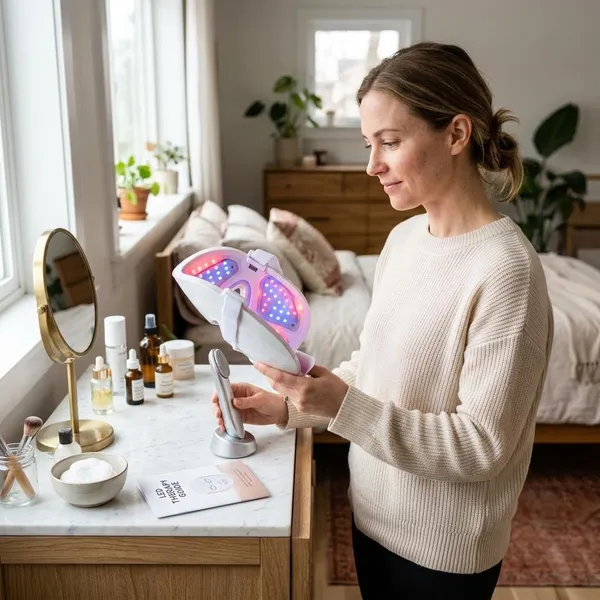
Start with your main skin goal, then check whether the device gives enough detail to support that goal. A long feature list is less useful than clear light settings, realistic use instructions, a comfortable fit, and a return policy that protects you if the mask feels awkward in real life.
Light settings that match your skin goal
Choose the setting for the problem you care about most, not the mask with the most colors. Extra modes can sound impressive, but they do not help if the brand never explains what each mode is for or how often to use it.
| Skin goal | Setting to compare first | Buying caution |
|---|---|---|
| Early fine lines or dullness | Red or near-infrared | Avoid expecting deep wrinkle correction |
| Recurring mild breakouts | Blue, or blue plus red | Not a substitute for acne care when spots are painful or cystic |
| Uneven, tired-looking skin | Red or combined modes | Texture from scarring may need stronger treatment |
Evidence for the specific device
General research on LED therapy does not automatically prove that a particular home mask performs well. Look for details tied to the exact model: stated wavelengths, treatment times, safety instructions, realistic before-and-after images, and reviews that mention fit and consistency rather than only "glowing skin."
Be cautious with brands that hide the basics behind phrases like "advanced light technology." You do not need a science paper to buy a home device, but you should be able to tell what light it uses, how often it should be worn, and what kind of result is realistic.
Fit, coverage, and comfort
Comfort decides whether the mask gets used after the first week. Check the strap, eye area, nose bridge, weight, and whether the mask covers the forehead, cheeks, chin, and around the mouth evenly enough for your concern.
- Busy evening routine: choose a mask that starts quickly and is easy to clean.
- Sensitive eyes: look closely at eye protection and brightness comments in reviews.
- Small face or high nose bridge: flexible designs may fit more securely.
- Travel or shared bathrooms: storage size and cordless use may matter more than extra modes.
Price, warranty, and return policy
The return policy is not a minor detail, because fit is personal. A mask can look perfect online and still feel bulky, too bright, or annoying after ten minutes. If the brand does not allow a practical return window, you take on more risk.
Also check the warranty before being swayed by discounts. LED masks are electronic devices, so charging faults, broken controllers, weak straps, and timer problems are possible. A mid-priced mask with clear support can be a better buy than a cheaper one with vague specifications and no useful backup.
How to use an LED face mask at home
Use the mask exactly as the manufacturer directs, especially for session length, frequency, eye protection, and cleaning. More time is not automatically better, and mixing too many skincare changes at once makes it harder to know whether the mask is helping or irritating your skin.
Prepare your skin as directed
Start with clean, dry skin unless your device instructions say otherwise. Remove makeup, sunscreen, and heavy creams so the mask stays cleaner and the session feels consistent each time.
If you use strong actives such as retinol, exfoliating acids, or scrubs, be more cautious at the beginning. For someone with easily irritated skin, alternating active nights and mask nights is often a safer test than stacking everything into one routine.
Follow the treatment time and schedule
Stick to the recommended treatment window and frequency for your exact device. Extending a session because you want faster results usually adds risk without proving extra benefit.
- Pick one main mode and use it consistently before judging results.
- Attach it to an existing habit, such as after cleansing at night.
- Give it several weeks before deciding it does nothing.
- Do not double up sessions to make up for missed days unless the instructions allow it.
Track changes with photos
Take a starting photo, then repeat it every one or two weeks in the same lighting, angle, and time of day. This is especially useful for fine lines, redness, and texture, where changes can be too subtle to judge from memory.
Photos also help during a return window. If the mask feels comfortable but you are unsure whether it is worth keeping, a consistent photo record gives you something more reliable than bathroom-mirror guesswork.
Stop if irritation develops
Pause the mask if you notice burning, stinging, worsening redness, headaches, unusual sensitivity, or eye discomfort. Mild warmth may happen with some devices, but the treatment should not feel harsh.
If irritation settles after stopping, restart only if the instructions allow it and consider reducing other irritating products first. If symptoms keep returning, or if you have a light-sensitive condition, a known skin disorder, or medication that affects light sensitivity, ask a qualified professional before continuing.
Conclusion
An LED face mask is most worth buying when your concern is mild, your expectations are realistic, and the device is comfortable enough to use regularly. Check the light mode, evidence, fit, warranty, and return terms before price alone, because the best mask is the one that suits both your skin goal and your actual routine.
FAQS
Is an LED mask better than an LED wand?
An LED mask is usually better for full-face convenience, while a wand is better for small targeted areas. If you know you will not patiently move a wand around your face, a mask is usually the more realistic choice.
Can I use an LED mask with retinol?
Often yes, but avoid starting both at the same time if your skin is reactive. If retinol already causes dryness or stinging, use the mask on alternate nights or pause retinol until your skin feels settled.
Can an LED mask replace professional treatment?
No, not for more serious concerns. A home mask may support mild acne, early lines, or maintenance, but severe acne, melasma, deep wrinkles, or scarring usually need professional assessment and stronger options.