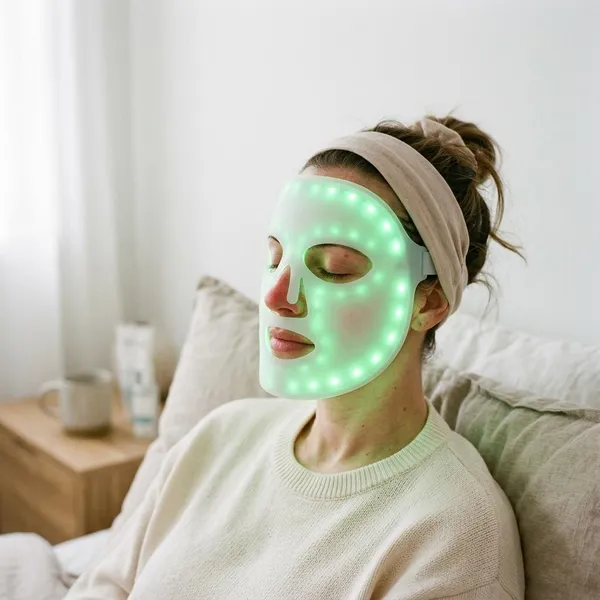
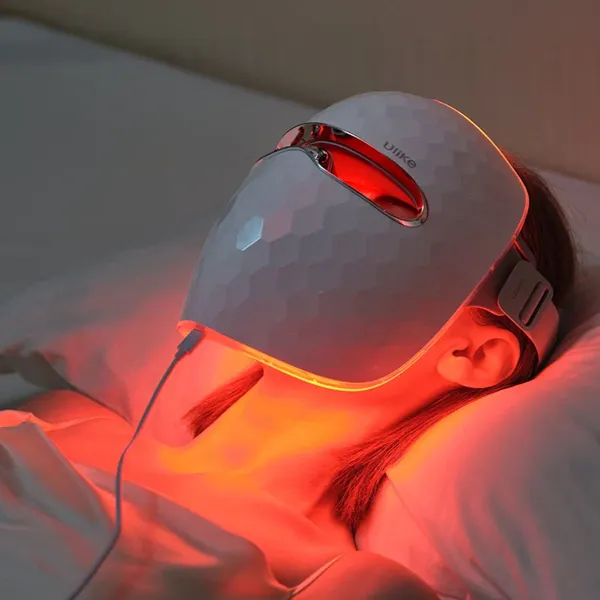
Can an LED Face Mask Help Reduce Hyperpigmentation?
An led face mask for hyperpigmentation may help some dark spots look softer over time, especially marks left after acne or irritation. It is not a bleaching treatment, and it should not be treated as a replacement for sunscreen, prescription care, or a proper check of unusual patches. The safest approach is to focus on the right light settings, use the mask conservatively, and stop if your skin darkens or becomes irritated.
How LED light colors differ for pigmentation
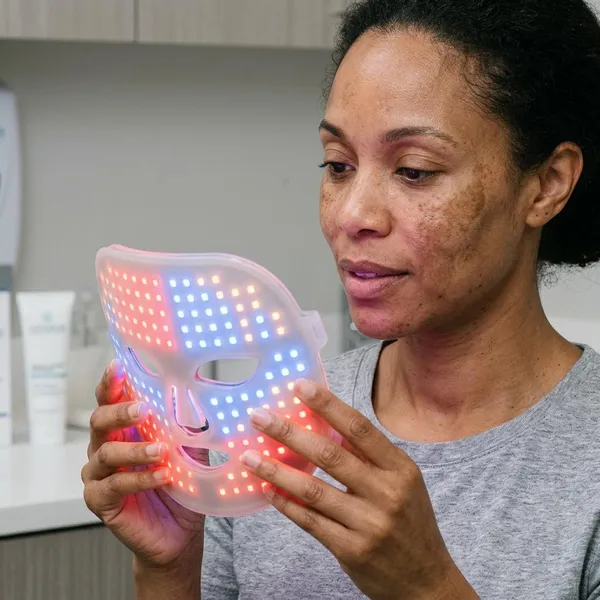
LED masks use non-UV light, so they are not the same as sun exposure. Still, each color has a different purpose. For pigment-prone skin, the practical question is not "Which color fades spots fastest?" but "Which setting is least likely to irritate my skin while supporting repair?"
Red light and dark spot research
Red light is the most practical LED option for many people dealing with post-inflammatory hyperpigmentation. It is commonly used in the red wavelength range, often around the low-to-mid 600nm range, and is studied more for inflammation, repair, and skin quality than for directly "breaking up" pigment.
Near-infrared light and skin repair research
Near-infrared light sits just beyond visible red light and is often included in masks aimed at recovery, firmness, and overall skin quality. For pigmentation, its value is indirect: it may support the skin's repair response rather than targeting melanin itself.
This can be helpful if your marks tend to hang around for months after acne or minor irritation. In that situation, repeatedly adding stronger exfoliants can sometimes make the cycle worse, while a red and near-infrared routine may be easier to tolerate long term.
Green light and pigment claims
Green light sounds appealing because it is often sold as the "dark spot" color. The problem is that consumer claims are often stronger than the available evidence. If a brand says green light targets melanin or clears pigmentation, look for real testing details rather than polished before-and-after language.
Green light is not necessarily useless; some users may find it calming. But if you are buying one device mainly for pigmentation, green light should be treated as a possible extra, not the main reason to trust the mask.
Blue light and pigmentation risk
Blue light is mainly used for acne. That can matter for pigmentation because fewer active breakouts can mean fewer future dark marks.
The caution is that blue light may be more complicated for darker or highly pigment-reactive skin. It is not UV light, but some people may notice more dullness, irritation, or darkening if they use blue sessions too often or at a setting their skin does not tolerate well.

When to seek advice before using an LED mask
Home LED masks are cosmetic devices, not diagnostic tools. Most straightforward post-acne marks can be approached cautiously at home, but some pigmentation needs a dermatologist's input before you experiment. The first thing to check is whether the patch is stable, familiar, and clearly linked to a past breakout or irritation.
Advice is especially worthwhile if the discoloration is new, spreading, symmetrical, heat-triggered, linked with medication, or appearing on skin that darkens easily. Getting the cause right can save months of trial and error.
If you have melasma
Melasma needs more caution than a simple acne mark. It is often influenced by sun, heat, hormones, and genetics, and it can return easily even after it improves. A mask may support overall skin quality, but it should not be your main plan for melasma unless a dermatologist agrees it fits your situation.
If you have darker skin
Darker skin can use LED, but the margin for irritation is smaller because inflammation can leave visible marks more easily. Red and near-infrared settings are usually the more conservative focus, while blue light deserves more careful testing.
- Start with fewer sessions: do not begin at the maximum schedule just because the device allows it.
- Check one area first: watch for extra warmth, stinging, redness, dullness, or darkening.
- Avoid stacking actives: strong acids, retinoids, and blue light on the same day may be too much for some skin.
If you take light-sensitive medications
Ask a doctor or pharmacist before using an LED mask if you take medication known to increase light sensitivity, including some acne medications, antibiotics, or other prescriptions. LED is different from UV, but light-reactive skin can still behave unpredictably.
The same caution applies if you have reacted badly to laser, IPL, phototherapy, or strong topical treatments in the past. That history does not automatically rule out LED, but it is a good reason to avoid guessing.
If dark patches are new or changing
A new, changing, raised, itchy, bleeding, or irregularly colored patch should be checked before you use a cosmetic device on it. The goal is not to be alarmist; it is to avoid treating something as "hyperpigmentation" when it has not been identified.
Once a professional confirms the area is harmless, you can make a safer cosmetic plan. Until then, diagnosis matters more than fading.
What to check before buying an LED mask for dark spots
Two LED masks can look almost identical online but give you very different levels of trust. For dark spots, do not choose by the number of colors alone. Start with evidence, skin tone suitability, clear settings, and safety information.
The strongest buying signal is transparency. A reliable brand should tell you what wavelengths it uses, how long each session lasts, how often to use it, and who should avoid or delay treatment.
Evidence for pigmentation improvement
Look for claims that explain the mechanism clearly. "Supports calmer recovery and more even-looking tone" is more believable than "erases melanin fast." Hyperpigmentation usually improves gradually, especially when the mark is older or deeper.
- Prefer named wavelengths: for example, a stated red or near-infrared wavelength is more useful than "advanced light technology."
- Look for realistic timelines: promises of overnight fading are a warning sign.
- Separate acne claims from pigment claims: blue light acne results do not automatically prove dark spot improvement.
Testing on your skin tone
If you have medium to deep skin or a strong tendency toward post-inflammatory hyperpigmentation, check whether the device has been tested, reviewed, or clearly discussed across a range of skin tones. A brand does not need to promise perfect results, but it should acknowledge pigment-prone skin instead of pretending every user has the same risk.
Clear wavelengths and treatment settings
A good mask should make the routine obvious: wavelength or color mode, session length, frequency, and any limits on use. If you cannot find those details before buying, that is a problem.
More frequent use is not automatically better for pigment-prone skin. For someone using retinol twice a week and sunscreen daily, a moderate LED schedule may fit well. For someone already irritated from peels, scrubs, and spot treatments, even a good mask can become one more trigger if used too aggressively.
Safety warnings and device clearance
Safety language is not boring fine print; it tells you whether the brand has thought beyond marketing. Look for warnings about photosensitivity, eye protection if relevant, medication concerns, unexplained lesions, and when to stop use.
Regulatory clearance or compliance can be reassuring where available, but it does not mean the mask will fade every dark spot. Think of it as one checkpoint, not proof of results. A sensible device still needs clear instructions and realistic claims.
How to use an LED mask on pigment-prone skin
Pigment-prone skin usually responds best to boring consistency. The aim is to support repair without creating new irritation. That means following the schedule, keeping the rest of your routine gentle, protecting your skin from UV exposure, and stopping early if the mask seems to make things worse.
Think of the mask as one part of a calm routine, not the thing that lets you skip sunscreen or pile on stronger actives. The most common mistake is trying to speed up fading by doing more of everything at once.
Follow the device's treatment schedule
Use the device exactly as directed at first, even if the sessions feel easy. Dark spots often change slowly, so doubling the time or adding extra sessions is more likely to irritate your skin than speed up visible fading.
Weekly photos in the same lighting are more useful than checking the mirror every morning. If the mark is simply softening around the edges, progress may be subtle before it is obvious.
Keep your skin care gentle
A simple routine is usually the safest match for LED use: cleanse, use the mask on clean dry skin if your device instructs that, then moisturize. Strong acids, scrubs, peeling treatments, and retinoids do not need to be used in the same routine to "boost" results.
- Before LED: remove sunscreen, makeup, and heavy residue.
- During LED: use the chosen mode and timing without adding extra minutes.
- After LED: apply a plain moisturizer or barrier-supporting product.
Use daily sun protection
Sunscreen is the non-negotiable part of any dark spot routine. An LED mask does not contain UVA or UVB, but daylight can still keep pigmentation active. If you use the mask consistently but skip SPF during outdoor errands, summer walks, or bright window exposure, the results may look disappointing.
Choose a broad-spectrum sunscreen you can wear every day, and add a hat or shade when exposure is longer. This is especially important for melasma or marks that deepen every summer.
Stop if irritation or darkening develops
Pause the mask if your skin starts stinging, feeling tight, staying red, or looking darker in the treated areas. Mild temporary warmth may happen with some devices, but ongoing irritation is not something to push through.
If the skin settles after a break, the issue may have been frequency, a specific color mode, or the way the mask interacted with other products. If darkening continues or the pattern looks unusual, get professional advice before restarting.

Conclusion
An LED mask can be a useful support tool for some pigmentation concerns, especially post-acne marks and skin that needs calmer recovery, but it is not the fastest or strongest dark spot treatment. Red and near-infrared settings are usually the most sensible starting point, while melasma, darker skin, blue light use, photosensitive medication, or changing patches all call for more caution. If you buy one, choose transparency over hype and let your skin's tolerance guide the routine.
FAQS
How long might dark spots take to improve with an LED mask?
Expect weeks, not days. Mild post-acne marks may look a little softer after consistent use for several weeks, while melasma, older marks, or deeper discoloration can take longer and may need other treatment.
Can an LED mask replace dark spot treatments?
No. It can support a routine, but it does not replace sunscreen, prescription brightening treatments, or dermatology care when pigmentation is stubborn, melasma-like, or medically unclear.
Can I use retinol with an LED mask?
Usually yes, but do not introduce everything at once. If your skin marks easily, separate retinol and LED at first, then adjust only if your skin stays calm.