Do LED Face Masks Really Improve Skin?
LED face mask clinical trials show that some home devices can help with fine lines, texture, firmness, radiance, and mild acne, but the improvements are usually gradual and modest. The first thing to check is not whether LED light "works" in general, but whether the exact mask, routine, and skin concern match the evidence being used to sell it.
What results have LED mask trials found?
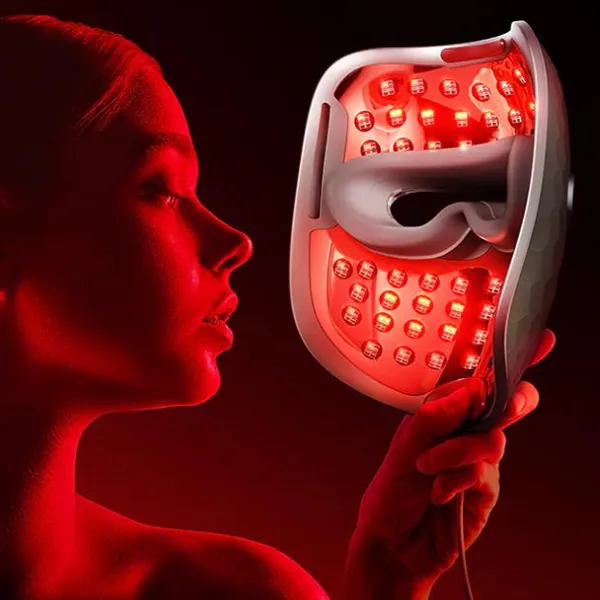
Most positive LED mask trials report small but measurable changes after regular use for several weeks. Wrinkle studies usually focus on red or near-infrared light, while acne studies more often include blue light, sometimes combined with red light.
Wrinkle improvements in controlled mask trials
Wrinkle trials are most convincing when they measure fine lines, texture, elasticity, and firmness rather than promising a dramatic change in deep creases. Brand-linked studies for devices such as Therabody's TheraFace Mask Glo and CurrentBody masks have reported improvements over roughly 8 to 12 weeks, often using imaging, expert grading, or elasticity measurements.
The useful expectation is "skin quality looks a bit better," not "procedure-level wrinkle correction." If you have early fine lines and can follow the schedule, a home mask may be a reasonable add-on. If you are mainly trying to soften deeper folds or significant sagging, the trial results are usually too modest to make the mask the main plan.
Acne reductions in home-use device trials
For acne, the better evidence tends to involve mild to moderate inflammatory breakouts, especially when blue light is part of the device. Blue light may help reduce C. acnes near the skin surface, while red light may calm visible inflammation.
- More realistic use: occasional inflammatory spots or mild recurring breakouts.
- Less realistic use: deep cystic acne, blackheads, or whiteheads as the only treatment.
- Important check: whether acne medications or skincare changes were controlled during the study.
If your acne changes quickly with stress, hormones, or product swaps, be careful with before-and-after claims. Some improvement may come from the device, but some may simply be the normal ups and downs of acne.
Limited evidence for lasting results
Lasting results are where the evidence becomes thinner. Many LED face mask clinical trials end around 8, 12, or sometimes 16 weeks, so they mostly show what happens during active use rather than what remains after stopping.
This matters if you are comparing a temporary skincare boost with a long-term purchase. A mask used before an event for glow is a different decision from buying one for year-round wrinkle or acne management. For long-term use, look for follow-up after treatment ends, clear maintenance instructions, and safety reporting beyond the first few weeks.
Which studies apply to home LED masks?
The closer the study is to the mask you want to buy, the more useful it is. Evidence from the exact model matters most; evidence from similar home devices is second-best; clinic studies are useful for understanding the science but weaker for judging a consumer mask.
| Evidence source | How much weight to give it | Best use |
|---|---|---|
| Exact mask trial | Highest | Judging that product's likely results |
| Similar home device | Moderate | Checking whether the category has support |
| Clinic LED study | Limited for shopping | Understanding wavelengths and possible mechanisms |
Trials of the exact mask
Put the most weight on studies of the same brand, same model, same wavelengths, and same treatment schedule. A useful product page should make it possible to see what was tested, how often people used it, how many completed the study, and what was measured.
Trials of similar home devices
Similar-device studies are useful background, but they are not proof for another mask. Two products can both advertise red light or blue light and still differ in dose, LED layout, distance from the skin, session length, and coverage.
Clinic studies with different equipment
Clinic papers can explain why LED therapy is plausible, but they should not be used as direct proof that a lower-power home mask will deliver the same result. In-office devices may use different panels, stronger output, trained operators, eye protection, and more controlled timing.
- Check the device first: exact mask evidence beats general LED research.
- Compare the routine: wavelength, session length, weekly frequency, and study duration all matter.
- Match the user group: a wrinkle trial in adults with mild photoaging does not answer a teenage acne question.
- Separate science from proof: mechanism evidence supports the idea, not every product claim.
If a brand mainly cites clinic studies but gives little detail about its own mask, treat the claim as supportive but incomplete.
What makes an LED mask trial credible?
A credible LED mask trial makes it clear who was studied, what device was used, how often it was used, what the comparison was, and how results were measured. The strongest evidence does not rely only on happy-user surveys or polished before-and-after photos.
For everyday shopping, I would check credibility in this order: control group, sample size, measurement method, follow-up time, then funding disclosure. A study does not have to be perfect to be useful, but the claim should not be stronger than the method behind it.
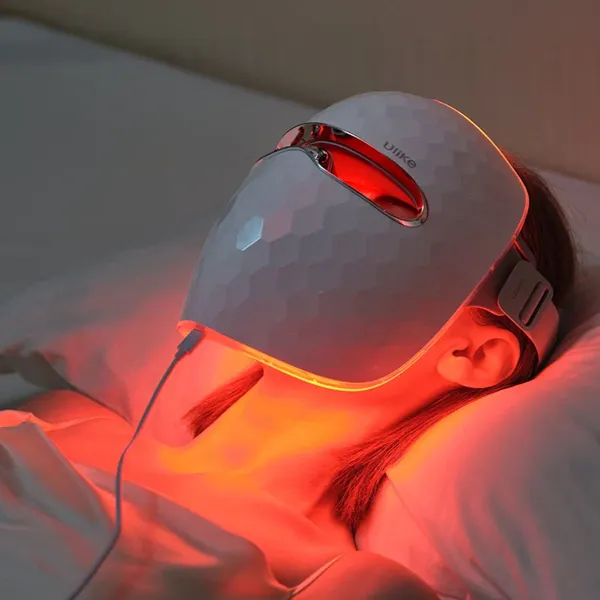
Randomized groups and a suitable control
A trial is much easier to trust when participants are randomized and compared with a suitable control, ideally a sham device or inactive mask. Without that, improvement could come from expectation, seasonal skin changes, better skincare habits during the trial, or natural acne fluctuation.
Open-label studies can still tell you something about comfort, tolerance, and whether people can stick with the routine. They are weaker for proving that the light itself caused the result.
Enough participants and follow-up
A result from 25 people is not useless, but it is fragile. Larger groups reduce the chance that a few strong responders make the device look better than it is, and they give a clearer picture of who may not benefit.
Follow-up matters just as much. A 56-day or 12-week trial can show early change, but it does not tell you much about maintenance, relapse, or whether results fade after stopping. If you plan to use a mask for years, short studies should be treated as a starting point, not a full answer.
Blinded assessments and objective measurements
Photos alone are weak unless the lighting, angle, timing, and evaluation method are controlled. Better trials use blinded graders, imaging systems, or skin-measurement tools so the result is less dependent on how the picture was taken or what the participant hoped to see.
- Imaging tools: can track wrinkles, texture, pores, redness, or pigmentation more consistently than casual photos.
- Skin instruments: may measure elasticity, hydration, barrier changes, or color shifts.
- Blinded grading: reduces the chance that the evaluator's expectations shape the score.
Clear funding and conflict disclosures
Brand funding is common in beauty-device research, and it does not automatically make a trial worthless. It does mean the methods and reporting need to be easy to inspect.
A company-funded study run by a third-party lab with clear endpoints is more reassuring than a sales page that only shares headline percentages. Independent replication is better still, especially when the product claims go beyond subtle cosmetic improvement.
Conclusion
LED face mask clinical trials are useful, but only if you read them narrowly: exact device, exact routine, exact skin concern. A mask can be a sensible add-on for mild acne or early signs of aging if the evidence matches your goal and you will actually use it consistently; it is less convincing as a stand-alone fix for severe acne, deep wrinkles, melasma-prone skin, or anyone who needs medical guidance before using light-based devices.
FAQS
Does "clinically tested" mean proven to work?
No. It may only mean the product was evaluated in people, and the study could be small, uncontrolled, unpublished, or based mostly on user opinions. Look for the method behind the phrase before giving it much weight.
Is FDA clearance the same as a clinical trial?
No. FDA clearance and clinical trial evidence answer different questions. Clearance may relate to regulatory requirements for marketing a device, but it does not automatically mean a large trial proved visible wrinkle or acne benefits.
Can brand-funded trials be reliable?
Yes, if the design is transparent and the measurements are meaningful. Clear methods, third-party testing, objective tools, and honest conflict disclosures make brand-funded data more useful; missing details make it harder to trust.
Do matching wavelengths guarantee matching results?
No. Wavelength is only one part of the treatment. Power, dose, session length, mask fit, coverage, and consistency can all change the result, so matching "red light" or "blue light" is not enough on its own.