How Many LED Lights Should a Face Mask Have?
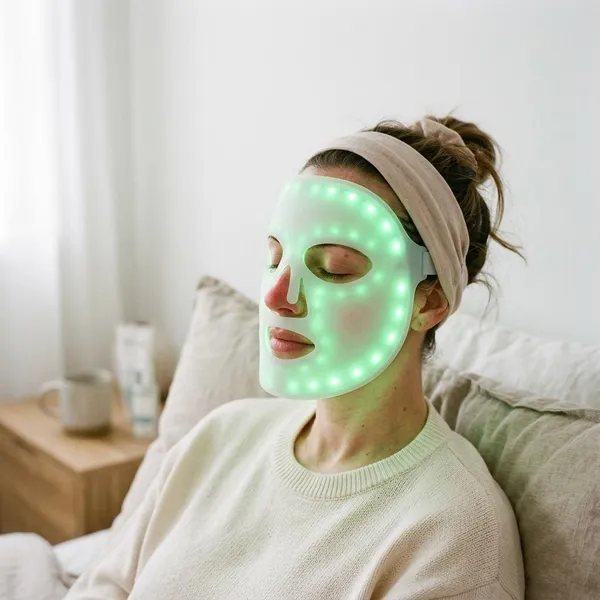
For most home LED masks, roughly 100 to 200 LEDs is a sensible range to look for, but the number only matters if those lights are useful, evenly placed, and close enough to the skin. If you are asking how many led lights should a face mask have, treat LED count as a first filter rather than the final reason to buy.
What matters more than LED count?
A face mask works well when the right light reaches the right areas consistently. A high LED count can help, but it cannot fix weak wavelengths, poor spacing, awkward fit, or unclear safety information.
Wavelengths
Wavelength decides what the light is meant to do. Red light is commonly used in the 630 to 660 nm range for visible aging concerns, while blue light is often used around 415 to 470 nm for blemish-prone skin. A mask with many LEDs but vague wavelength information is harder to trust because you cannot tell what those LEDs are designed to target.
Irradiance
Irradiance tells you how much light energy reaches the skin, usually shown as mW/cm². Two masks can both have 150 LEDs, but one may deliver noticeably more usable light than the other.
- Published clearly: easier to compare session length and output.
- Missing or vague: judge more carefully by brand transparency, treatment time, and claims.
- Very bold claims: be cautious if there is no clear output information behind them.
Full-face coverage
Good coverage means the forehead, cheeks, chin, nose area, and outer face are not treated as an afterthought. A mask that concentrates most of its LEDs in the center may look powerful on paper but still leave the jawline, temples, or outer cheeks with weaker exposure.
For general tone or texture concerns, full-face coverage matters more than spot intensity. For someone who only wants to target one small area, a lower-count device may be acceptable, but that is a different use case from a full-face LED mask.
LED spacing
Spacing turns LED count into real coverage. Evenly spaced LEDs create better overlap between light beams, while wide gaps can leave under-treated areas even when the total number sounds impressive.
Fit and light distance
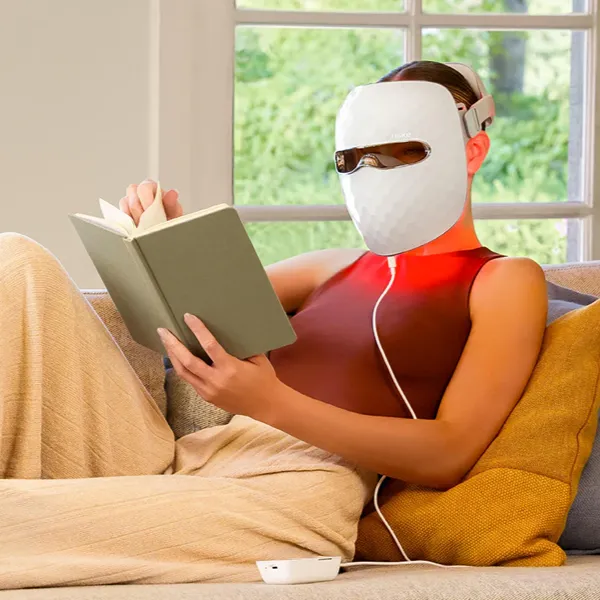
A mask that sits close to the skin usually makes better use of its LEDs than one that floats away from the face. This matters around curved areas such as the cheeks, temples, chin, and jawline, where rigid masks can sometimes leave uneven distance.
Fit also affects routine. If you are planning to use the mask several times a week for months, comfort is not a small detail; it is what determines whether the device actually gets used. For long-term use, I would choose a comfortable, close-fitting mask with clear specs over a bulkier mask that only wins on LED count.
Treatment time
Treatment time should match the device design. A shorter session can be convenient, but it should be supported by sensible output and clear instructions. A longer session is not automatically bad either, as long as it is realistic for your routine.
How LED spacing affects face coverage
LED spacing is one of the easiest design details to underestimate. It affects whether light spreads evenly across the face or lands strongly in some areas while missing others.
Because the face is curved, a good layout needs to do more than fill a flat panel with lights. It should make sense around the nose, cheeks, mouth, chin, and outer edges of the face.
Even spacing reduces treatment gaps
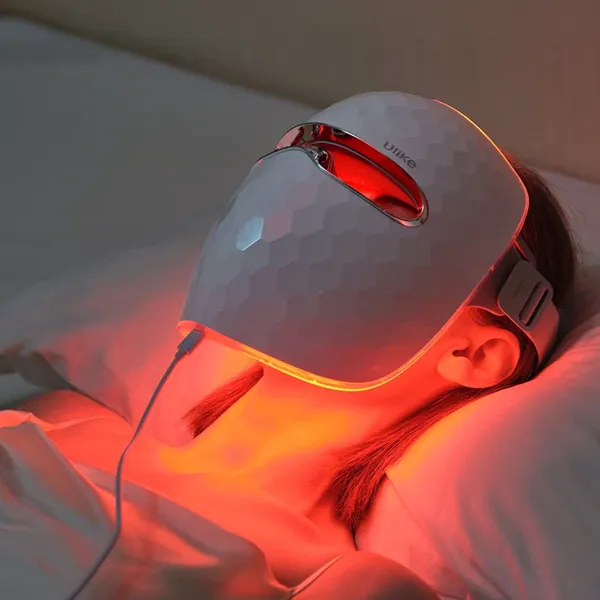
Even spacing helps reduce weak spots between LEDs. You do not need to measure each gap, but product photos should show a layout that looks balanced rather than crowded in one area and sparse in another.
This is especially important if you want overall brightness, texture, or aging support across the whole face. Uneven exposure can make results feel patchy over time, even if the mask technically has plenty of LEDs.
Good placement follows facial contours
Good placement means the LEDs are arranged for a real face, not just for a neat grid. The nose, mouth area, cheeks, temples, and chin all create small coverage challenges.
- Outer cheeks: easy to under-treat if LEDs are too central.
- Jawline: often affected by poor fit or weak edge coverage.
- Nose and mouth area: needs thoughtful spacing without compromising comfort.
Better distribution can matter more than density
A dense cluster of LEDs in one zone is less useful than a slightly lower count spread across the areas you actually want to treat. When comparing two masks, look at where the lights are placed before getting impressed by the larger number.
Mask fit affects how evenly light reaches the skin
Spacing and fit work together. Even a well-designed LED layout can lose value if the mask sits too far from parts of your face. If you have a smaller face, a very rigid mask may leave more gaps; if you have a broader face, edge coverage and strap adjustability become more important.
How to compare LED face masks
The best way to compare LED face masks is to move from the most meaningful specs to the more cosmetic ones. Do not start and stop with the LED count.
Check the LED count
Use LED count as a quick screening tool. Around 100 to 200 LEDs is a reasonable benchmark for many full-face home masks. Fewer than that is not automatically bad, but you should look more closely at coverage. Much higher counts can be useful, but only when the design supports them.
Compare wavelengths
Match the wavelength to your main skin goal before you compare anything else. Red light is usually the more relevant choice for visible aging support, while blue light is more commonly connected with acne-focused use.
If you are buying for shared use, multiple wavelengths may be more practical. One person may care about fine lines while another wants blemish support. In that situation, versatility matters, but only if the brand clearly explains what each mode is for.
Look at coverage and spacing
Product photos can reveal a lot. Check whether the LEDs reach the forehead, cheeks, chin, and outer areas rather than sitting mostly in the middle of the mask.
- No large blank zones across the main treatment areas.
- Balanced edge coverage around cheeks and jawline.
- Reasonable eye spacing with clear safety guidance.
- Consistent layout rather than random-looking clusters.
Check irradiance when available
If irradiance is listed, use it to understand how strong the treatment may be at the skin surface. It is especially helpful when two masks have similar LED counts but different session times.
If it is not listed, avoid assuming the higher-count mask is stronger. Instead, look for other signs of care: clear wavelength ranges, realistic treatment instructions, eye-safety information, and claims that do not sound exaggerated.
Review fit and treatment time
Fit and treatment time decide whether the mask fits into real life. A ten-minute routine you can repeat consistently is often more useful than a longer routine you keep skipping.
For occasional curiosity, a basic mask with decent coverage may be enough. For long-term use, comfort, strap adjustability, facial contact, and a realistic treatment schedule become much more important than chasing the biggest LED number.
Check safety and device claims
Look for clear instructions, eye-safety guidance, usage limits, and realistic language about results. Be careful with promises that sound instant or dramatic, especially for wrinkles, acne, or skin tightening.
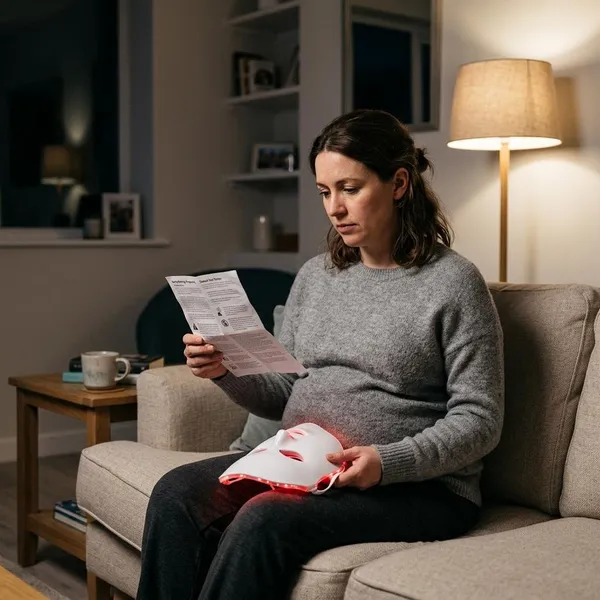
If you have sensitive skin, a light-triggered skin condition, are using photosensitizing medication, or are unsure whether LED treatment is suitable for you, it is safer to check with a qualified professional before using a mask. A good product page should make safe use easier to understand, not bury it.
Where Ulike ReGlow fits
Ulike ReGlow fits into the higher-spec side of the LED mask conversation, where LED count is meant to support broader full-face coverage rather than act as a standalone selling point. The better question is whether the count, wavelengths, spacing, fit, and routine all work together.
A higher LED count for full-face coverage
A higher LED count is useful when it helps cover more facial zones evenly. With a mask like Ulike ReGlow, the count should be judged by whether it supports the forehead, cheeks, chin, and outer face without obvious weak areas.
That makes the higher count more relevant for someone who wants full-face treatment rather than a small spot-treatment approach.
Multiple wavelengths for different skin goals
Multiple wavelengths can make the mask more flexible if you want one device for more than one concern. That is most useful when the brand clearly separates what each wavelength or mode is intended to support.
This matters for mixed needs. A buyer focused on visible aging may mainly care about red light, while someone dealing with breakouts may look for blue-light support. A multi-wavelength mask can make sense when those options are clearly explained rather than presented as vague color therapy.
Even light distribution across facial areas
Even distribution is the part I would pay closest attention to after wavelengths. A mask with many LEDs should use them to reduce untreated gaps across the face, not just to create a busier-looking panel.
LED count works alongside the overall mask design
LED count only becomes meaningful when the rest of the design supports it. For Ulike ReGlow or any similar mask, look at whether the device pairs its LED count with suitable wavelengths, even spacing, comfortable fit, realistic treatment time, and clear safety instructions.
Conclusion
A good LED face mask does not need the biggest number on the box; it needs enough well-placed LEDs to cover the face evenly, with wavelengths and output that match your goal. For most people, 100 to 200 LEDs is a sensible range to start from, while higher counts are worth considering when they clearly improve coverage, spacing, and usability.
FAQS
Is 100 LEDs enough for a face mask?
Yes, 100 LEDs can be enough if the mask is designed for full-face coverage and sits close to the skin. If the layout looks sparse around the cheeks or jawline, compare spacing before deciding.
Are more LEDs always better in a face mask?
No. More LEDs help only when they are placed well, use relevant wavelengths, and work with a comfortable mask design.
Does LED count affect treatment time?
It can, but not by itself. Treatment time also depends on irradiance, wavelength, distance from the skin, and the manufacturer's usage instructions.