How Often Should You Do Laser Hair Removal at Home Safely?
For most people, the safest answer to how often should you do laser hair removal at home is: use it exactly as often as your device allows, not more. Many at-home IPL devices start with weekly or twice-weekly sessions, while some home laser devices need longer gaps. If your skin feels irritated or the manual says to wait, extra sessions are not a shortcut.

How often should you use at-home laser hair removal?
Your first check should always be the schedule for your exact device. At-home hair removal is usually split into two phases: a starter phase, where you treat more regularly, and a maintenance phase, where you only do touch-ups when needed or when the brand recommends them.
Follow your device's starter schedule
Most at-home IPL devices are used once or twice a week during the first several weeks, often around 8 to 12 weeks, but not every product follows that pattern. Some home laser devices ask for wider spacing from the start, such as every two weeks or monthly.
- If you are treating legs: weekly sessions may be easy to plan because the area is large but less sensitive for many users.
- If you are treating the face, underarms, or bikini line: be more cautious with intensity and timing because these areas can react faster.
- If your manual gives a different schedule: use that schedule over any general rule.
Keep the recommended gap between sessions
The gap between sessions matters because your skin needs recovery time and the hair follicle does not respond instantly. Using the device again too soon often means you are flashing the same area without gaining a better result. If your brand says to wait a week, two weeks, or longer, that waiting period is part of the treatment plan.
Move to touch-ups when directed
Touch-ups usually begin after the starter phase is complete and regrowth has slowed. For many IPL routines, that may be after a few months, while some home laser schedules take longer.
Do not move to maintenance just because the area looks slightly better after two or three sessions. Early thinning can happen before the full reduction phase is finished, and stopping too soon can make results look uneven.
Why treatment frequency varies by device
At-home devices are not all built the same way. IPL, diode-style home lasers, energy settings, treatment windows, cooling features, and skin sensors can all affect how often a brand allows you to treat.
IPL devices follow different schedules
IPL devices often use a more frequent early routine because they deliver broad-spectrum light over repeated sessions. A common pattern is weekly use, or sometimes twice-weekly use for a limited starter period, followed by less frequent upkeep.
This can work well for someone who wants to treat larger areas, such as legs or arms, as long as the schedule is realistic. If you know you will not keep up with twice-weekly sessions, a weekly device or a slower routine may be easier to follow consistently.
Home laser devices have their own intervals
Home laser devices may call for longer gaps, and that does not automatically mean they are weaker or slower in a bad way. The interval is usually tied to how the device delivers energy and how the brand has designed its safety instructions.
Frequency also cannot fix every match problem. Very light blonde, red, gray, or white hair often responds poorly to light-based devices because there may not be enough pigment for the energy to target well. In that situation, using the device more often is unlikely to solve the issue.
Brands use different maintenance plans
Maintenance can mean different things depending on the brand: a monthly touch-up, a session every few weeks, or treatment only when visible regrowth appears within the allowed schedule. The important part is staying inside the device's recommended range instead of guessing.
| What your device says | What it usually means in practice |
|---|---|
| Weekly starter sessions | Choose one fixed day and avoid adding extra sessions between treatments. |
| Twice-weekly starter sessions | Space the days apart instead of treating on back-to-back days. |
| Biweekly or monthly sessions | Do not fill the waiting time with extra flashes just because hair is still visible. |
| Touch-ups as needed | Wait for real regrowth, not just impatience after one missed smooth day. |
Can you use at-home laser hair removal too often?
You can overdo at-home laser or IPL treatments. More flashes do not mean more follicles are ready to respond, and irritated skin can force you to stop for longer than if you had followed the original schedule.
A steady routine is usually better than an aggressive one, especially if you are treating sensitive areas or using a higher intensity setting.
Extra sessions do not guarantee faster results
Daily or near-daily use is usually a poor strategy because hair reduction depends on growth cycles, not just how many times you use the device. If you still see hair two days after a session, that does not prove the treatment failed. Some hairs take time to shed, and others were not in the right stage yet.
Overtreatment can irritate your skin
Watch for skin reactions that last longer than expected. Mild temporary warmth or redness can happen with some devices, but repeated discomfort is a sign to slow down, lower the setting if allowed, or pause until the area feels normal.
- Pause if skin feels hot, sore, itchy, or unusually tender.
- Do not treat broken, sunburned, or freshly irritated skin.
- Be careful around tattoos, dark spots, moles, and areas near the eyes.
- Patch test when changing intensity or starting a new body area.
Irritated skin needs time to recover
If a treated area is still irritated when your next session is due, skip that area and let it recover. It is better to miss one session than to turn mild irritation into a longer setback. When you restart, use the manual's guidance and consider a lower setting if your device allows it.
When should you switch to maintenance?
You are usually ready for maintenance when two things are true: you have completed the starter phase, and regrowth is clearly slower or lighter than before. The calendar alone is not enough if the area is still growing back quickly and evenly.
Finish the initial treatment phase
Complete the first phase before judging the device too harshly. Many people expect dramatic change after one or two sessions, but the more useful comparison is how the area looks after the full starter schedule. If you stop early, you may only have treated part of the hair cycle.
Wait for regrowth to slow
Good signs include shaving less often, hair coming back softer, or bare patches staying clear for longer. If you normally shave your underarms every other day and now can wait several more days, that is more useful evidence than checking the area every morning.
- Ready for maintenance: regrowth is patchy, finer, and noticeably slower.
- Not ready yet: the whole area grows back quickly in the same density as before.
- Unclear: take photos every few weeks under similar lighting and compare instead of relying on memory.
Follow the recommended touch-up schedule
Once you switch, stay within the touch-up plan your device gives. Legs may only need occasional maintenance for some users, while facial hair or areas affected by hormones may need closer monitoring. The schedule can vary by body area, but each area still needs enough time between sessions.
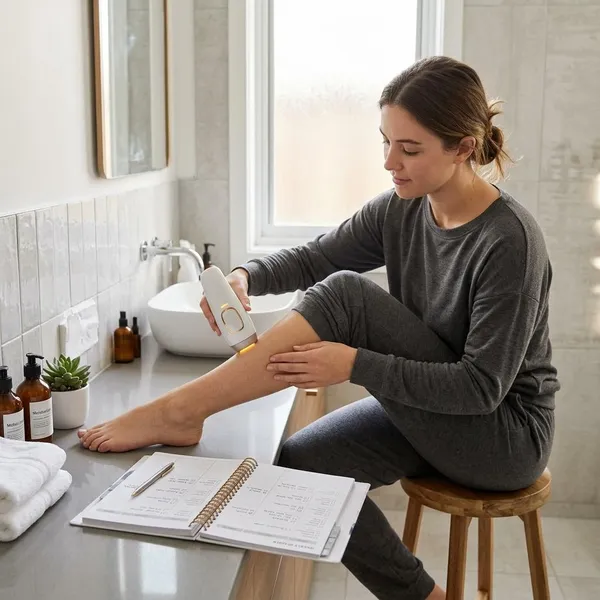
How to stay consistent with at-home treatments
The easiest routine is one you can repeat without thinking too much about it. A complicated plan often leads to skipped sessions, while a simple calendar habit helps you finish the starter phase without crowding treatments together.
Set regular treatment days
Pick treatment days that match your device interval and your real week. If your IPL device allows twice-weekly use, spacing sessions out is better than squeezing both into the weekend. If your device is weekly, choose a night when you have time to shave first and avoid rushing afterward.
Track every session
Tracking is especially useful if you treat different body areas on different days. For example, you might do lower legs on Sunday and underarms on Wednesday so each area gets enough attention without turning one evening into a long chore.
- Date of treatment
- Body area treated
- Intensity setting used
- Any redness, stinging, dryness, or missed patches
Keep the same treatment areas
Beginners often do better by starting with one or two areas instead of trying to treat everything at once. If you begin with legs and underarms, you can learn how long the process takes and how your skin reacts before adding the bikini line or face. That makes progress easier to judge and lowers the chance of losing track.
Record your results
Progress can be subtle, so record signs that matter in daily life: how often you shave, whether hair feels finer, and whether regrowth is patchy instead of dense. Photos every two or three weeks can help, as long as you use similar lighting and do not check so often that every tiny change feels disappointing.

Conclusion
The best schedule is the one your device was designed for, then adjusted cautiously based on how your skin and regrowth behave. Start with the manual, keep the recommended gap, finish the starter phase, and only move to maintenance when the hair is clearly returning more slowly. If you feel tempted to treat more often, that is usually the moment to slow down rather than push harder.
FAQS
Can you use at-home laser hair removal every day?
No. Daily use is usually not recommended because it can irritate your skin without making hair reduction happen faster.
What happens if you miss a treatment?
One missed treatment usually does not ruin your progress. Resume the normal schedule rather than doubling up or treating too soon to "catch up."
Should you restart after a long break?
If regrowth has mostly returned, you may need to go back to a starter-style routine. Use your device instructions to decide whether to restart fully or resume with maintenance.
Can you treat different body areas on different days?
Yes. It can make the routine easier, especially for large areas, as long as you track each area separately and keep the correct interval for each one.