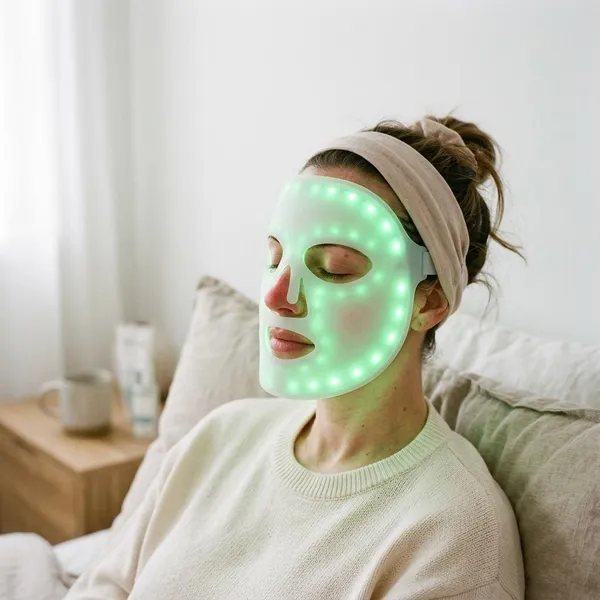
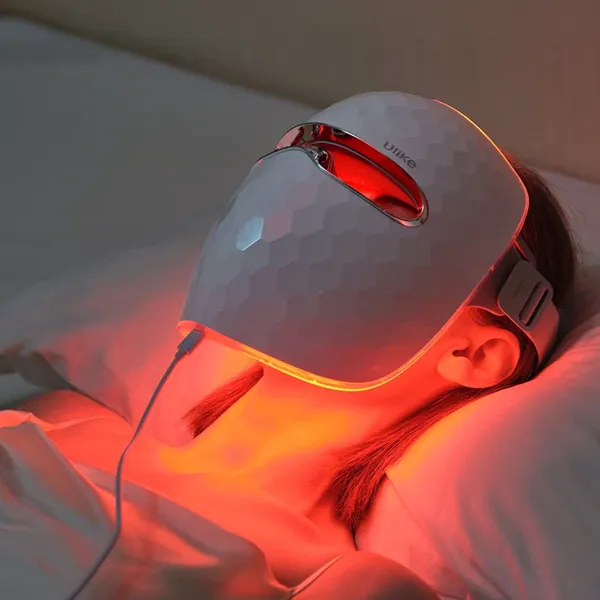
Should You Choose a Laser or LED Face Mask?
If you are comparing a laser face mask vs LED mask, LED is usually the easier choice for at-home skincare because it covers more of the face and is simpler to use consistently. Laser can make sense for very targeted areas, but it is not automatically "better" just because the light is more focused. For most people, the smarter first check is whether the device has the right wavelengths, safe eye guidance, good coverage, and a routine you will actually follow.
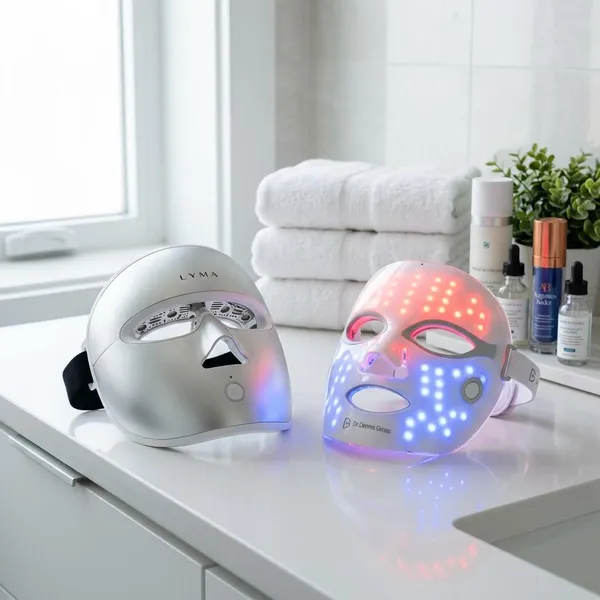
Laser face mask vs LED at a glance
LED masks are usually better for simple full-face routines. Laser devices are more focused, which can be useful for small treatment zones, but that precision can become less helpful if your main concern is spread across your cheeks, forehead, jawline, or chin.
| Best fit | Usually choose | Why it matters |
|---|---|---|
| Full-face anti-aging routine | LED | Covers more skin in one session |
| One small target area | Laser may be worth considering | More focused light delivery |
| Acne-prone skin | LED | Many masks include blue light modes |
| Beginner at-home use | LED | Usually easier to wear and repeat |
How laser and LED masks differ
The difference is not just marketing language. Laser light is coherent and more focused, while LED light is non-coherent and spreads more broadly. In everyday skincare, that creates a trade-off: laser can be more precise, while LED is usually easier for treating larger facial areas.
Laser uses coherent focused light
A laser uses coherent light, meaning the light waves are more aligned. In skincare devices, that is why laser is often linked with precision and targeted delivery.
The catch is that "laser" on a product page does not tell you enough by itself. A laser device still needs clear wavelength information, sensible power output, eye safety guidance, and a design that matches how you plan to use it at home.
LED uses non-coherent light
LED light is non-coherent, so it spreads out more. For a wearable mask, that wider spread is often a benefit because it helps cover multiple facial zones at once.
This is one reason LED masks are common for home use. They are not trying to treat one tiny point; they are built for repeatable, whole-face exposure.
Laser concentrates light more precisely
Precision is laser's main appeal. If your concern is narrow and you are willing to spend more attention on placement, that focused delivery may be useful.
For broad anti-aging goals, though, precision can be less important than even coverage. A person trying to soften overall texture or support the look of the whole face may not benefit much from a device that treats only small zones efficiently.
LED treats larger areas more easily
LED handles larger areas with less effort. That makes it a better match for people who want a routine they can do while sitting on the sofa, reading, or winding down before bed.
Which is better for different skin goals
Your skin goal should decide the technology, not the other way around. Laser may suit targeted anti-aging areas, while LED is usually the more flexible option for full-face aging concerns, acne-prone skin, and regular maintenance.
Laser for targeted anti-aging treatment
Laser may be worth considering if you are mainly worried about one small area, such as crow's feet or lines around the mouth. It is less compelling if your concern is general skin quality across the whole face.
This is where long-term use matters. A targeted device can be useful for someone patient and precise, but frustrating for someone who wants a quick mask routine before bed.
LED for full-face anti-aging routines
If fine lines, dullness, or uneven texture are spread across the face, LED is usually the more practical anti-aging choice. Many LED masks use red light, and some include near-infrared light, both commonly used in devices aimed at skin appearance and rejuvenation support.
- For early signs of aging: LED is often the easier starting point.
- For one stubborn area: a targeted device may deserve a closer look.
- For long-term maintenance: comfort and repeatability matter more than impressive wording.
Blue LED for acne-prone skin
For acne-prone skin, LED usually has the clearer advantage because many masks include blue light modes. Blue light is commonly used in consumer devices for blemish-prone skin, and some masks pair blue with red light for a more flexible routine.
If you get occasional breakouts plus post-breakout marks, a multi-mode LED mask is usually more useful than a laser-only tool aimed mainly at targeted aging concerns.
LED for regular skin maintenance
LED fits regular maintenance because it is broad, repeatable, and usually easier to live with. If your goal is to support tone, glow, and mild texture concerns rather than chase dramatic correction, a comfortable LED mask is often the sensible choice.
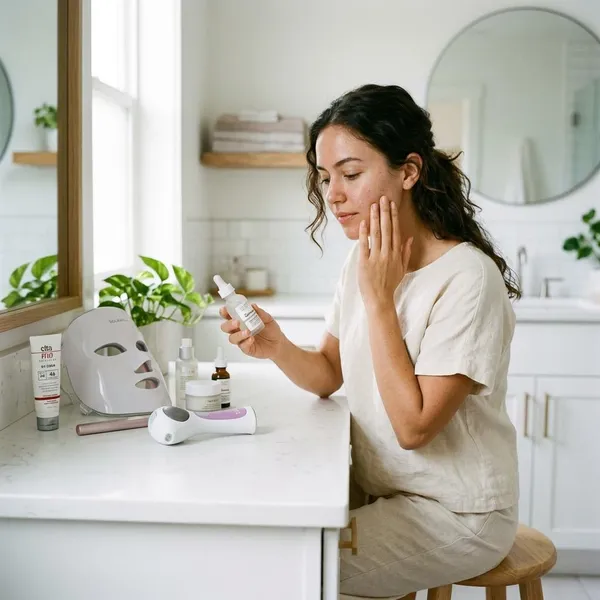
What matters more than laser vs LED
The label matters less than the treatment details. A well-designed LED mask can be more useful than a poorly specified laser device, especially for home users who need safe, even, repeatable sessions.
Wavelength
Wavelength tells you what the device is trying to do. Red light is commonly used for visible skin appearance and anti-aging routines, blue light is usually associated with acne-focused devices, and near-infrared is often included for deeper tissue exposure.
Light dose
Light dose is about how much usable light reaches the skin during a session. More intense does not automatically mean better; the dose needs to be safe, repeatable, and paired with a realistic treatment time.
Do not rely only on claims like "professional strength" or "deep treatment." Look for clear usage instructions, session length, distance or fit guidance, and any information about irradiance or tested output if the brand provides it.
Full-face coverage
Coverage can make or break the experience. A mask that misses the sides of the face, sits awkwardly away from the skin, or leaves common concern areas untreated may feel disappointing even if the technology sounds strong.
- Check the fit if you have a smaller or wider face shape.
- Look at light placement around the cheeks, mouth, forehead, and jawline.
- Avoid buying on light count alone; placement and evenness matter too.
Treatment schedule
The best schedule is the one you can repeat without turning it into a chore. If a mask needs frequent long sessions and you know you only have patience for short routines, choose the easier device.
Think in real-life terms: occasional use for a small concern is different from a long-term anti-aging routine several times a week. For long-term use, comfort, easy cleaning, charging, straps, and eye comfort can matter as much as the light technology.
Clinical evidence
Clinical evidence helps separate serious devices from vague beauty claims. Look for published testing, regulatory clearance where relevant, or at least clear information about how the device was evaluated.
Before-and-after photos and influencer reviews can be helpful for expectations, but they should not replace basic product evidence. If you have a skin condition, take photosensitizing medication, are pregnant, or have eye concerns, it is smarter to ask a dermatologist or clinician before using any light therapy device.
Which should you choose
Most home users should start with LED unless they have a very specific reason to choose laser. LED usually gives the best mix of full-face coverage, easier routines, acne and anti-aging options, and lower effort over time.
Laser is not a bad choice, but it is more of a targeted decision. If a laser mask costs more, covers less skin, or requires more careful use, it needs to solve a problem that LED does not solve well for you.
Choose LED for easy full-face treatment
Choose LED if your main goal is full-face anti-aging support, mild redness, dullness, uneven tone, or general skin maintenance. It is also the better pick if you want a device that feels easy enough to keep using after the first week of excitement wears off.
Choose LED for acne and anti-aging options
Choose LED if you want one device with more than one use case. A red and blue LED mask can be useful for someone who gets breakouts but also wants anti-aging support, or for a household where different people have different skin goals.
Skip the laser upgrade if the only reason is that it sounds stronger. Pay more only when the device gives you clearer specs, safer design, better evidence, or a targeted benefit you genuinely need.
Conclusion
For most at-home skincare routines, LED is the better everyday choice because it is easier to use across the whole face and more flexible for both aging and acne-prone concerns. Laser may still make sense for focused treatment, but only if the device has clear specs, appropriate safety guidance, and fits a specific goal. Choose the mask you can use correctly and consistently, not the one with the most impressive label.
FAQS
Is a laser face mask stronger than LED?
Not always. Laser light is more focused, but a device is only as good as its wavelength, dose, coverage, and safety design.
Does laser penetrate deeper than LED?
It depends on the wavelength and device design. Some LED masks include near-infrared light, so "laser" alone is not enough to judge depth.
Is laser or LED better for wrinkles?
LED is usually better for wrinkles spread across the face. Laser may be useful for a small targeted area, but it is less convenient for broad facial treatment.