Does At-Home Laser Hair Removal Actually Work?
At-home laser hair removal can work, but the realistic goal is less hair, slower regrowth, and fewer shaving sessions—not permanently bare skin after a few uses. It works best when there is strong contrast between dark hair and lighter skin, and it usually needs a steady treatment routine plus occasional maintenance. If your hair is very light, your skin tone is outside the device's approved range, or you want fast dramatic results, a clinic is often the better route.

Does at-home laser hair removal really work?
For many people, it can work, but it is more accurately described as long-term hair reduction rather than permanent hair removal. A home device uses light energy to heat the pigment in the hair, which may weaken the follicle over repeated sessions. Because hair grows in cycles, a single treatment cannot target every follicle at the ideal stage.
The first thing to check is not the price or number of flashes. Check whether your skin tone and hair color are suitable for the device. A consistent routine on dark underarm or bikini-line hair is a very different situation from trying to treat pale blonde leg hair before a holiday.
It can reduce hair growth over time
The change usually builds slowly. You may first notice that stubble takes longer to appear, then that some hairs come back softer or thinner. Dense areas can look uneven for a while because some follicles respond earlier than others.
For someone who shaves their underarms every day, even stretching that to once or twice a week can feel like a real result. For someone expecting a completely smooth finish after two sessions, the same progress may feel disappointing.
Results vary by skin and hair color
Light-based devices depend on melanin in the hair. That is why black or dark brown hair on light to medium skin usually responds best, while gray, white, red, and very light blonde hair often respond poorly.
- Best match: dark hair with an approved lighter or medium skin tone.
- Often weak results: very light hair because there is little pigment for the light to target.
- Higher caution: deeper skin tones, recent tanning, or a history of pigmentation changes.
If your match is borderline, do not guess based on online reviews. Use the device's skin-tone chart and consider asking a dermatologist before buying.
Maintenance is usually needed
Even when the device works well, touch-ups are usually part of the deal. Hormones, dormant follicles, and natural regrowth can bring some hair back, so home treatment is best for people who are comfortable maintaining results rather than "finishing" the process once and never thinking about it again.
Laser vs IPL at home
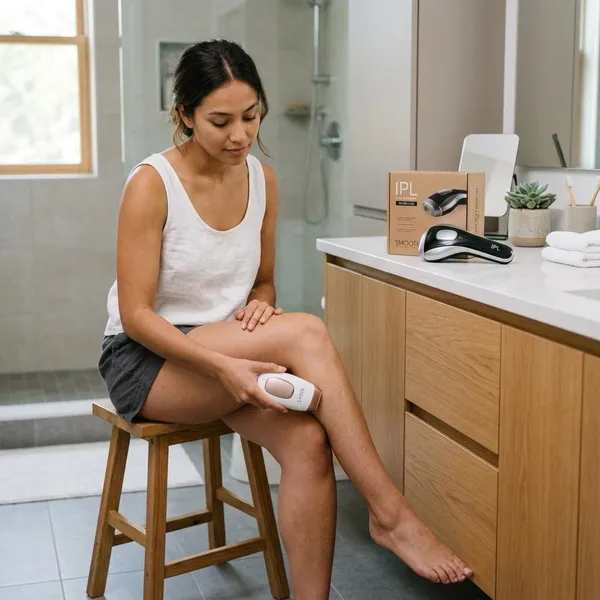
Many devices sold for home "laser" hair removal are actually IPL devices. Both use light to target pigment in the hair, but they deliver that light differently. For a buyer, the practical difference is usually treatment area, speed, precision, and whether the device is approved for your skin and hair combination.
Laser uses a focused wavelength
A laser uses a more focused wavelength, which can make it feel more precise on smaller treatment zones such as underarms, toes, or the edge of the bikini line. A home laser is still not the same as a professional clinic laser, though; consumer devices are lower powered, so the results are usually slower.
IPL uses a broader light spectrum
IPL sends pulses across a broader range of light. The larger flash window can make it more convenient for legs or arms, especially if you want a realistic routine you can keep up with at home.
The trade-off is precision. IPL tends to rely even more on a good contrast between hair pigment and surrounding skin, so it is not automatically the better choice just because it covers more skin quickly.
Both target pigment in the hair
Laser and IPL share the same basic target: pigment in the hair. The light is absorbed, heat builds around the follicle, and repeated sessions can weaken future growth.
- That explains the best results: dark, coarse hair usually gives the device more pigment to work with.
- That explains poor results: very light hair may not absorb enough light.
- That explains the safety limits: skin with more competing pigment may be at higher risk if the device is not approved for it.
What results can you expect?
The most realistic result is easier hair management. You may still need to shave, but less often, and the hair that returns may be finer or patchier. Body area matters too: underarms and bikini line often respond well because the hair is usually darker and coarser, while large areas like legs can take more patience simply because there is more ground to cover.
Think about your goal before buying. If you want a lower-maintenance year-round routine, a home device may make sense. If you only want perfectly smooth legs for one summer trip starting next week, it is probably the wrong tool for that timeline.
Slower hair regrowth
Slower regrowth is often the first useful sign. The area may stay smoother for longer after shaving, even before you see obvious bare patches.
Finer or patchier hair
Hair may come back softer, thinner, or unevenly spaced. That patchy stage can look awkward, but it often means some follicles are responding while others still need more properly timed sessions.
A practical way to judge progress is to compare upkeep, not perfection. If shaving takes less time, razor bumps are calmer, or stubble feels less coarse, the device may be helping even if the area is not hair-free.
Less frequent hair removal
For many people, this is the result that matters most. Needing to shave once a week instead of every day can be enough to reduce irritation, save time, and make last-minute plans less annoying.
Ongoing maintenance
After the initial treatment phase, most users need occasional touch-ups. How often depends on the area, hormones, genetics, and how well your hair responded at the start. If you know you will not keep the device charged, cleaned, and scheduled, professional sessions may be a better fit despite the higher cost.
How to get better results safely
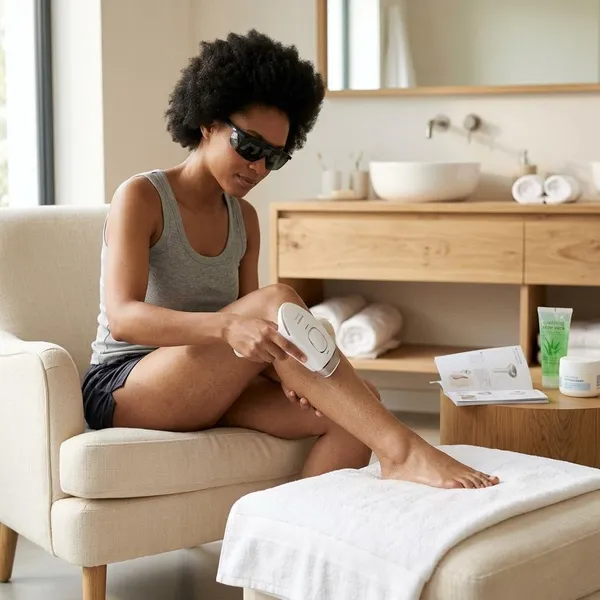
The safest way to improve results is to remove the common reasons home treatment fails: poor compatibility, skipped sessions, waxing between treatments, using the wrong intensity, and treating skin that should be left alone. Do the boring checks first, because they matter more than pushing the device harder.
Check skin and hair compatibility
Start with the device chart and compare it to your actual skin tone and hair color in the area you want to treat. Do not assume one body area predicts another; dark bikini-line hair may be suitable while lighter arm hair may barely respond.
If you have deeper skin, very reactive skin, melasma, or a history of post-inflammatory pigmentation, it is worth getting professional advice before using a home light device. That is not overcautious; it is cheaper than dealing with a burn or uneven discoloration later.
Shave before treatment
Shave the area so the light can reach the hair below the surface instead of heating long hair above the skin. Waxing, tweezing, or epilating removes the target from the follicle, so those methods can make your sessions much less effective.
Patch test as directed
A patch test is especially useful on sensitive zones such as the bikini line, underarms, or upper lip. Treat a small approved area, wait the time stated by the manufacturer, and look for unusual redness, swelling, blistering, or delayed darkening before continuing.
Use the recommended intensity
Higher intensity is not always better. A setting you can use consistently and comfortably is usually more useful than one harsh session that leaves your skin irritated and makes you avoid the device for weeks.
Increase only within the device guidance. If your skin feels hot, stings sharply, or stays irritated longer than expected, step back rather than trying to "push through."
Follow the treatment schedule
Consistency matters because hair follicles are not all in the same growth phase at once. Set reminders if you need to; a device used regularly at the right interval usually beats an expensive device used randomly.
Follow tanning and area restrictions
Do not treat sunburned, freshly tanned, irritated, broken, or recently exfoliated skin. Also avoid tattoos, dark moles, and any facial or intimate area that the manufacturer excludes.
This is where a low-risk and high-risk situation differ. Treating approved underarm skin that has not seen sun exposure is not the same as treating a recently tanned upper lip or a tattooed bikini area. When the area is visible, sensitive, or pigment-prone, choose caution.
Conclusion
At-home devices are worth considering if your hair and skin are a good match, your goal is lower maintenance, and you are willing to follow a routine for weeks before judging the result. They are not the best shortcut for very light hair, unsuitable skin tones, last-minute smoothness, or the strongest possible reduction. Check compatibility first, then decide whether convenience at home is more valuable to you than faster professional treatment.
FAQS
Is at-home laser hair removal permanent?
Usually no. It can give long-term reduction, but most people still need touch-ups because some follicles recover or become active later.
How long does at-home hair removal take to work?
Many people need several weeks of consistent use before the change is obvious. Early results often look like slower regrowth rather than bare skin.
Does at-home laser hair removal hurt?
It can sting or feel warm, but it should not feel sharply painful. If the sensation feels intense or your skin reacts strongly, stop and lower the setting or check whether the area is suitable.
Can you use an at-home device on your face or bikini line?
Sometimes, but only on areas the device specifically approves. Keep it away from the eyes, do not use it on restricted intimate areas, and be more cautious on skin that marks easily.