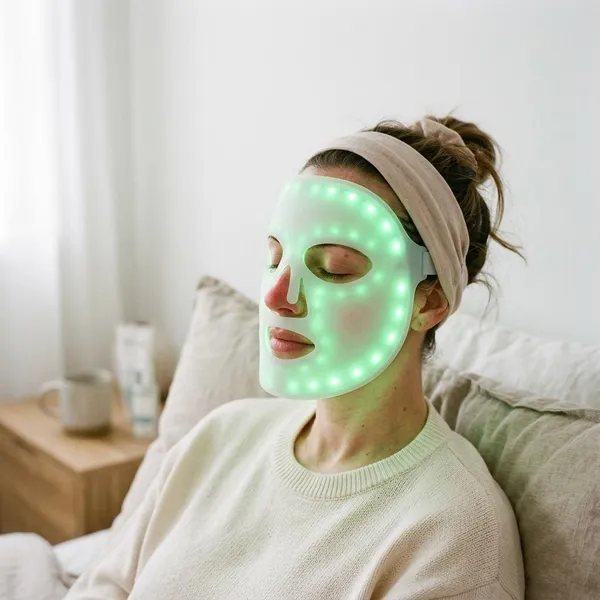
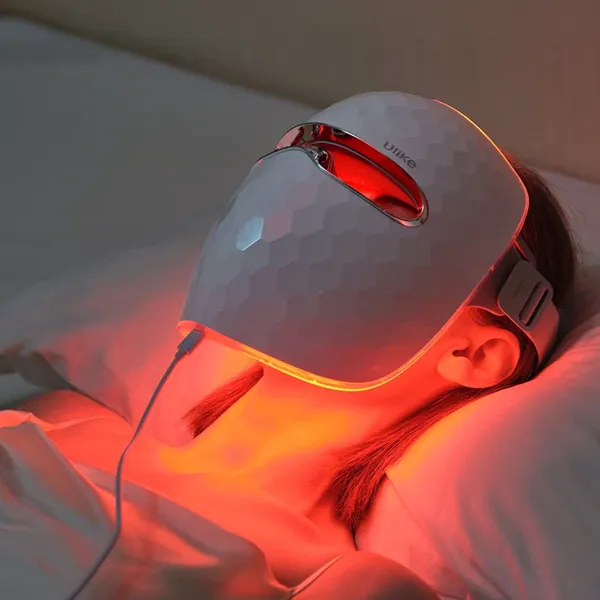
Can LED Face Masks Cause Side Effects?
LED face mask side effects are usually mild, but the ones worth taking seriously are lingering redness, barrier irritation, and eye discomfort. The safest approach is to check three things before your first session: the device schedule, your medication or skincare warnings, and whether you need proper eye protection. If you have melasma, a light-sensitive condition, unexplained rashes, or eye problems, it is better to ask a clinician before experimenting at home.
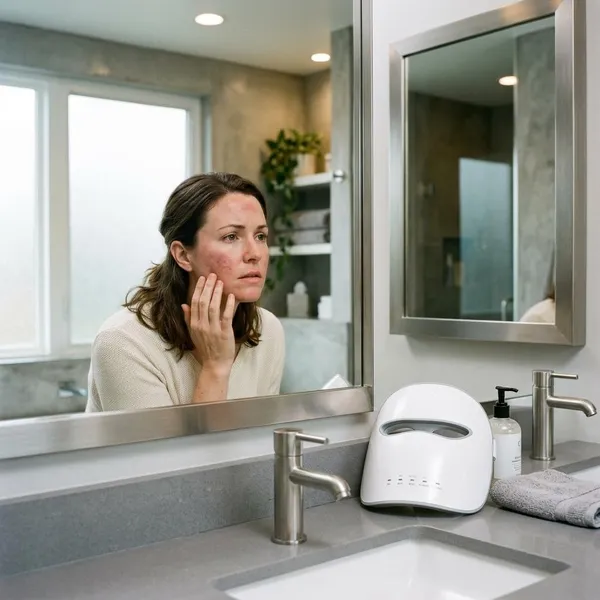
Common LED face mask side effects
Most reactions happen because the skin or eyes are getting more stimulation than they tolerate well. A slight flush after a session can be normal; skin that stays hot, itchy, dry, or more sensitive over the next day is a sign to slow down or pause.
Temporary redness
A light pink tone right after treatment is one of the more common reactions and often fades within minutes to a few hours. It becomes more concerning if the redness feels hot, spreads unevenly, lasts into the next day, or appears faster each time you use the mask.
For someone using a mask occasionally on calm skin, mild redness may only mean the skin was briefly stimulated. For someone with rosacea, recent exfoliation, sun exposure, or a damaged barrier, the same redness can be an early warning that the routine is too much.
Dryness or tightness
Dryness usually shows up as tight, rough, or slightly uncomfortable skin after treatment. It is more likely if you already use drying acne products, retinoids, exfoliating acids, or a cleanser that leaves your face squeaky-clean.
- First adjustment: reduce session frequency before adding more products.
- Skin support: use a plain, fragrance-free moisturizer after treatment.
- Warning sign: flaking, stinging, or tightness that lasts more than a day.
Mild irritation or itching
Itching can come from the light, but it can also come from heat, mask pressure, sweat, leftover skincare, or friction where the device touches your face. If the itch appears only along the cheeks, nose bridge, or forehead contact points, the fit or cleanliness of the mask may be part of the problem.
A practical test is to use the device only on clean, dry skin and keep the rest of your routine simple that day. If itching still repeats, stop using the mask rather than trying to "push through" a reaction.
Eye discomfort or light sensitivity
Eye symptoms deserve more caution than mild skin redness. Watering, afterimages, headaches, eye strain, blurred vision, or sensitivity after treatment can mean too much light is reaching the eyes.
Do not rely on closed eyelids if the device instructions recommend goggles, shields, or inserts. If discomfort returns even with protection, the mask may not fit your face well enough, or LED treatment near the eyes may not be a good choice for you.
What increases the risk of side effects
The biggest risk factors are usually not mysterious: too much use, longer sessions than directed, photosensitizing medication, light-sensitive conditions, and weak eye protection. If you want a quick priority order, check medication warnings and eye safety first, then adjust frequency and treatment time.
Using the mask too often
More sessions do not automatically mean better results. At-home LED devices are designed around a specific routine, and using them more often than directed can turn a mild reaction into ongoing sensitivity.
This matters most for people who are trying to speed up acne or anti-aging results. A beginner with calm skin may tolerate the recommended schedule well, while someone already using retinol or benzoyl peroxide may need the lower end of the suggested frequency.
Extending treatment time
Leaving the mask on longer than recommended is a common mistake because it feels harmless in the moment. The problem is dose: extra time may add irritation without adding benefit.
If your device has no automatic shutoff, set a timer before you start. That small habit also makes it easier to notice patterns, such as redness only happening after longer sessions or only when you use a certain light setting.
Taking photosensitizing medications
Some medications and treatments can make skin or eyes react more strongly to light. This can include certain acne medications, antibiotics, diuretics, antifungals, anti-inflammatory drugs, lithium, and products that carry photosensitivity or sun-sensitivity warnings.
The safest check is simple: read the patient leaflet or label for light-sensitivity warnings, and ask a pharmacist or doctor if you are unsure. Be especially cautious if you recently started a new prescription and your skin suddenly reacts to products or routines you used to tolerate.
Having light-sensitive conditions
Conditions such as lupus, porphyria, some seizure disorders, and light-triggered skin problems can change whether LED use is sensible. Non-UV light is not the same as sunlight, but that does not make every home device automatically low risk for every person.
Melasma is a separate concern because visible light and heat may worsen pigmentation in some people. If your dark patches deepen after sun, heat, inflammation, or summer weather, long LED sessions or near-infrared settings are worth discussing with a dermatologist first.
Skipping recommended eye protection
Skipping eye protection is one of the least useful risks to take. LED masks sit close to the eyes, and small gaps around the nose or cheeks can let light leak in even when the mask looks properly placed.
- Use the included protection if the device provides goggles, shields, or inserts.
- Check for gaps before starting, especially around the inner eye area.
Stop for symptoms such as afterimages, eye pain, headaches, or blurred vision.
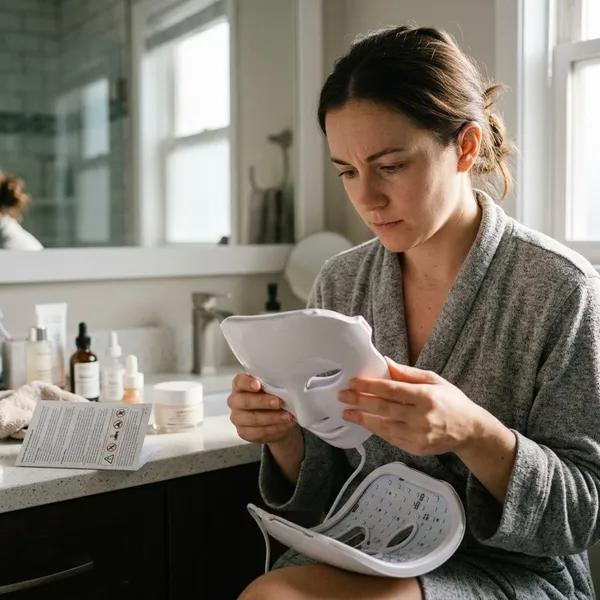
How to use an LED face mask safely
A safe routine should be boring in the best way: clean skin, correct session length, proper eye protection, and no stacking of harsh skincare on the same day. If you are choosing between doing more and staying consistent, consistency is the better bet.
Follow the recommended schedule
Use the schedule in your device manual rather than copying someone else's routine. If the instructions give a range, sensitive or reactive skin should start at the lower end.
Give your skin enough time to show a pattern before changing everything. For example, a person using the mask twice a week with no irritation can judge tolerance more clearly than someone who changes light settings, session length, and skincare products every few days.
Start with clean dry skin
Clean, dry skin reduces variables. Makeup, sunscreen, facial oil, and heavy creams can affect how the mask sits, trap heat, or make it harder to tell whether a reaction came from the device or from something left on the skin.
- Before treatment: cleanse gently and pat dry.
- Skip right before LED: strong acids, scrubs, retinol, and benzoyl peroxide unless advised otherwise.
- After treatment: use a basic moisturizer if your skin feels tight.
Use the recommended eye protection
Eye protection should be part of every session, not something you use only when the light feels bright. A short session can still bother sensitive eyes if the mask leaks light or sits poorly.
If the protection shifts, pinches, or leaves visible gaps, fix that before turning the device on. If you cannot get a comfortable fit, that is a reason to choose a different setup rather than accept eye strain as normal.
Check medication warnings
Medication and skincare checks are worth doing before the first session, not after your skin reacts. Look for wording such as photosensitivity, light sensitivity, or sun sensitivity on prescriptions, acne treatments, and strong topical products.
- Read the device instructions for session length, frequency, eye protection, and cleaning.
- Review your routine for retinoids, acids, benzoyl peroxide, or prescription topicals.
- Check medication labels or ask a pharmacist if any warning is unclear.
- Start conservatively if your skin is sensitive, dry, or recently irritated.
Pause if reactions build instead of increasing use to chase faster results.
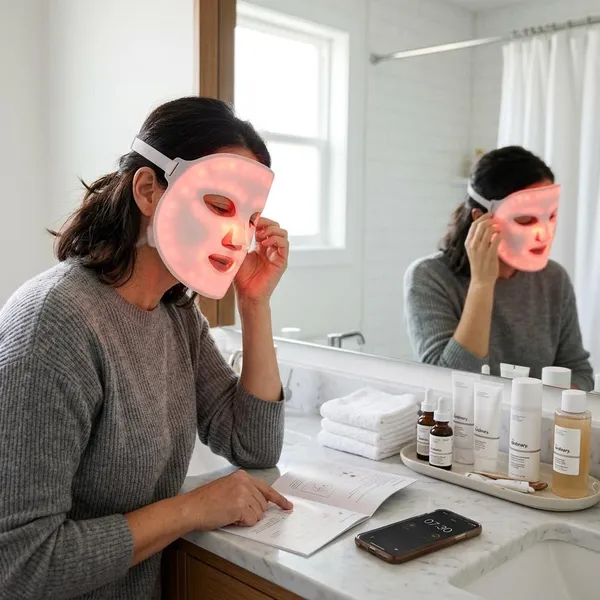
Who should ask a doctor before using LED
Most healthy users do not need a medical appointment just to try a home LED mask, but some situations are different. If light, heat, medication, pigmentation, eye disease, or unexplained skin symptoms are already part of the picture, professional advice can prevent a small experiment from becoming a longer problem.
People taking photosensitizing medication
Ask a doctor or pharmacist before using LED if your medication carries a light-sensitivity warning. The question to ask is not only "Can I use this?" but also "Should I wait, avoid certain settings, or use a different treatment while I am on this medication?"
People with photosensitive conditions
Medical clearance is sensible if you have a condition known to flare with light exposure. This includes autoimmune, metabolic, neurological, or skin conditions where light or heat can trigger symptoms.
A clinician may recommend avoiding LED entirely, using only certain wavelengths, or treating the underlying skin concern in another way. That decision is hard to make from a product manual alone.
People with significant eye conditions
Anyone with inherited retinal disease, severe dry eye, recent eye surgery, glaucoma concerns, or recurring light-triggered eye symptoms should ask an eye doctor before using a bright device close to the face.
For a person with healthy eyes, correct protection may be enough. For a person who already gets pain, halos, migraines, or strong sensitivity from bright light, the risk-benefit calculation is different.
People with unexplained skin reactions
If you have persistent redness, swelling, itching, dark patches, or rashes that have not been diagnosed, do not use LED as a guessing tool. Different conditions can look similar in the mirror but need very different treatment plans.
- Possible rosacea: heat and light may worsen flushing in some people.
- Possible melasma: visible light and irritation may deepen pigmentation.
- Possible dermatitis: mask pressure, sweat, or residue may aggravate the barrier.
Conclusion
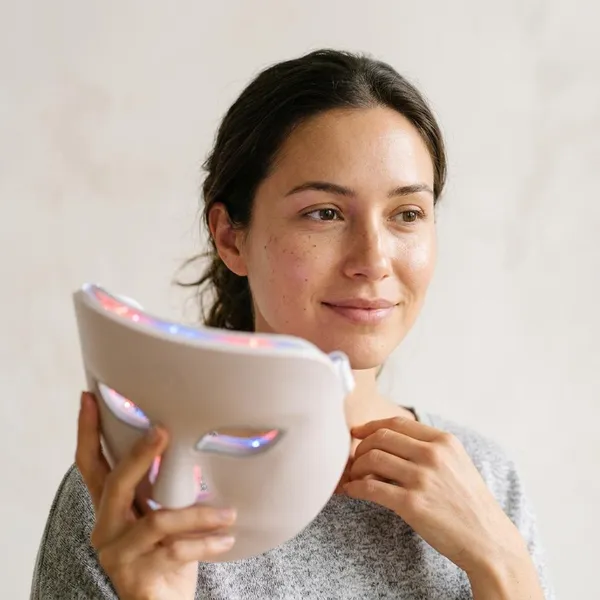
An LED mask is usually a low-risk beauty device when it is used as directed, but it is not something to intensify just because the first few sessions feel fine. Start with the manual, protect your eyes, keep skincare simple on treatment days, and treat lingering redness, itching, dryness, or eye symptoms as a reason to pause. If medication warnings, melasma, light sensitivity, or eye conditions apply to you, getting advice first is the more practical choice.
FAQS
Is it safe to use an LED face mask every day?
Only if your specific device recommends daily use. If the manual suggests a few sessions per week, daily use is more likely to add irritation than better results.
Can you use an LED mask with retinol?
Sometimes, but separating retinol nights from LED sessions is often easier on the skin. Be more cautious if you are new to retinol, using a strong formula, or already noticing dryness.
Can LED masks make melasma worse?
They may in some people. If your pigmentation darkens with heat, visible light, or irritation, ask a dermatologist before using an LED mask at home.
Can red light therapy damage your eyes?
Correct use with proper eye protection is generally considered lower risk for healthy users, but eye symptoms are not something to ignore. Stop if you notice pain, blurred vision, or repeated light sensitivity.
How long should redness last after LED therapy?
Mild redness should usually settle within minutes to a few hours. Redness that lasts into the next day, feels hot, or worsens after each session is a sign to pause and reassess your routine.