Can an Nd YAG Laser Safely Remove Hair at Home?
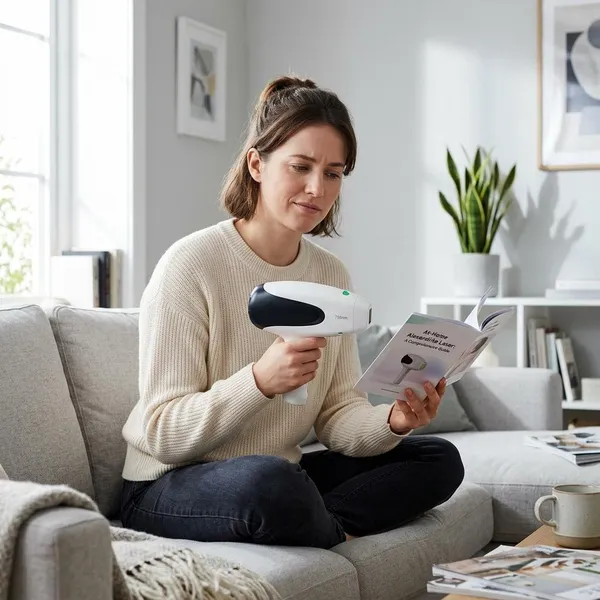
If you are looking for nd yag laser hair removal at home, the practical answer is that true clinic-style Nd:YAG treatment is not really a home option. What you can buy is usually IPL, a consumer diode laser, or in some cases a lower-energy 1064 nm diode device. The smart move is to check the actual technology first, then decide whether home use is realistic for your skin tone, hair type, and risk level.
Why is 1064 nm used for darker skin?
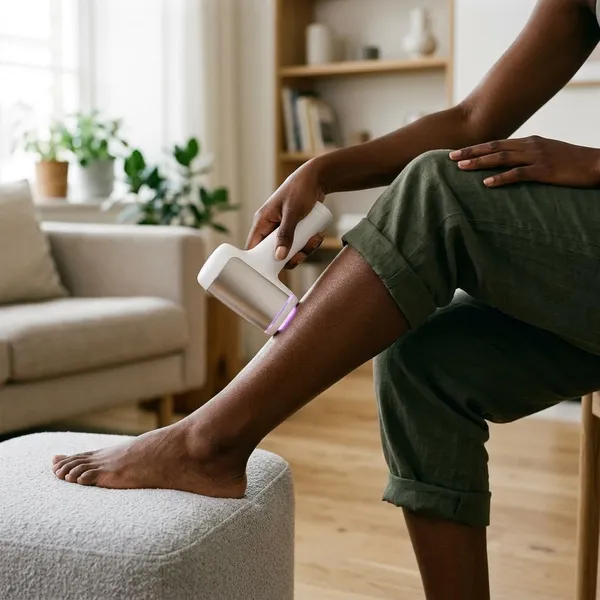
Professional Nd:YAG hair removal is often discussed for darker skin because its 1064 nm wavelength behaves differently from shorter hair-removal wavelengths. It is less strongly absorbed by surface pigment, can reach deeper hair follicles, and may offer a better safety margin for deeper skin tones when used correctly.
That last part matters. A safer wavelength does not make treatment foolproof. Settings, cooling, recent tanning, hair thickness, and the person operating the device all affect whether treatment is sensible.
Lower melanin absorption in the epidermis
The main reason 1064 nm is useful for darker skin is that it is less attracted to melanin in the epidermis, the outer layer of the skin. Less surface absorption means there is usually less unwanted heating of skin pigment compared with many shorter wavelengths.
For someone prone to post-inflammatory hyperpigmentation, that difference can be important. It does not remove the risk of burns or dark marks, but it gives a trained provider more room to treat the hair follicle without overheating the skin surface.
Deeper light penetration
At 1064 nm, light can penetrate more deeply into the skin than some shorter wavelengths used for hair removal. That can help when the target is coarse hair with deeper follicles, such as underarm hair, bikini-line hair, beard-area hair, or chest hair.
Better suitability for deeper skin tones
This is where Nd:YAG has its strongest reputation: medium-deep to dark skin tones are often harder to treat safely with pigment-hungry devices. A professional 1064 nm Nd:YAG laser may be a better match when dark skin and dark coarse hair are both present.
Hair color still limits results. Dark, coarse hair usually responds best. Blond, red, gray, or white hair may respond poorly because light-based hair removal needs enough pigment in the hair to absorb energy.
Proper settings and cooling still matter
Cooling and settings are not small details. A clinic device can use strong cooling, adjustable pulse settings, and test spots to reduce the chance of irritation or pigment changes. A home device may have sensors or a cooling plate, but that is not the same as medical-grade cooling plus trained judgment.
If your skin is recently tanned, irritated from exfoliants, sunburned, or reacting to skincare, it is a bad time to treat it with any light-based device.
What can you actually use at home?
At home, your realistic choices are not true professional Nd:YAG machines. Most options fall into three groups: IPL devices, consumer diode laser devices, and a smaller number of 1064 nm diode devices. The right choice depends less on the word "laser" and more on skin compatibility, hair color, safety controls, and how patient you are willing to be.
| Home option | Best fit | Main limitation |
|---|---|---|
| IPL | Light to medium skin with dark hair | Often less suitable for deeper skin tones |
| Consumer diode laser | Users wanting a more targeted home device | Lower power than clinic lasers |
| 1064 nm diode device | Some users seeking a darker-skin-friendly home option | Not the same as professional Nd:YAG |
How to check a 1064 nm home device
Start with proof, not marketing language. The first thing to verify is whether the product is truly a diode laser, IPL, or another light-based device. After that, check whether your skin tone, hair color, and intended treatment area are clearly supported.
Confirm the actual laser technology
Look for the exact technology name in the manual or official technical information. "1064 nm," "salon-grade," or "professional-inspired" is not enough. A transparent brand should make it clear whether the product is IPL, diode laser, or something else.
Check the supported skin-tone range
Match your skin to the brand's skin-tone chart before buying, not after the box arrives. If your tone sits near the darkest approved shade, be more conservative with intensity and patch testing.
- Check your natural skin tone, not a fresh tan.
- Confirm that your hair color is also supported.
- Avoid treatment on irritated, sunburned, or recently exfoliated skin.
Review regulatory clearance
Regulatory clearance does not promise perfect results, but it is still an important filter. In the United States, look for FDA clearance for home hair removal; in other markets, check the relevant local approval or conformity route.
Be careful with weaker-sounding claims. "FDA registered" or "made in an FDA-registered facility" is not the same as clearance for the device's intended use.
Check energy and safety controls
Useful home-device controls include skin-contact sensors, skin-tone detection, intensity limits, flash lockout, cooling features, and automatic shutoff. These features matter because they reduce the chance of misfiring or treating skin the device cannot safely read.
Comfort also affects results. If a device is so uncomfortable that you stop after three sessions, the theoretical wavelength will not help much.
Follow the approved treatment areas
Only use the device on areas named in the manual. Legs, arms, underarms, and bikini line are common approved areas; facial use may be limited to below the cheekbones. Eyebrows and areas close to the eyes should not be improvised with a home light device.
For sensitive intimate areas or facial hormonal hair, be extra cautious. If hair growth is new, sudden, or linked with skin changes, it may be better to speak with a professional before repeatedly treating the area at home.
What results should you expect at home?
Home devices are usually best judged by reduced maintenance, not total hair removal. A good result may mean slower regrowth, softer stubble, fewer shaving sessions, or patchier hair return after a full treatment cycle.
That can still be worthwhile. Someone treating lower legs for convenience may be happy with less shaving. Someone trying to clear dense beard-area growth or stubborn hormonal chin hair may find home devices too slow or limited and may be better served by professional advice.

Gradual hair reduction
Gradual reduction is the normal pattern. You may notice hair coming back more slowly before you see obvious bare patches. This happens because light-based devices work best on hairs in the active growth phase, and not all hairs are in that phase at once.
Multiple treatments
Expect a series of sessions. Most home devices use an initial schedule followed by maintenance, but the exact timing should come from the device instructions.
Do not treat more often just because progress feels slow. Extra sessions or higher intensity can increase irritation without giving better long-term reduction.
Slower visible regrowth
Slower visible regrowth is often the first useful sign. If shaving lasts longer, stubble feels softer, or irritation from frequent shaving drops, the device may already be improving your routine even if the area is not fully clear.
Maintenance over time
Maintenance is part of the deal with home hair removal. Hair can return because of hormones, genetics, missed growth cycles, or simply because consumer devices use lower power than clinic systems.
If you want a low-cost, long-term routine and accept touch-ups, home treatment can make sense. If you want faster reduction on dense dark hair, especially with a deeper skin tone, professional Nd:YAG treatment may be the more practical route.
Conclusion
True Nd:YAG hair removal is still mainly a professional treatment, so do not buy a home device expecting clinic-level 1064 nm performance. For home use, choose based on verified technology, approved skin tone, supported hair color, safety controls, and the areas you actually want to treat. If your skin is deeper, easily marked, recently tanned, or the hair is dense and stubborn, paying for professional assessment may be safer and more satisfying than trying to force a home device to do a clinic laser's job.
FAQS
Is there a true at-home Nd:YAG laser?
Not in the same way clinics use Nd:YAG. Home products may mention 1064 nm, but they are usually lower-energy consumer devices rather than professional medical Nd:YAG systems.
Is a 1064 nm diode laser the same as Nd:YAG?
No. They may use a similar wavelength, but the light source and energy delivery are different. Treat a 1064 nm diode home device as its own category, not a home version of a clinic Nd:YAG laser.
Is Nd:YAG better for dark skin?
Often, yes. Professional Nd:YAG is commonly favored for deeper skin tones because 1064 nm is less absorbed by surface melanin, but safe results still depend on correct settings, cooling, and skin assessment.