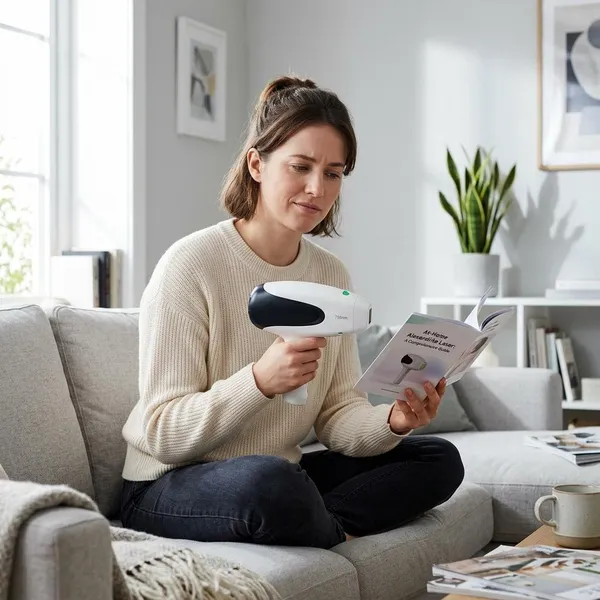
Why Am I Not Seeing Results From IPL Hair Removal?
If you are asking why is my at home laser hair removal not working, start with the boring checks first: time, schedule, hair and skin match, coverage, and whether the device is actually flashing properly. Home IPL and laser devices usually do not give quick, dramatic results, but you should still see small signs of progress after a consistent course. If there is no slower regrowth, no finer hair, and no patchiness at all, something in the routine or device setup needs a closer look.
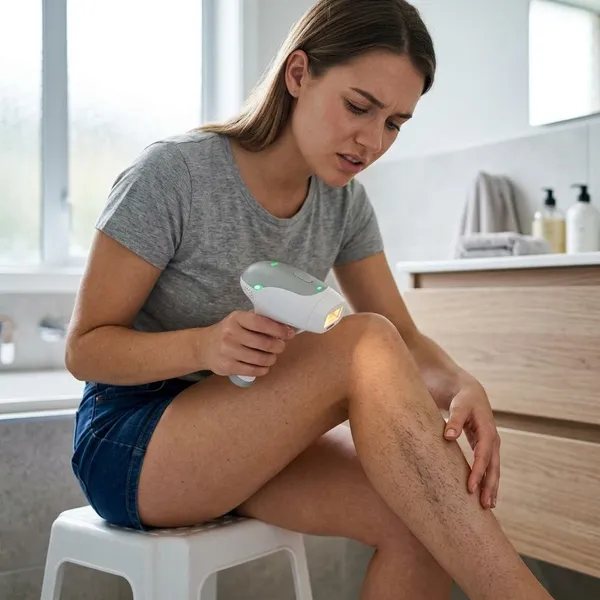
Why at-home laser hair removal may not be working
Most poor results come from one of five things: judging too early, missing sessions, using the device on hair or skin it is not well suited for, treating with uneven technique, or using a handset that is not firing correctly. Check them in that order before deciding the device is useless.
You have not used it long enough
Two or three sessions is usually too soon to judge at-home IPL or laser. These devices work on hairs during certain growth phases, and not every follicle is in the right phase on treatment day. Many brands suggest a starter course of weekly or biweekly sessions for around 8 to 12 weeks, though the exact schedule depends on the device.
A useful way to judge timing is to separate "still seeing hair" from "nothing is changing." If you are only four weeks in and still shaving, that can be normal. If you have finished the full recommended course and your shaving frequency, hair texture, and density look exactly the same, then it is reasonable to question the result.
Your sessions are too inconsistent
At-home treatment is easy to ruin with a stop-start routine. If you treat one week, skip two weeks, then restart when you remember, you may keep missing the best window for enough follicles. This is especially common when someone buys a device before summer, uses it intensely for a few weeks, then drops the routine once the weather changes.
- Best first fix: choose one treatment day and keep it visible on your calendar.
- Track by area: legs, underarms, and bikini line may not progress at the same speed.
- Do not restart randomly: if you miss several sessions, go back to the device's recommended schedule rather than guessing.
Your skin and hair may be a poor match
Home IPL and many light-based hair removal devices work best when the device can clearly target pigment in the hair. Darker hair on lighter to medium skin usually responds better than blonde, red, grey, white, or very fine hair. Very deep skin tones may also be unsuitable for some home devices because of safety limits, depending on the model.
This is not a technique problem. Someone with coarse dark lower-leg hair may notice slower regrowth fairly quickly, while someone treating pale facial fuzz may see almost nothing even with perfect scheduling. Before spending months repeating the same routine, compare your hair and skin tone with the compatibility chart for your exact device.
Your technique may be reducing coverage
Uneven coverage can make a working device look unreliable. The flash only affects the area under the treatment window, so moving too quickly, lifting the device at curves, or leaving small gaps can create normal-looking regrowth right beside treated patches.
- Shave, do not wax: the root needs to stay in place for the light to target it.
- Use a simple pattern: work in rows instead of randomly stamping around the area.
- Slow down on curves: knees, ankles, underarms, and bikini edges are easy to miss.
- Keep the window flat: poor contact can stop the flash or reduce effective coverage.
Your device may not be flashing correctly
If the handset powers on but flashes only sometimes, your results will be inconsistent no matter how carefully you follow the schedule. Many devices will refuse to flash when the skin sensor is blocked, the window is not flat, the battery is low, the unit is too hot, or the skin tone sensor rejects the area.
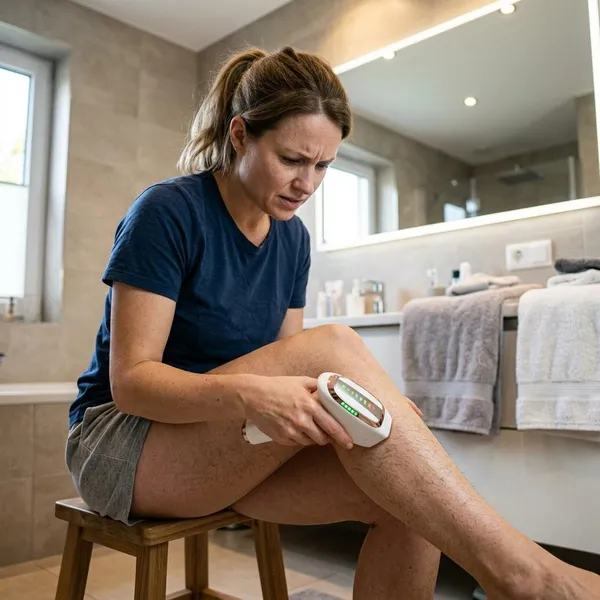
Signs your at-home treatment may still be working
Progress is not always bare skin. With home IPL or laser, the first useful signs are often slower regrowth, softer hair, and uneven patches where some follicles respond sooner than others. Compare the area with your own baseline, not with a clinic before-and-after photo.
Hair grows back more slowly
Slower regrowth is one of the clearest early signs. If you used to shave your lower legs every two days and now you can wait four or five, the device is probably doing something even though hair is still visible.
Regrowth looks finer
Hair that comes back softer, thinner, or less prickly can mean the follicle is weakening. This can be easy to miss on areas you shave often because the skin still does not feel completely smooth.
Hair becomes patchier
Patchiness can be either a good sign or a technique warning. Random thinner areas mixed with slower regrowth often suggest some follicles are responding. Straight lines, missed strips, or untouched edges usually point to uneven coverage instead.
Look at the pattern. If bare spots gradually spread over several sessions, keep going. If the same narrow bands keep growing normally, change your stamping or glide pattern before the next treatment.
How to check if your device is working properly
When results stall, check the device like a simple fault-finding process: flash, window, sensors, error signals, then support. This prevents you from wasting weeks on a unit that is not delivering consistent light.
Confirm the device flashes normally
Use the device on a shaved area that the manual says is suitable, hold the window flat, and test the normal treatment mode. A working device should flash in a predictable way. If it only fires after repeated repositioning, pressing unusually hard, or changing angles, there may be a contact, sensor, power, or internal fault.
Clean the treatment window
Residue on the treatment window can interfere with contact and light output. Turn the device off, let it cool if needed, and clean the window only as the manual allows. Avoid scraping, harsh cleaners, or anything abrasive because a scratched or cloudy window can create a new problem.
Check sensor and warning lights
Small lights and color changes are easy to ignore during treatment, but they often explain why the flash is blocked. Check whether the device is warning about skin contact, skin tone, overheating, battery level, or another safety condition.
- Contact light: reposition the window flat against the skin.
- Skin tone warning: stop and confirm the area is approved for your model.
- Heat warning: let the device cool instead of forcing another pass.
Review any error signals
A repeated beep, blinking pattern, sudden shutdown, or color change usually means something specific. Write down what happens and when: at startup, after several flashes, on one body area, or everywhere. Then match that pattern to the troubleshooting section of the manual.
Contact support if flashing fails
If charging, cleaning, cooling, and correct skin contact do not fix the flashing problem, contact the manufacturer rather than guessing. Send a short description, the model name, the warning signal, and what you already tried. A quick video of the fault can help support decide whether the unit needs reset instructions, repair, or replacement.
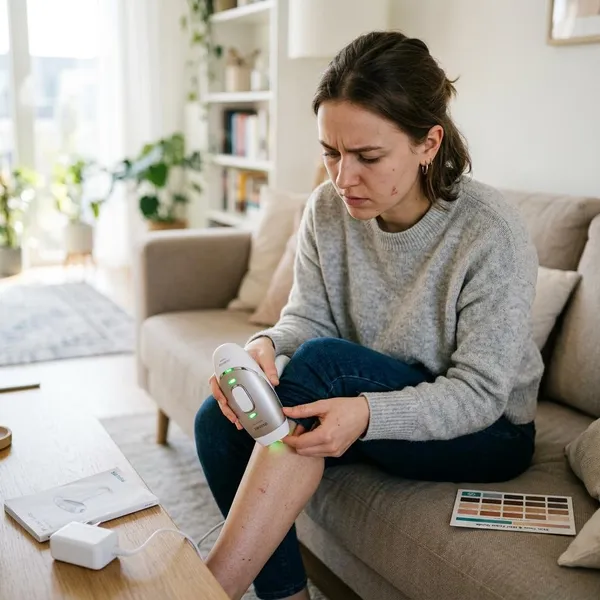
When professional treatment may make more sense
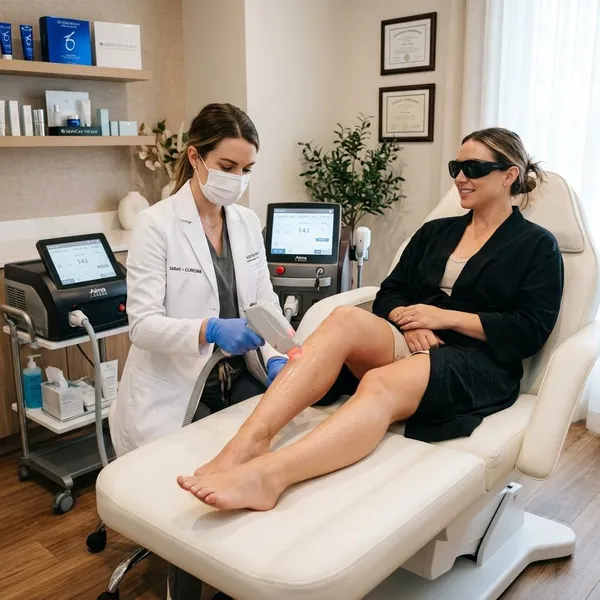
Professional treatment is worth considering when you have used the device correctly for a full course and still see almost no change, or when your hair, skin tone, or regrowth pattern is unlikely to respond well to home IPL. It is not automatically the next step for everyone, but it can save time when the home route is clearly a poor fit.
Home treatment shows little progress
If you have followed the recommended schedule for around 8 to 12 weeks or longer, shaved correctly, covered the area carefully, and still notice no slower regrowth, no finer strands, and no patchiness, home energy levels may not be enough for your hair. That is different from being impatient after a few sessions.
For dense underarm or bikini hair, a clinic may be able to use stronger and more adjustable settings than a consumer device. For mild leg regrowth that is already getting finer, continuing at home may still be reasonable.
Your hair is a poor match for IPL
Light blonde, red, grey, white, and very fine hair often responds poorly because there may not be enough pigment for IPL to target. Repeating the same home treatment usually does not overcome that basic limitation.
A professional can tell you whether laser is still realistic or whether electrolysis is the more sensible option. This check is especially useful before buying a second home device with the same limitation.
Hormonal regrowth stays persistent
Facial, chin, neck, lower abdomen, and chest hair can be more complicated when hormones are involved. Treatment may reduce some existing hair while new growth keeps appearing, which makes the result feel like it never holds.
If regrowth is sudden, persistent, or appears with other body changes, it is sensible to speak with a doctor or dermatologist. Hair removal can help with the visible hair, but it may not address the reason new follicles keep becoming active.
You need a more tailored treatment plan
A tailored plan matters when the area is sensitive, the hair is stubborn, or your skin and hair sit near the edge of what home devices can safely treat. A clinic can assess different body areas separately instead of using one broad setting for everything.
- Better for a clinic: persistent facial hair, very dense bikini hair, or unclear skin-tone suitability.
- Possibly fine at home: darker leg or underarm hair that is already growing back slower.
- Needs medical input: sudden new hair growth, strong hormonal signs, or irritation that keeps returning.
Conclusion
A home device is worth continuing when you can point to real changes, even small ones: longer gaps between shaving, softer regrowth, or patches that are slowly thinning. If you have used it consistently, your hair and skin are compatible, your technique is careful, and the device flashes normally, give the full course a fair chance. If none of those checks looks good, fixing the weak point or getting professional advice is smarter than repeating the same routine and hoping for a different result.
FAQS
Why is my hair still growing after at-home laser?
Because at-home laser and IPL reduce growth gradually; they do not remove every active hair at once. If the hair is growing at the same speed and thickness after a full, consistent course, check compatibility, technique, and device performance.
Why is IPL not working on my bikini or pubic area?
Bikini hair is often coarse, dense, and awkward to cover evenly, so results can be slower than on legs or arms. If the same strips keep growing back, your issue may be missed coverage rather than complete treatment failure.
Can using a low setting make IPL less effective?
Yes, a very low setting may not deliver enough energy for useful reduction. If your skin tolerates treatment and your manual allows it, increase gradually instead of jumping straight to the highest level.
Why is my IPL device not flashing?
Common reasons include poor skin contact, a dirty window, low battery, overheating, or a sensor blocking the flash. If cleaning, charging, cooling, and correct placement do not help, stop guessing and contact the manufacturer.