Can Ice-Cooled IPL Make Hair Removal More Comfortable?
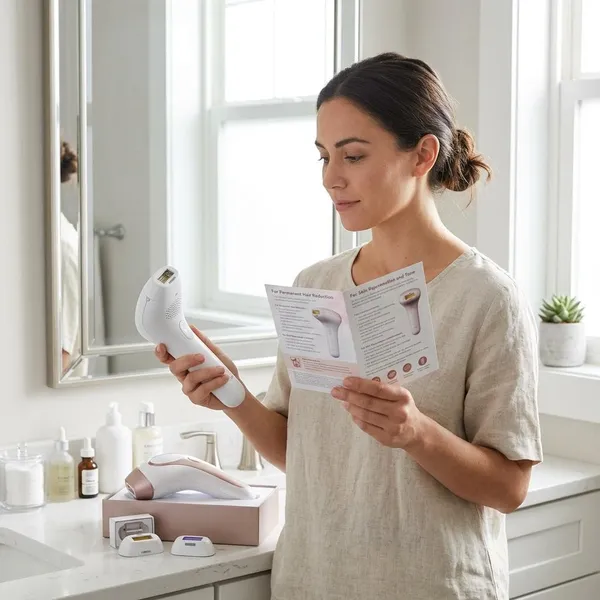
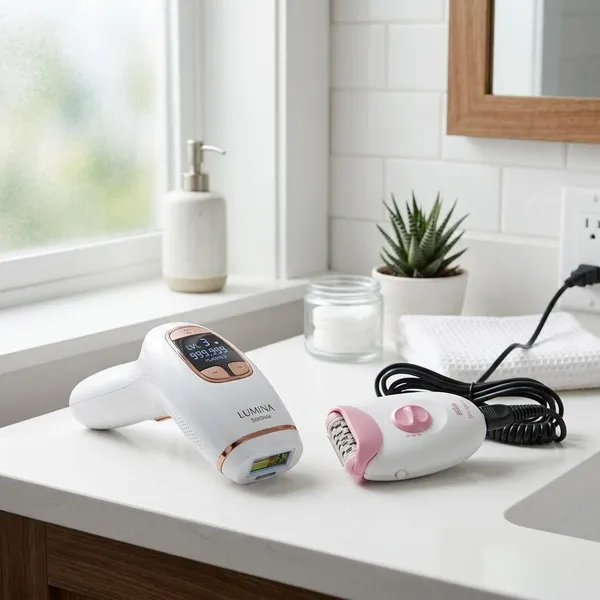
An ipl hair removal device with ice cooling tech is worth considering if regular home IPL feels too hot, sharp, or hard to keep up with. The cooling does not replace the IPL light or guarantee better results, but it can make sessions more comfortable enough that you are more likely to use the device consistently and safely.
How IPL hair removal with ice cooling works
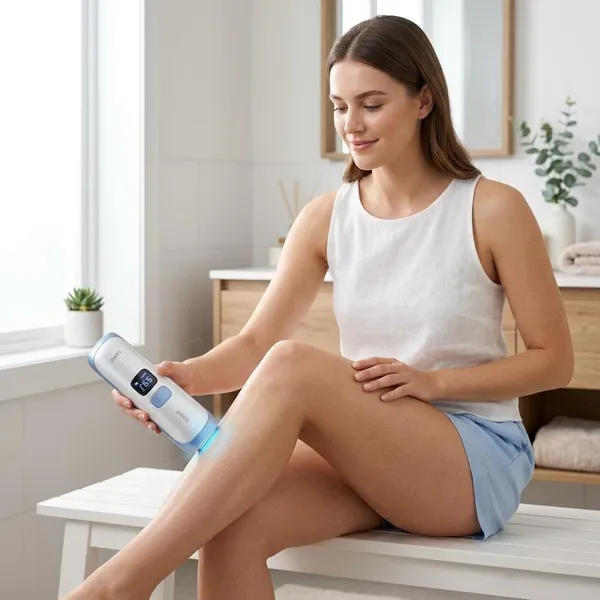
IPL uses flashes of light to heat pigment in the hair. Ice cooling adds a chilled contact surface at the skin level, so the flash can feel less hot while the device is pressed against the treatment area.
The most important thing to understand is the split between results and comfort: IPL is responsible for hair reduction, while cooling mainly changes how tolerable the session feels.
IPL light targets pigment in the hair
IPL works best when the device can "see" the hair clearly against the skin. Darker hair usually responds better because it contains more pigment to absorb the light, while very light blonde, white, gray, or red hair often responds poorly.
Skin tone matters too. If the skin is outside the device's safe range, too much light can be absorbed by the skin instead of the hair. Before buying, check the brand's skin tone and hair color chart rather than assuming every IPL device suits every person.
Cooling helps reduce heat on the skin
The cooling surface helps calm the outer skin during each flash. It may be a metal plate, sapphire contact surface, or another chilled treatment window, depending on the model.
Repeated sessions target different hair growth cycles
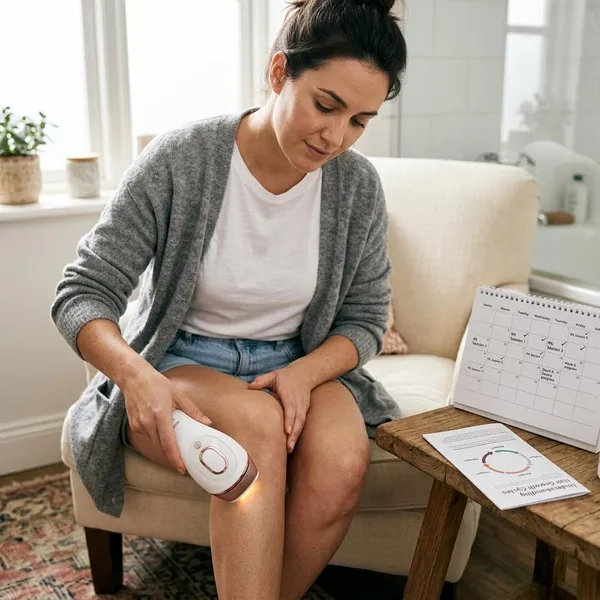
One session cannot catch every hair at the right moment. Hair grows in cycles, and IPL tends to work best on hairs in an active growth phase.
What ice cooling adds to IPL hair removal
Ice cooling is most useful when discomfort is the reason you avoid IPL or rush through treatments. It can make the process feel less harsh, which is especially valuable for beginners, sensitive areas, and longer full-body sessions.
Less heat during each flash
A good cooling plate can make each flash feel less prickly or sharp. You may still feel warmth, especially on coarse hair or higher intensity levels, but the sensation is often easier to manage.
More comfort on sensitive areas
Underarms, the bikini line, and some lower facial areas can feel more intense than broad areas like calves or forearms. Cooling can make these smaller zones feel more approachable, but it should not encourage risky use.
- Start lower: use a conservative intensity on sensitive areas first.
- Keep contact steady: curved areas need slower placement.
- Stop if skin reacts badly: cooling should not mask irritation.
Easier full-body treatments
Comfort becomes more important when a session is long. Treating both legs is a different experience from doing a quick underarm touch-up, and heat can feel more noticeable as the routine goes on.
If you plan to use IPL on several body areas every week during the starting phase, cooling can make the habit easier to keep. For someone treating only one small area occasionally, it is still nice to have, but not always the deciding feature.
A gentler feel for beginners
Beginners often worry more about the flash sensation than the technique. A cool contact surface can make the first few sessions feel less intimidating, giving you more attention for the things that actually matter: skin contact, intensity, and even coverage.
How to check if an area is safe for IPL
Check safety in this order: whether the device approves the body area, whether your skin and hair are compatible, and whether the skin is calm and free from high-pigment marks. Cooling does not make an unsafe area safe.
Confirm the device supports that body area
Do not assume a device that works on legs is suitable everywhere. Some home IPL devices are approved for legs, arms, underarms, and outer bikini areas only; others allow limited facial use with extra restrictions.
If the manual does not clearly name the area, skip it. Product-specific approval matters more than general advice because treatment windows, sensors, and intensity ranges vary by model.
Avoid the eyes and genital areas
IPL should not be used around the eyes, on eyelids, or close to the eye socket. Even devices that allow facial treatment usually limit use to lower facial areas, such as the upper lip or chin.
Genital tissue should also be avoided. A device may allow the outer bikini line, but that is not the same as being safe for intimate internal areas or mucosal skin.
Avoid tattoos, dark marks, and irritated skin
Tattoos, dark moles, large freckles, birthmarks, and other dark marks can absorb more light than the surrounding skin. That raises the risk of burns, discoloration, or irritation.
Wait if the skin is sunburned, peeling, broken, inflamed, or freshly irritated from strong skincare. A simple rule helps: if the area already looks or feels angry before treatment, IPL should wait.
Follow device-specific limits for facial use
Facial rules are usually stricter because the skin can be more reactive and the eyes are nearby. Many devices set a boundary such as "below the cheekbones," but the exact wording matters.
For facial hair linked to hormones or very dense growth, home IPL may be less predictable. In that situation, it is better to start cautiously and consider professional advice rather than repeatedly increasing intensity at home.
How to use a cooling IPL device
A safe routine is simple: prepare the skin, choose a suitable setting, keep the cooling surface flat, cover the area once in an organized pattern, and follow the brand's schedule. Most mistakes happen when people rush, double-flash the same patch, or treat skin that should have been left alone.
Shave and clean the treatment area
Shave before IPL so the light is not wasted on long hair above the skin. Waxing or plucking right before treatment is usually the wrong choice because it removes the root the light needs to target.
- Remove residue: no lotion, deodorant, sunscreen, oil, or self-tanner.
- Dry the skin fully: damp skin can affect contact and comfort.
- Use clean tools: avoid treating freshly nicked or irritated skin.
Check your skin tone and choose the right intensity
Use the compatibility chart first, then the device sensor if it has one. A sensor is helpful, but it should not be your only safety check.
Start lower on a new area and patch test if the manual recommends it. Legs may tolerate a stronger setting than underarms or the upper lip, so do not treat your whole body as if it has the same sensitivity.
Keep the cooling surface flat against the skin
The cooling surface needs full contact to cool properly and help the device flash evenly. On ankles, knees, underarms, and bikini edges, slow down and adjust the angle instead of forcing the device into place.
Treat the area evenly without repeated flashes
Work in rows or small sections so you know where you have already treated. Repeatedly flashing the same exact spot in one session is more likely to irritate the skin than speed up results.
A useful approach is to use stamp mode for small or curved zones and glide mode for broader areas if your device offers both. Stamp mode gives control; glide mode saves time.
Follow the recommended schedule and aftercare
Follow the schedule in the manual rather than copying another brand's routine. Most devices use a more frequent starting phase, then maintenance once regrowth slows, but the exact timing depends on the model.
After treatment, keep the area calm. Avoid very hot showers, harsh exfoliation, strong active skincare, and heavy sun exposure for a while if your skin feels sensitive. If you are treating exposed areas in sunny months, sun protection becomes part of the routine, not an optional extra.
What to look for in an IPL device with ice cooling
The best choice is not simply the device with the coldest-sounding marketing claim. Look for the combination that fits your skin tone, hair color, treatment areas, and patience level.
| Using it mainly for | Feature to prioritize | Why it matters |
|---|---|---|
| Legs, arms, larger areas | Fast flashes and a wider window | Shorter sessions are easier to keep up with |
| Underarms, bikini edge, face-approved zones | Good contact and precise stamp mode | Curved areas need control more than speed |
| First-time or cautious users | Skin tone sensing and more intensity levels | Less guesswork when starting low |
| Sensitive-feeling sessions | Reliable cooling through the full routine | Comfort should last beyond the first few flashes |
Cooling plate design and skin contact
A cooling plate should stay noticeably cool and sit evenly against the skin. If it only cools well on flat areas but loses contact around curves, the benefit will feel limited in real use.
Sapphire cooling can be a good feature, but the material name alone is not enough. Reviews that mention comfort during a full leg or full-body session are often more useful than a product page that only lists the cooling material.
Skin tone sensing and intensity levels
Skin tone sensing helps reduce accidental use outside the safe range, while multiple intensity levels let you adjust by area. This is especially helpful if your legs tolerate IPL well but your underarms feel much sharper.
Flash speed and treatment window
Flash speed and window size affect how realistic your routine feels. A larger window is useful for thighs and calves; a smaller or more precise window is better around ankles, bikini edges, and approved facial zones.
Stamp and glide modes
Stamp mode fires one flash at a time, which helps with careful placement. Glide mode is better when you want to move steadily over broad, flatter areas.
Having both modes is useful for full-body use because it lets the device match the area instead of forcing one technique everywhere.
Body area compatibility and ease of use
Check the approved body areas before you buy, not after. A device that excludes the face or has limited bikini guidance may still be good, but only if those limits match what you actually want to treat.
Ease of use is not a small detail. Clear controls, a comfortable grip, readable instructions, and a cord or battery setup that fits your space can decide whether the device becomes part of your routine or ends up unused in a drawer.
Conclusion
A cooling IPL device makes the most sense when comfort is the thing that would stop you from being consistent. Choose it for safer-feeling, easier sessions rather than expecting the cooling feature to make IPL stronger, and put compatibility, approved body areas, intensity control, and steady technique ahead of marketing claims.
FAQS
Does ice cooling make IPL more effective?
Not directly. The IPL light does the hair-reduction work; cooling mainly helps you tolerate the session and stay consistent.
Is sapphire cooling better than other cooling systems?
It can be, especially for smooth contact and steady cooling, but it is not automatically better. A well-designed cooling plate that stays cool during a full session matters more than the material name alone.
Can you use cooling IPL on sensitive skin?
Sometimes, if your skin tone and hair color are compatible and the skin is calm. Start low, patch test when advised, and avoid IPL on irritated, sunburned, broken, or inflamed skin.