How to Choose a Sapphire IPL for Men's Back Hair?
If you want to reduce back hair at home without turning every session into a hot, stop-start chore, a sapphire cooling IPL device for men's back hair removal can make sense. The key is not just "does it flash," but whether it stays comfortable long enough to cover a large area evenly and whether it suits your skin tone and hair color.
Why sapphire cooling helps
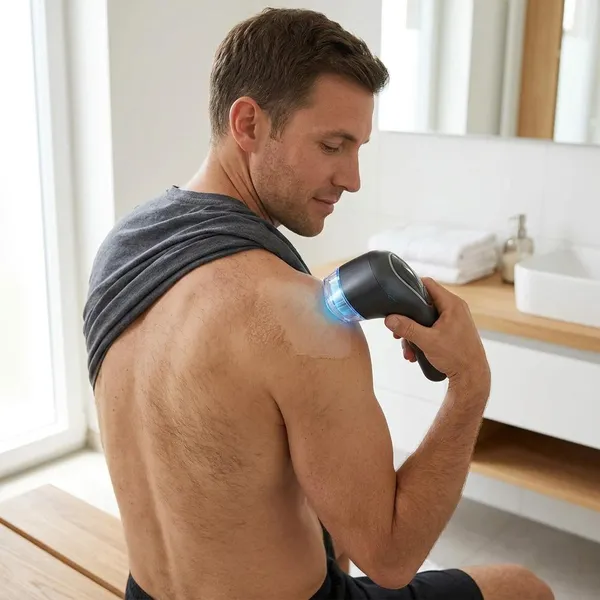
Sapphire cooling matters most on the back because the area is large, often hairy, and easy to rush when treatment starts feeling too warm. The cooling surface does not make IPL painless or suitable for everyone, but it can make repeated flashes easier to tolerate.
Reduces heat on the skin
The cooled contact surface helps lower the heat you feel where the device touches the skin. That is useful on dense back hair, where the flash can feel sharper than it does on finer or smaller areas.
Do not treat cooling as a safety shortcut. If your skin is recently tanned, irritated, sunburned, or outside the device's approved skin tone range, cooling will not fix that risk.
Makes repeated flashes more comfortable
A few flashes may feel manageable with almost any decent IPL device. The real test is the 10th, 50th, or 100th flash across the back. Better cooling helps keep the sensation more consistent, so you are less likely to skip rows or lower the setting too far just to finish.
Helps with longer back sessions
Back treatment is rarely a quick touch-up. If you are treating the full upper and lower back, comfort and speed directly affect whether you complete the session properly.
For occasional grooming before a holiday, shaving may be easier. For year-round reduction, a cooled IPL device is more practical because the routine has to be repeatable, not just bearable once.
What to look for in a device
Choose the device by real-use features first: cooling strength, flash speed, glide mode, skin tone protection, and how easy it is to hold at awkward angles. Marketing claims matter less than whether the device helps you cover the back evenly without guessing or rushing.
Strong cooling
Look for clear cooling information, not just the word "ice" or "cooling" in the product name. A useful device should keep the treatment window comfortable during repeated flashes, especially on thick hair around the shoulders and upper back.
- Good sign: sapphire contact cooling that works continuously during treatment.
- Weak sign: vague cooling claims with no explanation of how it works.
- Practical check: read reviews from people using it on legs, chest, or back, not only small areas.
Fast flashing
Slow flashing makes back treatment feel much longer than it needs to be. A faster flash cycle helps you keep a steady row-by-row pattern, which is important because missed strips are one of the easiest ways to end up with patchy results.
Glide mode
Glide mode is worth having for broad, flatter parts of the back. It lets you move the device more smoothly instead of pressing for every single flash.
Single-flash mode still has a place near the shoulders, spine area, or edges where you need more control. The best setup is having both options, so you can use speed where it helps and precision where it matters.
Skin tone sensing
Skin tone sensing is one of the first safety features to check. IPL works by targeting pigment, so darker skin tones or recently tanned skin may absorb more light than intended.
A sensor is helpful, but it should not be your only safeguard. Check the brand's skin tone and hair color chart before buying, then do a patch test before treating the whole back.
Easy handling
Back hair removal is not just a power problem; it is a reach problem. A device that is heavy, slippery, or awkward to angle can make even coverage difficult, especially if you are working alone.
- Solo use: prioritize a comfortable grip, visible controls, and glide mode.
- Partner-assisted use: speed and cooling may matter more than reach.
Large backs or dense hair: avoid tiny treatment windows unless you are prepared for longer sessions.
How to use IPL on back hair
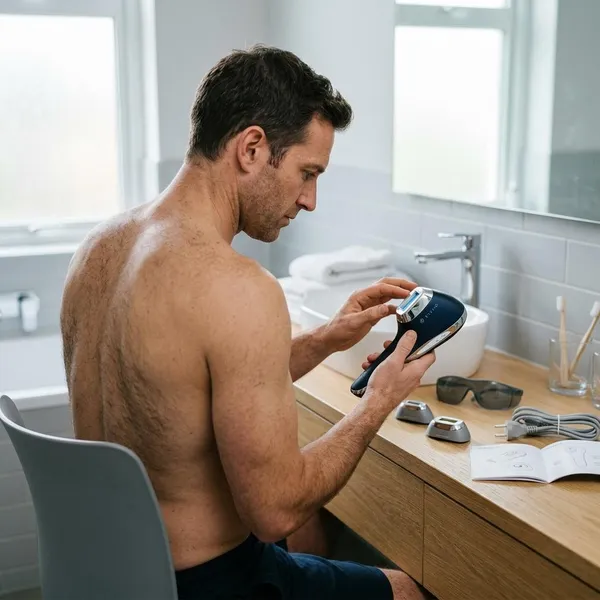
The safest routine is simple: shave, clean the skin, patch test, treat in a pattern, and stay on schedule. The back is hard to see, so planning your coverage matters more here than it does on easy areas like the arms.
Shave before treatment
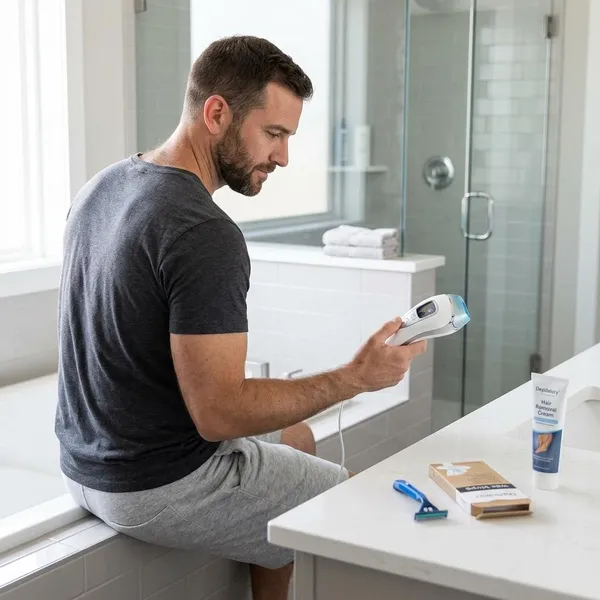
Shave before using IPL so the light can target the hair below the skin instead of heating long hair on the surface. Do not wax or pluck before IPL, because removing the root gives the light less pigment to target.
If your back hair is thick, shaving the day before may feel more comfortable than shaving immediately before treatment, but follow your device manual if it gives specific timing.
Clean and dry the skin
Start with clean, dry skin. Sweat, lotion, sunscreen, body oil, or self-tanner can interfere with contact and may increase irritation.
Complete a skin test
Do a patch test on a small area before the first full session, after changing intensity, or after recent sun exposure. Wait for the time recommended by the manufacturer before deciding whether to continue.
This step is especially important if you have sensitive skin or you are near the darker end of the device's approved skin tone range.
Cover the back evenly
Use a clear route instead of moving randomly. Work from shoulder to lower back in rows, or from one side to the other, and repeat the same pattern each session.
- Use a mirror if treating your own back.
- Ask for help if you cannot keep the device flat against the skin.
- Avoid repeated flashes on the same spot unless the manual allows overlap.
- Mark mental sections such as upper left, upper right, lower left, and lower right.
Follow the treatment schedule
IPL needs repeated sessions because hair grows in cycles. Most home devices start with weekly or every-two-week use, then move to maintenance after growth slows, but the exact schedule should come from your device manual.
IPL vs other back hair removal
The right method depends on what you want most: instant smoothness, less frequent upkeep, lower cost, or professional supervision. IPL is best viewed as a gradual reduction method, not a one-session replacement for shaving or waxing.
IPL for long-term reduction
IPL is a good fit if you want back hair to become easier to manage over time. It may lead to slower, finer, or patchier regrowth after consistent use, though results vary by hair color, skin tone, device strength, and schedule.
It is less suitable if you need perfectly smooth skin tomorrow. For that situation, shave first and think of IPL as the longer-term plan.
Shaving for quick removal
Shaving is the fastest option for immediate back hair removal. It is cheap and useful before a beach day, gym event, or trip, but regrowth usually returns quickly and the back can be awkward to reach without help.
Waxing for temporary smoothness
Waxing can keep the back smoother for longer than shaving because it removes hair from the root. The trade-off is pain, possible irritation, and the need to let hair grow long enough before the next wax.
If you are using IPL, avoid mixing it with waxing during the treatment phase. IPL needs the root pigment present, so shaving is the better preparation method.
Professional laser for clinic treatment
Professional laser may be a better choice if your back hair is very dense, you want expert handling, or you do not want to manage coverage yourself. It usually costs more than a home IPL device, but the treatment is supervised and may use stronger equipment.
At-home sapphire cooling IPL makes more sense when convenience and privacy matter most, and when your skin tone and hair color fall within the device's suitable range.
Conclusion
Sapphire cooling IPL is most useful for men who want gradual back hair reduction and are willing to follow a routine, not for anyone expecting instant permanent removal. Check skin tone suitability first, then prioritize strong cooling, fast flashing, glide mode, and easy handling; if those basics are right, the device is far more likely to become something you actually keep using.
FAQS
Does IPL work on thick back hair?
It can, especially when the hair is dark and the skin tone is within the device's approved range. Thick hair may take more sessions, so judge progress over weeks rather than after one use.
Is sapphire cooling IPL less painful?
For many users, yes. The cooling surface reduces the hot feeling on the skin, but you may still feel warmth, snapping, or mild stinging during flashes.
Can you use IPL on your own back?
Yes, but it is easier with mirrors, a clear row pattern, and a device that is comfortable to hold. If you cannot keep the window flat against the skin, getting help will usually give better coverage.
How often should you use IPL?
Follow the schedule in your device manual. Many home IPL routines start weekly or every two weeks, then switch to maintenance once regrowth becomes slower or finer.
Is IPL safe for darker skin?
Only if the specific device is approved for your skin tone. Cooling does not make an unsuitable IPL device safe, so check the compatibility chart, avoid tanning before treatment, and patch test first.